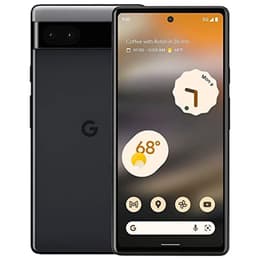

Galaxy A34 Vs Google Pixel 6A

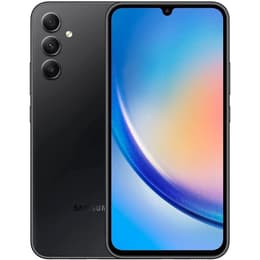
Galaxy A34
Galaxy A34
Starting at

Refurbished price:£105.00

Versus £399.00 new

See options
Google Pixel 6A
Google Pixel 6A
Starting at

Refurbished price:£107.00

Versus £459.00 new

See options

Ratings

The Samsung Galaxy A34 (released March 2023) and the Google Pixel 6A (released July 2022) are both smartphones designed to offer a balanced experience. While the Galaxy A34 emphasizes a larger display with a higher refresh rate and extended battery life, the Pixel 6A focuses on a compact form factor, a highly capable camera system, and a streamlined software experience. Both devices operate on the Android platform, providing access to a wide ecosystem of applications and services.

Scores

Durability

When considering the longevity of these devices, several factors come into play, including their release timelines, software support, and physical build.

  • Release Timeline: The Samsung Galaxy A34 was released in March 2023, making it a newer device compared to the Google Pixel 6A, which launched in July 2022. This difference in release date can influence the duration of future software support.
  • Software Support: The Galaxy A34 is expected to receive four years of operating system upgrades and five years of security updates. The Pixel 6A, on the other hand, is slated to receive OS updates until at least July 2025 and security updates until at least July 2027. This means the Pixel 6A will continue to receive security patches for a longer period.
  • Physical Durability: Both devices carry an IP67 rating for dust and water resistance, indicating they can withstand submersion in up to one meter of freshwater for 30 minutes. The Galaxy A34 features Corning Gorilla Glass 5 on its front display, offering enhanced scratch and drop protection, while the Pixel 6A uses Corning Gorilla Glass 3.

Year of Release

2023

2022

Compatible with latest Update

Yes

Yes

OS

Android

Android

Foldable

No

No

Performance

The performance of a smartphone is crucial for daily tasks, from app usage to multitasking and gaming. Both the Galaxy A34 and Pixel 6A offer distinct approaches to processing power and memory management.

  • Processor Capabilities: The Pixel 6A features a processor designed by Google, which is optimized for artificial intelligence and machine learning tasks, contributing to smooth multitasking and responsive operation. In benchmark tests, the Pixel 6A has shown stronger performance compared to the Galaxy A34. The Galaxy A34 is powered by an octa-core processor that handles demanding applications and games smoothly.
  • Memory and Storage: The Galaxy A34 comes with options for 6GB or 8GB of RAM and 128GB or 256GB of internal storage. A notable advantage for some users is its expandable storage, supporting microSD cards up to 1TB. The Pixel 6A is equipped with 6GB of RAM and 128GB of internal storage, which is not expandable.
  • Battery Behavior: The Galaxy A34 houses a larger 5000 mAh battery, generally providing extended usage times. The Pixel 6A has a 4410 mAh battery, and while it offers good battery life, heavy users might find themselves charging more frequently.

Memory (GB)

6 GB

6 GB

Screen quality

The display is a primary interface for smartphone interaction, and both devices offer vibrant viewing experiences with some key differences.

  • Display Technology and Size: The Galaxy A34 features a larger 6.6-inch Super AMOLED display, providing ample screen real estate for media consumption and productivity. The Pixel 6A has a more compact 6.1-inch OLED display, which might appeal to users preferring a smaller device.
  • Refresh Rate and Smoothness: A significant difference lies in the refresh rate. The Galaxy A34 boasts a 120Hz refresh rate, contributing to smoother scrolling and a more fluid visual experience. The Pixel 6A features a standard 60Hz refresh rate.
  • Resolution and Brightness: Both phones offer a Full HD+ resolution (1080 x 2340 for A34, 1080 x 2400 for 6A), ensuring clear and sharp visuals. The Galaxy A34's Super AMOLED display can reach up to 1000 nits of brightness in high brightness mode, making it highly visible outdoors. The Pixel 6A's OLED display supports HDR, offering good contrast and color depth.

Resolution

1080 x 2340

1080 x 2400

Screen type

Super AMOLED

OLED

Audiovisual

For many users, the camera system is a deciding factor, and these two phones approach photography with different strengths.

  • Rear Camera System: The Galaxy A34 features a triple rear camera setup, including a 48MP main sensor with optical image stabilization (OIS), an 8MP ultrawide lens, and a 5MP macro lens. The Pixel 6A has a dual rear camera system, comprising a 12.2MP main sensor with OIS and a 12MP ultrawide lens.
  • Photography Performance: The Pixel 6A is widely recognized for its computational photography, producing sharp, color-accurate images with good dynamic range, even in challenging lighting conditions. Its ultrawide camera also delivers balanced shots. The Galaxy A34's main camera performs well in daylight, offering saturated images, though some users note noise in low-light conditions and a tendency for the ultrawide to over-saturate.
  • Video Recording and Front Camera: Both devices can record 4K video at 30 frames per second (fps) with their main rear cameras, and the Pixel 6A can also record at 60fps. The Galaxy A34's 13MP front camera can record 4K video at 30fps, while the Pixel 6A's 8MP front camera records at 1080p at 30fps. The Pixel 6A's selfie camera is considered decent but can be grainy in lower light.

Main camera

48 megapixels

12.2 megapixels

Front camera

13 megapixels

8 megapixels

Miscellaneous

Beyond the core features, several practical elements contribute to the overall user experience of a smartphone.

  • Connectivity: Both the Galaxy A34 and Pixel 6A support 5G connectivity, enabling faster mobile data speeds. The Pixel 6A supports Wi-Fi 6 and 6E, offering potentially faster and more stable wireless internet connections, while the Galaxy A34 supports Wi-Fi 5. Both include Bluetooth for wireless accessories, with the A34 featuring Bluetooth 5.3 and the Pixel 6A having Bluetooth 5.2.
  • Physical Design and Handling: The Galaxy A34 is slightly larger and heavier at 161.3 x 78.1 x 8.2 mm and 199g, featuring a glass front (Gorilla Glass 5), plastic back, and plastic frame. The Pixel 6A is more compact and lighter at 152.2 x 71.8 x 8.9 mm and 178g, with a glass front (Gorilla Glass 3), plastic back, and an aluminum frame. Both devices feature stereo speakers.
  • Ports and Sensors: Both phones utilize a USB-C port for charging and data transfer, with the Pixel 6A featuring the faster USB-C 3.1 standard compared to the Galaxy A34's USB-C 2.0. Neither device includes a traditional 3.5mm headphone jack. Both incorporate an under-display optical fingerprint sensor for secure unlocking.

Weight

199 g

250 g

Screen size (in)

6.6

6.1

Mobile network

5G

5G

SIM card

Dual Physical SIM

Physical SIM + eSIM

Carrier compatibility

Unlocked

Unlocked

Connector

USB-C

USB-C

User feedback often highlights the Pixel 6A's superior camera performance and its responsive, clean software experience as key strengths. However, some users have noted concerns regarding its battery life and occasional software bugs. The Galaxy A34 is frequently praised for its larger, smoother display, longer battery life, and the flexibility of expandable storage. Its camera performance is generally considered competent for everyday use, though not as consistently outstanding as the Pixel 6A's, particularly in challenging conditions.

For users who prioritize exceptional photography capabilities, a compact design, and a streamlined Android experience with prompt updates, the Google Pixel 6A may be the more suitable choice. Its advanced image processing and efficient performance make it a strong contender for those who value camera quality and system responsiveness above all else. Conversely, individuals who prefer a larger display with a higher refresh rate for media consumption, require extensive battery life, and benefit from expandable storage will likely find the Samsung Galaxy A34 better suited to their needs. Its robust battery and larger screen cater well to users who spend significant time on their devices throughout the day.

Ultimately, the decision between these two smartphones depends on individual priorities. Both offer compelling features within their respective categories, and considering a quality-assured refurbished option for either device can provide an eco-friendly alternative for making an informed choice.


See all articles

Our recent comparisons