
Compare models
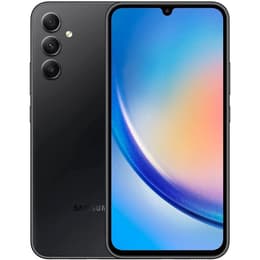
Galaxy A34 Vs Google Pixel 10 Pro XL
- 1-year minimum warranty
- Free delivery on all items
- Free 30-day returns
Differences at a glance
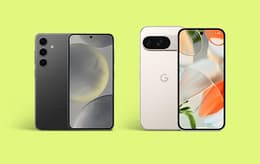
The Samsung Galaxy A34 (2023) and the Google Pixel 10 Pro XL (2025) represent entirely different tiers of the smartphone market, catering to distinct user expectations and daily demands. While the Galaxy A34 focuses on delivering balanced core features for everyday use, the Google Pixel 10 Pro XL targets users seeking advanced capabilities and high-end engineering. Both devices operate on the Android platform, yet their software experiences and underlying hardware philosophies diverge significantly.
Understanding these fundamental differences helps buyers determine which device matches their practical lifestyle requirements.
Available Models
Colour
Storage
Scores
Durability
When examining longevity and hardware durability, these two devices offer contrasting support timelines and build longevity expectations.
- Software update timeline: The Google Pixel 10 Pro XL provides extended operating system and security updates spanning several years, while the Galaxy A34 offers a shorter support window reflecting its release year and tier.
- Build quality and repairs: Both models feature robust water and dust resistance ratings, though repair availability and component longevity favor newer flagship engineering standards found in the Pixel lineup.
- Expected lifespan: Users can anticipate reliable multi-year performance from both devices, with the Pixel offering a longer window of active software maintenance for future software versions.
Year of Release
2023
2025
Compatible with latest Update
Yes
Yes
OS
Android
Android
Foldable
No
No
Performance
System responsiveness and hardware capability vary greatly between these two choices, influencing how apps load and how smoothly multitasking runs.
- Multitasking and storage: The Google Pixel 10 Pro XL handles heavy background tasks and high-demand applications seamlessly with generous memory configurations, whereas the Galaxy A34 manages standard daily apps, messaging, and web browsing efficiently.
- Battery behavior: Both devices manage daily energy consumption well, though heavy usage involving navigation and gaming results in different discharge rates based on battery capacity and processor efficiency.
- System fluidity: Everyday navigation feels responsive on both models, with the Pixel delivering extra processing headroom for intensive tasks and advanced background processing.
Screen quality
Display technologies differ notably, impacting outdoor readability, color reproduction, and media consumption quality.
- Panel technology and clarity: The Google Pixel 10 Pro XL utilizes an advanced OLED screen with exceptionally high peak brightness and sharp resolution, while the Galaxy A34 features a bright, clear panel suited for comfortable daily viewing.
- Refresh rate and motion: Both smartphones support high refresh rates, ensuring smooth scrolling through web pages, social feeds, and system menus.
- Outdoor visibility: The Pixel achieves higher maximum luminance levels for direct sunlight legibility, whereas the Galaxy A34 remains sufficiently clear under normal daylight conditions.
Resolution
1080 x 2340
1344 x 2992
Screen type
Super AMOLED
OLED
Audiovisual
Imaging capabilities and media output reflect the distinct engineering focus of each smartphone family.
- Camera hardware: The Google Pixel 10 Pro XL incorporates a versatile multi-lens setup including a dedicated telephoto zoom and advanced computational photography, while the Galaxy A34 relies on a primary and ultra-wide configuration for standard snapshots.
- Video and low-light performance: The Pixel excels in challenging lighting conditions and detailed video recording, whereas the Galaxy A34 captures clear daytime video and casual low-light memories adequately.
- Audio and media output: Stereo speakers on both devices provide clear sound for hands-free calls and casual video viewing, with the Pixel offering a more robust audio profile for multimedia.
Front camera
13 megapixels
42 megapixels
Miscellaneous
Practical daily features such as connectivity, physical handling, and security sensors shape the overall user experience.
- Connectivity and ports: Both models support current wireless standards including 5G and modern Wi-Fi protocols, utilizing reversible USB-C ports for charging and data transfer.
- Biometrics and handling: The Galaxy A34 and Google Pixel 10 Pro XL both integrate secure biometric authentication through in-display fingerprint sensors and facial recognition.
- Dimensions and weight: The Galaxy A34 offers a lighter, standard-sized footprint for one-handed use, while the Pixel 10 Pro XL provides a larger physical canvas suited for media consumption. Choosing a quality-assured refurbished option provides a sustainable choice for buyers looking to minimize environmental impact.
Weight
199 g
232 g
Screen size (in)
6.6
6.8
Mobile network
5G
5G
SIM card
Dual Physical SIM
Physical SIM + eSIM
Carrier compatibility
Unlocked
Unlocked
Connector
USB-C
USB-C
What the community thinks
Community discussions and user feedback indicate that buyers appreciate the Galaxy A34 for its dependable daily reliability and straightforward feature set. At the same time, users frequently praise the Google Pixel 10 Pro XL for its advanced computational photography and expansive display quality. Common criticisms for the older model center around slower loading times during heavy tasks, while discussions regarding the Pixel often note its larger physical size and weight during one-handed handling.
Users prioritizing long-term software support, versatile camera zoom, and maximum processing power may prefer the Google Pixel 10 Pro XL, while users focusing on essential daily smartphone tasks in a balanced, manageable size will find the Galaxy A34 well-suited to their needs. Exploring a quality-assured refurbished option allows consumers to access these devices as an eco-friendly alternative that aligns with sustainable purchasing habits. Ultimately, the choice depends on balancing hardware priorities with individual daily usage patterns.