
Compare models

Galaxy A34 Vs Google Pixel 10

  • 1-year minimum warranty
  • Free delivery on all items
  • Free 30-day returns
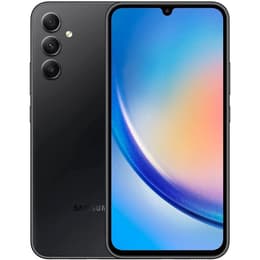
Galaxy A34
Starting at

Refurbished price:£98.00

Versus £399.00 new

See options
Google Pixel 10
Starting at

Refurbished price:£404.00

Versus £789.14 new

See options

Differences at a glance

The Samsung Galaxy A34 (2023) and the Google Pixel 10 (2025) are Android smartphones designed to serve different segments of everyday mobile users. While the Galaxy A34 focuses on accessible, reliable everyday functionality, the Google Pixel 10 brings advanced processing capabilities and newer software integration to the market. Choosing between them depends on how you balance generational updates against core utility.

Available Models

Colour

Storage

Scores

Durability

When examining hardware longevity and software timelines, both devices offer solid support frameworks that shape their expected practical lifespans.

  • Release timeline and OS support: The Google Pixel 10 benefits from a newer launch year and an extended software update commitment, whereas the Galaxy A34 has been on the market longer and is further along its update path.
  • Repairability and build: Both models feature dust and water resistance ratings, though their internal component availability and repair structures vary slightly according to regional service networks.
  • Expected lifespan: Users seeking extended software security updates over many years will find the newer release schedule of the Pixel option advantageous for long-term usage.

Year of Release

2023

2025

Compatible with latest Update

Yes

Yes

OS

Android

Android

Foldable

No

No

Performance

Day-to-day speed, multitasking efficiency, and power management differ notably due to the generation gap between the two hardware configurations.

  • App loading and multitasking: The Google Pixel 10 handles demanding apps, heavy multitasking, and modern gaming smoothly with its advanced processor and ample RAM, while the Galaxy A34 handles routine messaging, media streaming, and casual tasks reliably.
  • Battery behavior: Both devices easily manage a standard day of moderate use, though individual screen-on time varies depending on background activity and processing demands.
  • Storage configuration: Base storage tiers provide ample room for apps and media, with the Google Pixel series omitting expandable storage while certain regional variants of the Galaxy line support card slots.

Screen quality

Display characteristics shape media consumption and outdoor usability, with both phones offering bright, fluid panels.

  • Display technology: The Galaxy A34 features a slightly larger Super AMOLED panel, while the Google Pixel 10 utilizes a compact OLED screen capable of high peak brightness levels in direct sunlight.
  • Refresh rate and smoothness: Both devices support a 120Hz maximum refresh rate, ensuring fluid scrolling through web pages and smooth UI transitions.
  • Visual clarity: Resolutions on both models provide crisp text and vibrant image rendering suited for watching videos and reading on the go.

Resolution

1080 x 2340

1080x2424

Screen type

Super AMOLED

OLED

Audiovisual

Camera systems and media output cater to different photography preferences and everyday recording requirements.

  • Camera hardware: The Google Pixel 10 incorporates a versatile triple-lens array including a dedicated telephoto option, whereas the Galaxy A34 relies on a primary, ultra-wide, and macro setup.
  • Everyday and low-light imaging: The Pixel line leverages advanced computational photography for balanced exposures and sharp details in challenging lighting conditions.
  • Audio and speaker output: Both models deliver clear stereo sound for hands-free calls and casual media playback without requiring external headphones.

Front camera

13 megapixels

42 megapixels

Miscellaneous

Practical everyday features, connectivity standards, and physical handling traits define the physical user experience.

  • Connectivity and ports: Both devices support 5G networks, modern Wi-Fi standards, and USB-C connectivity for charging and data transfer.
  • Security sensors: Each phone integrates a secure in-display fingerprint sensor alongside software-based facial recognition options.
  • Physical handling: The Galaxy A34 features a slightly wider plastic-backed build, whereas the Google Pixel 10 offers a more compact form factor with distinct color finishes. Choosing a quality-assured refurbished option provides a sustainable choice for conscious buyers.

Weight

199 g

204 g

Screen size (in)

6.6

6.3

Mobile network

5G

5G

SIM card

Dual Physical SIM

Physical SIM + eSIM

Carrier compatibility

Unlocked

Unlocked

Connector

USB-C

USB-C

What the community thinks

User feedback from online forums highlights distinct preferences for each device based on individual daily routines. Owners of the Galaxy A34 frequently praise its reliable battery stamina, bright display, and dependable everyday communication tools. At the same time, users often note that its processing speed is best suited for standard tasks rather than heavy gaming. Conversely, Pixel 10 owners highlight the responsive system performance, capable multi-lens camera versatility, and long-term software outlook, though some mention that the compact dimensions require getting used to for media-heavy workflows.

Users prioritizing extended software support, advanced photo versatility, and rapid system responsiveness will find the Google Pixel 10 well-suited to their needs. Meanwhile, users who prefer a larger screen footprint, expandable storage potential, and reliable daily functionality at a steady pace may lean toward the Galaxy A34. Evaluating these core traits against your personal usage habits helps determine the ideal fit. Exploring a quality-assured refurbished option through Back Market offers an eco-friendly alternative that aligns advanced technology with sustainable purchasing choices.