Galaxy A26 Vs Galaxy S23

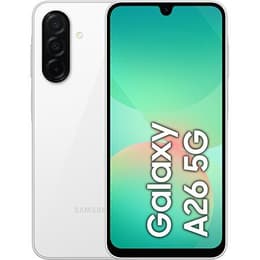
Galaxy A26
Galaxy A26
Starting at

Refurbished price:£152.00

Versus £419.55 new

See options
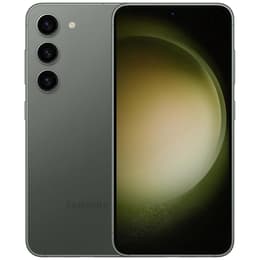
Galaxy S23
Galaxy S23
Starting at

Refurbished price:£186.84

Versus £1,019.00 new

See options

Ratings

The Samsung Galaxy A26 (2025) and the Samsung Galaxy S23 (2023) represent different segments of Samsung's smartphone lineup, offering distinct experiences tailored to varying user needs. While the Galaxy A26 focuses on extended software support and a larger display, the Galaxy S23 prioritizes compact design, powerful performance, and advanced camera capabilities. Both devices run on the Android operating system, but their underlying hardware and software longevity differ significantly.

Scores

Durability

When considering the practical lifespan of these devices, several factors come into play, including their release timelines, software support, and physical durability.

  • Release Timeline and Software Longevity: The Galaxy A26, released in March 2025, benefits from a more recent launch, promising an impressive six years of operating system upgrades and security updates, extending its support until 2031. In contrast, the Galaxy S23, launched in February 2023, offers four years of OS updates and five years of security updates, with support concluding around 2028. This means the A26 will receive software support for a longer duration, potentially making it a more future-proof option for users prioritizing software longevity. [1, 3, 6, 7, 8, 9, 11, 29, 36, 39, 41]
  • Durability Features: Both smartphones incorporate robust build materials. The Galaxy A26 features Gorilla Glass Victus Plus on both its front and back, along with an IP67 rating for dust and water resistance, indicating protection against immersion in up to 1 meter of fresh water for 30 minutes. The Galaxy S23, on the other hand, is equipped with Gorilla Glass Victus 2 and boasts an IP68 rating, offering enhanced protection against dust and water, allowing for immersion in up to 1.5 meters of fresh water for 30 minutes. [6, 9, 10, 11, 19, 29, 30, 38, 39]
  • Repairability: The Galaxy S23 has shown improvements in repairability compared to its predecessors, with features like battery pull tabs making certain repairs more straightforward. While specific repairability scores for the A26 are less detailed, the S23's design considerations for easier servicing could contribute to its practical lifespan. [19, 30, 35, 38]

Year of Release

2024

2023

Compatible with latest Update

Yes

Yes

OS

Android

Android

Foldable

No

No

Performance

The performance of a smartphone significantly impacts daily usability, from launching applications to handling demanding tasks and multitasking.

  • Processor Capabilities: The Galaxy S23 is powered by a custom-tuned processor designed for flagship performance, enabling it to handle demanding applications, intensive mobile gaming, and complex multitasking with notable smoothness and responsiveness. This specialized hardware offers higher processing and graphics speeds. [4, 15, 18, 20, 24, 27, 37] The Galaxy A26 features a mid-range processor that provides sufficient power for everyday tasks and casual gaming. While it performs well for general use, some users might experience occasional lag when multitasking heavily or running very demanding applications. [6, 9, 12, 16, 25, 41, 45]
  • System Responsiveness and Multitasking: The Galaxy S23 generally offers a consistently fluid user experience, with quick app loading times and seamless transitions between applications, even with multiple apps open. The Galaxy A26 delivers a smooth experience for typical daily usage, but its performance headroom is less extensive, meaning it might not maintain the same level of responsiveness under sustained heavy loads. [6, 12, 22, 33, 34, 41, 45]
  • Storage and RAM: Both devices offer various storage configurations, with the Galaxy S23 providing options that include faster storage technology (UFS 4.0) in its higher capacity variants, which can contribute to quicker app launches and data transfers. The Galaxy S23 typically comes with 8GB of RAM, while the Galaxy A26 offers 6GB or 8GB options. More RAM generally aids in smoother multitasking. [3, 4, 6, 8, 9, 24, 25, 31, 37, 41]

Memory (GB)

8 GB

8 GB

Screen quality

The display is a primary interface for user interaction, and both devices offer vibrant viewing experiences with some key differences.

  • Display Technology and Clarity: Both the Galaxy A26 and Galaxy S23 feature AMOLED display technology, known for its deep blacks and vibrant colors. The Galaxy A26 has a larger 6.7-inch Super AMOLED display with Full HD+ resolution, providing a spacious viewing area. The Galaxy S23 features a more compact 6.1-inch Dynamic AMOLED 2x display, also with Full HD+ resolution, offering a sharp and clear visual experience. [1, 3, 4, 6, 9, 11, 17, 21, 22, 26, 29, 31, 37, 39, 41]
  • Brightness and Outdoor Visibility: The Galaxy S23's display is noted for being brighter and more colorful, with significantly better HDR performance, making it highly readable even in bright outdoor conditions. The Galaxy A26's Super AMOLED display offers excellent color vibrance and contrast, but its brightness levels can be challenging in direct sunlight, making content viewing difficult at times. [10, 11, 17, 21, 22, 26, 29]
  • Refresh Rate and Smoothness: Both smartphones feature a 120Hz refresh rate, which contributes to smoother scrolling, more fluid animations, and a more responsive feel during interactions. This high refresh rate enhances the overall visual experience on both devices. [1, 6, 9, 11, 17, 29, 31, 37, 39, 41]

Resolution

1080 x 2340

1080 x 2340

Audiovisual

The camera systems on both the Galaxy A26 and Galaxy S23 cater to different levels of photography and videography needs.

  • Rear Camera System: The Galaxy S23 features a versatile triple-camera setup, including a 50MP main sensor, a 12MP ultrawide lens, and a 10MP telephoto lens with 3x optical zoom. This configuration allows for a wider range of photographic styles, including detailed zoomed-in shots. The Galaxy A26 also has a triple-camera system with a 50MP main sensor (with OIS), an 8MP ultrawide, and a 2MP macro lens. [6, 9, 16, 17, 27, 31, 37, 39]
  • Photography Performance: The Galaxy S23's camera array is generally considered excellent, delivering high-quality photos with good detail and color accuracy in various lighting conditions. Its low-light performance is also strong. The Galaxy A26's main camera performs decently in good lighting, offering good dynamic range, but its low-light capabilities and the performance of its ultrawide and macro sensors tend to decline in challenging light. [6, 17, 21, 26, 34]
  • Video Recording and Front Camera: The Galaxy S23 excels in video recording, offering high-quality video with good stabilization and a range of features. Its 12MP front camera also provides clear selfies. The Galaxy A26 can record 4K video at 30fps, though without electronic image stabilization (EIS), resulting in potentially shaky footage; 1080p recording offers better stabilization. Its 13MP front camera is considered good for selfies. [6, 9, 16, 17, 26, 37, 39]

Front camera

13 megapixels

12 megapixels

Miscellaneous

Beyond the core specifications, several practical elements contribute to the overall user experience and device functionality.

  • Connectivity and Ports: Both devices support 5G connectivity for fast mobile data. The Galaxy S23 likely features more advanced Wi-Fi standards (e.g., Wi-Fi 6E) due to its flagship processor, while the Galaxy A26 supports Wi-Fi 5. Both include Bluetooth and NFC. The Galaxy A26 has a USB-C port, but notably lacks a 3.5mm headphone jack, a feature also absent on the Galaxy S23. [6, 9, 11, 37]
  • Biometric Security: The Galaxy S23 incorporates an in-display fingerprint sensor for secure and convenient unlocking. The Galaxy A26 features a side-mounted fingerprint scanner, integrated into the power button, which is also fast and reliable. [6, 21, 37, 39]
  • Design and Handling: The Galaxy S23 offers a more compact form factor with a 6.1-inch display, making it easier for one-handed use and pocketability. The Galaxy A26, with its larger 6.7-inch display, provides a more expansive screen experience, though it results in a larger overall device. Both phones feature modern designs, with the A26 having a glass back and an IP67 rating, and the S23 having a glass back with Gorilla Glass Victus 2 and an IP68 rating. [6, 10, 17, 26, 37, 39]

Weight

197 g

350 g

Screen size (in)

6.5

6.1

Mobile network

5G

5G

SIM card

Dual Physical SIM

Physical SIM + eSIM

Carrier compatibility

Unlocked

Unlocked

Connector

USB-C

USB-C

The Samsung Galaxy A26 and Galaxy S23 cater to different user priorities, each excelling in specific areas. The Galaxy A26 is praised for its vibrant AMOLED display, long software support, and robust battery life, making it a solid choice for users who value longevity and a spacious screen for media consumption and everyday tasks. However, some users have noted that its performance can be less consistent during heavy multitasking, and its single speaker might not offer the richest audio experience. [1, 6, 10, 11, 12, 17, 29, 39, 40, 41, 43, 45]

Conversely, the Galaxy S23 receives acclaim for its powerful processor, compact design, and versatile, high-quality camera system. Users appreciate its smooth performance for demanding applications and gaming, as well as its brighter display and improved durability. Criticisms sometimes point to its smaller battery capacity compared to larger phones, though many find it sufficient for a full day's use, and occasional software-related lags have been reported. [2, 4, 5, 13, 14, 15, 18, 21, 22, 23, 24, 26, 27, 33, 34, 37]

Users prioritizing a device with a longer software update commitment and a larger screen for general use and media consumption may find the Galaxy A26 well-suited to their needs. Its IP67 rating and Gorilla Glass Victus Plus also offer good everyday durability. For those who require top-tier performance for intensive gaming, advanced photography, and a more compact, premium build with superior display brightness and an IP68 rating, the Galaxy S23 remains a compelling option. When considering either device, exploring quality-assured refurbished options can provide an eco-friendly alternative for making an informed choice.

See all articles

Our recent comparisons