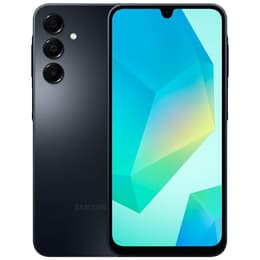


Galaxy A16 Vs Google Pixel 9 Pro

Galaxy A16
Galaxy A16
Starting at

Refurbished price:£100.62

Versus £206.96 new

See options
Google Pixel 9 Pro
Google Pixel 9 Pro
Starting at

Refurbished price:£395.25

Versus £917.17 new

See options

Ratings

The Samsung Galaxy A16 and the Google Pixel 9 Pro represent distinct approaches to the modern smartphone, released in late 2024 and mid-2024 respectively. While both operate on the Android platform, the Galaxy A16 is positioned as a device offering extended software support and essential features, whereas the Pixel 9 Pro focuses on delivering a premium experience with advanced camera capabilities and high-end performance. These differences cater to varying user priorities, from everyday reliability to cutting-edge technology.

Scores

Durability

The longevity of a smartphone is significantly influenced by its software support and physical resilience. Both devices offer substantial update commitments, contributing to a longer practical lifespan.

  • Software Updates: The Samsung Galaxy A16 launched with Android 14 and is promised six years of operating system upgrades and security updates, extending its support until at least October 2030. The Google Pixel 9 Pro, also launching with Android 14, offers an even longer commitment of seven years for both OS and security updates.
  • Build Materials: The Galaxy A16 features a construction with a plastic back and frame, complemented by a glass front. The Pixel 9 Pro utilizes more robust materials, including Gorilla Glass Victus 2 on both the front and back, encased in a metal frame.
  • Environmental Protection: The Pixel 9 Pro carries an IP68 rating, indicating high resistance to dust and water immersion. While some sources mention the Galaxy A16 as being rated for dust and water resistance, a specific IP rating is not consistently provided across all specifications.

Year of Release

2024

2024

Compatible with latest Update

Yes

Yes

OS

Android

Android

Foldable

No

No

Performance

Performance is a key differentiator, impacting how smoothly applications run and how efficiently the device handles demanding tasks. The internal components of each phone are tailored to their respective market segments.

  • Processing Power: The Galaxy A16 is equipped with an octa-core processor, such as the MediaTek Helio G99 or Exynos 1330, depending on the region. This setup is designed to manage everyday tasks and general usage effectively. The Pixel 9 Pro features Google's Tensor G4 processor, an octa-core chipset engineered for high-end performance, capable of handling intensive applications and complex multitasking with greater responsiveness.
  • Memory and Storage: The Galaxy A16 offers various configurations, including 4GB, 6GB, or 8GB of RAM, alongside 128GB or 256GB of internal storage, which is expandable via a microSD card up to 1.5TB. The Pixel 9 Pro comes with a substantial 16GB of LPDDR5X RAM and storage options ranging from 128GB to 1TB, utilizing UFS 3.1 technology, but does not support external memory expansion.
  • Real-world Responsiveness: Users of the Galaxy A16 can expect smooth operation for common activities like web browsing and social media, though some lag might occur during heavy multitasking. The Pixel 9 Pro is designed to deliver a consistently fluid experience, excelling in demanding scenarios such as advanced gaming and professional applications, with minimal delays.

Memory (GB)

4 GB

16 GB

Screen quality

The display is the primary interface for user interaction, and both devices offer distinct visual experiences tailored to their design philosophies.

  • Display Technology and Clarity: The Galaxy A16 features a 6.7-inch Super AMOLED display with a Full HD+ resolution (1080 x 2340 pixels), providing vibrant colors and good contrast for media consumption. The Pixel 9 Pro boasts a 6.3-inch Super Actua LTPO OLED display with a higher resolution of 1280 x 2856 pixels, resulting in a sharper image with greater detail.
  • Brightness and Refresh Rate: The Galaxy A16 offers a 90Hz refresh rate for smoother scrolling and an HBM (High Brightness Mode) of 800 nits, with measured peak brightness around 808 nits, suitable for most indoor and outdoor conditions. The Pixel 9 Pro features an adaptive refresh rate ranging from 1Hz to 120Hz, optimizing power consumption and smoothness, along with a peak brightness of 3000 nits and 2000 nits for HDR content, ensuring excellent visibility even in bright sunlight.
  • Screen Protection: The Galaxy A16 includes Gorilla Glass for screen protection, though the specific version is not always detailed. The Pixel 9 Pro is protected by Gorilla Glass Victus 2, offering enhanced durability against scratches and drops.

Resolution

1080 x 2340

1280 x 2856

Screen type

Super AMOLED

LTPO OLED

Audiovisual

Camera capabilities are a significant factor for many users, and these devices offer different strengths in their photographic and videographic systems.

  • Rear Camera System: The Galaxy A16 is equipped with a triple rear camera setup, including a 50MP main sensor, a 5MP ultrawide lens, and a 2MP macro lens. The Pixel 9 Pro features a more advanced triple rear camera system, comprising a 50MP main sensor with optical image stabilization (OIS), a 48MP ultrawide lens with macro autofocus, and a 48MP telephoto lens offering 5x optical zoom and OIS.
  • Photography Features: The Galaxy A16's main camera performs well in daylight, but its low-light performance and secondary sensors are less capable. The Pixel 9 Pro excels in various lighting conditions, leveraging its larger sensors, OIS, and computational photography features like Night Sight for enhanced low-light images. The Pixel also offers advanced AI features for photo editing.
  • Video Recording: The Galaxy A16 records video at Full HD (1080p) at 30 frames per second, utilizing electronic image stabilization (gyro-EIS). The Pixel 9 Pro supports 4K video recording at 60 frames per second and can achieve 8K resolution through cloud-based Video Boost upscaling, benefiting from OIS and advanced stabilization for smoother footage.
  • Front Camera: For selfies and video calls, the Galaxy A16 has a 13MP front camera. The Pixel 9 Pro features a higher-resolution 42MP front camera with autofocus, designed to capture sharper and brighter images, particularly in challenging lighting.

Main camera

50 megapixels

50 megapixels

Front camera

13 megapixels

42 megapixels

Miscellaneous

Beyond core performance and display, several practical elements contribute to the overall user experience and daily usability of a smartphone.

  • Battery Capacity and Charging: Both devices are equipped with substantial batteries; the Galaxy A16 has a 5000mAh battery, while the Pixel 9 Pro features a 4700mAh battery. The Galaxy A16 supports 25W wired fast charging but lacks wireless charging. The Pixel 9 Pro offers faster 45W wired charging, capable of reaching approximately 55% charge in 30 minutes, and also includes 21W wireless charging and reverse wireless charging capabilities.
  • Connectivity and Ports: Both phones support 5G connectivity and modern Wi-Fi standards. The Galaxy A16 includes Wi-Fi 802.11 a/b/g/n/ac and Bluetooth 5.3, with a USB Type-C 2.0 port. The Pixel 9 Pro supports newer Wi-Fi 7/6E/6 standards and Bluetooth 5.3, also featuring a USB Type-C port.
  • Biometrics and Design: The Galaxy A16 incorporates a side-mounted fingerprint sensor integrated into the power button. The Pixel 9 Pro utilizes an in-display fingerprint sensor for biometric authentication. In terms of physical design, the Galaxy A16 measures 164.6 x 77.9 x 7.9mm and weighs 200g, while the Pixel 9 Pro is slightly more compact at 152.8 x 72 x 8.5mm and weighs 199g.

Weight

200 g

199 g

Screen size (in)

6.7

6.3

Mobile network

4G

5G

SIM card

Dual Physical SIM

Physical SIM + eSIM

Carrier compatibility

Unlocked

Unlocked

Connector

USB-C

USB-C

The Samsung Galaxy A16 and Google Pixel 9 Pro cater to different segments of the smartphone market, each with distinct strengths and user profiles in mind. User feedback for the Galaxy A16 often highlights its impressive battery life, with many reporting it can last up to two days with moderate use, and its commitment to six years of software updates is a frequently praised aspect for a device in its category. However, some users note that its charging speed is slower compared to competitors, and its camera performance in low light can be a limitation.

The Google Pixel 9 Pro, on the other hand, receives consistent acclaim for its advanced camera system, particularly its computational photography capabilities and improved selfie camera. Its high-resolution, bright display and robust performance are also frequently lauded. Criticisms sometimes point to its video recording capabilities, with some users finding the 8K video upscaling via cloud processing less ideal than native recording, and the charging speed, while improved, not being the fastest in the premium segment.

Users prioritizing extended software support, reliable battery life, and expandable storage for everyday tasks may find the Galaxy A16 well-suited to their needs. It represents a practical and durable choice for those seeking a long-term device without requiring top-tier performance in every aspect. Conversely, individuals who place a high value on cutting-edge camera technology, a vibrant and sharp display, and powerful processing for demanding applications will likely lean towards the Pixel 9 Pro. Its premium build and advanced features are designed for users who want a flagship experience.

For those considering either device, exploring quality-assured refurbished options can provide an eco-friendly alternative, offering access to these technologies while supporting sustainable consumption.


See all articles

Our recent comparisons