
Galaxy A16 5G Vs Galaxy A55

Galaxy A16 5G
Galaxy A16 5G
Starting at

Refurbished price:£103.00

Versus £205.87 new

See options
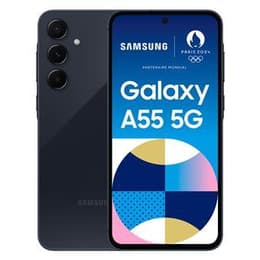
Galaxy A55
Galaxy A55
Starting at

Refurbished price:£193.21

Versus £479.00 new

See options

Ratings

The Samsung Galaxy A16 5G and the Samsung Galaxy A55 are both mid-range smartphones from Samsung's popular A-series, offering distinct features for different user needs. The Galaxy A55, released in March 2024, emphasizes a more robust build and enhanced performance, while the Galaxy A16 5G, launched in late 2024 and early 2025, focuses on extended software support and a slightly larger display. Both devices operate on the Android platform, providing access to a wide ecosystem of applications and services.

Scores

Durability

When considering the long-term usability of these devices, their release timelines and software support policies are key factors.

  • Release Timeline: The Galaxy A55 was introduced in March 2024, making it an established option. The Galaxy A16 5G followed later, with its European release in October 2024 and US availability in January 2025.
  • Software Longevity: The Galaxy A16 5G is notable for its extended software commitment, promising six years of operating system and security updates, with support expected to continue until October 2030. In contrast, the Galaxy A55 is slated to receive four major OS updates and five years of security updates.
  • Build and Repairability: The Galaxy A55 features a more premium construction with a glass front and back, protected by Corning Gorilla Glass Victus+, and an aluminum frame, along with an IP67 rating for dust and water resistance. The Galaxy A16 5G utilizes plastic materials and carries an IP54 rating, indicating a lesser degree of protection against dust and splashes.

Year of Release

2024

2024

Compatible with latest Update

Yes

Yes

OS

Android

Android

Foldable

No

No

Performance

The performance capabilities of these smartphones cater to varying demands, primarily influenced by their internal processing units and memory configurations.

  • Processor Capabilities: The Galaxy A55 is equipped with a more advanced processor, manufactured on a 4nm process, which contributes to its ability to handle demanding applications, multitasking, and streaming smoothly. The Galaxy A16 5G features a processor built on a 5nm process, providing sufficient power for everyday tasks like browsing, email, and media consumption.
  • Multitasking and Responsiveness: With higher base RAM options, the Galaxy A55 generally offers a more fluid experience when switching between multiple applications and engaging in more intensive mobile gaming. The Galaxy A16 5G, while capable for general use, may exhibit occasional lag during rapid app switching or when processing burst photography.
  • Storage Options: Both devices offer 128GB and 256GB internal storage variants, with expandable storage via a microSD card. The Galaxy A16 5G supports expansion up to 1.5TB, while the Galaxy A55 supports up to 1TB.

Memory (GB)

4 GB

8 GB

Screen quality

The visual experience on both phones is delivered through Super AMOLED displays, though with some distinctions in size, refresh rate, and brightness.

  • Display Technology and Clarity: Both the Galaxy A16 5G and Galaxy A55 feature Super AMOLED displays with FHD+ resolution (1080 x 2340 pixels), providing vibrant colors and deep blacks for an engaging viewing experience.
  • Refresh Rate and Brightness: The Galaxy A55 offers a smoother visual experience with an adaptive 120Hz refresh rate and a peak brightness of 1000 nits in High Brightness Mode, enhancing visibility in various lighting conditions, including direct sunlight. The Galaxy A16 5G has a 90Hz refresh rate and a peak brightness of 800 nits, which provides clear visuals indoors but may present challenges with outdoor visibility under bright conditions.
  • Screen Size: The Galaxy A16 5G features a slightly larger 6.7-inch display, offering a more expansive canvas for content consumption. The Galaxy A55 has a 6.6-inch display.

Resolution

1080 x 2340

1080 x 2340

Screen type

Super AMOLED

Super AMOLED

Audiovisual

The camera systems on these devices are designed to capture everyday moments, with the Galaxy A55 offering more advanced features for photography and videography.

  • Rear Camera System: The Galaxy A55 is equipped with a versatile triple-camera setup, including a 50MP main sensor with Optical Image Stabilization (OIS), a 12MP ultrawide lens with a 123-degree field of view, and a 5MP macro lens. The Galaxy A16 5G also features a triple-lens system with a 50MP main sensor, a 5MP ultrawide lens, and a 2MP macro lens, but it lacks OIS on its main camera.
  • Photography Performance: The Galaxy A55's main camera delivers crisp, detailed photos with good color vibrancy and dynamic range, performing well in various lighting conditions, including improved low-light performance with Nightography features. The Galaxy A16 5G's main camera captures decent images in good light, but low-light photos may appear less detailed and somewhat muddy.
  • Video Recording and Front Camera: The Galaxy A55 supports 4K video recording at 30 frames per second from both its main and 32MP front cameras, benefiting from OIS and Video Digital Image Stabilization (VDIS) for smoother footage. The Galaxy A16 5G records video up to Full HD at 30 frames per second and has a 13MP front camera.

Main camera

50 megapixels

50 megapixels

Front camera

13 megapixels

32 megapixels

Miscellaneous

Beyond core specifications, several practical features and design elements differentiate the user experience of these two smartphones.

  • Connectivity and Ports: Both devices support 5G connectivity, but the Galaxy A55 includes Wi-Fi 6 for faster and more stable wireless connections, while the Galaxy A16 5G supports Wi-Fi 5. Both utilize a USB Type-C 2.0 port for charging and data transfer. The Galaxy A16 5G uses its USB-C port for audio output, whereas the Galaxy A55 does not feature a traditional headphone jack.
  • Biometrics and Audio: The Galaxy A55 incorporates an in-display fingerprint sensor for secure unlocking and offers dual speakers for a more immersive audio experience. The Galaxy A16 5G likely features a side-mounted fingerprint sensor and a single bottom-firing speaker.
  • Design and Handling: The Galaxy A55 has dimensions of 161.1 x 77.4 x 8.2 mm and weighs 213 grams, featuring a metal frame and glass construction. The Galaxy A16 5G is slightly larger at 164.6 x 77.9 x 7.9 mm and weighs 200 grams, with a slimmer profile and plastic build.

Weight

200 g

213 g

Screen size (in)

6.7

6.6

Mobile network

5G

5G

SIM card

Dual Physical SIM

Dual Physical SIM

Carrier compatibility

Unlocked

Unlocked

Connector

USB-C

USB-C

User feedback often highlights the Galaxy A55's robust build quality and capable camera system as strong points, with many appreciating its premium feel and consistent performance for daily tasks and moderate gaming. Some users note that while its processor is efficient, it may not match the raw power of some competitors in its segment. The Galaxy A16 5G is frequently praised for its impressive software update commitment, offering peace of mind for long-term use, and its vibrant Super AMOLED display. However, some criticisms point to its performance for demanding applications and its less advanced camera features compared to higher-tier models.

Users prioritizing a durable device with a more premium feel, a higher refresh rate display, and a more versatile camera system, particularly for photography and 4K video recording, may find the Galaxy A55 well-suited to their needs. Its enhanced processing power also benefits those who engage in more intensive multitasking or mobile gaming. Conversely, users who value extended software longevity, a slightly larger screen for media consumption, and a device that handles everyday tasks reliably will likely lean toward the Galaxy A16 5G. This device is also a practical choice for those seeking an eco-friendly alternative through quality-assured refurbished options.

Ultimately, the decision between these two Samsung Galaxy smartphones depends on individual priorities, balancing factors like build quality, performance demands, camera capabilities, and long-term software support.


See all articles

Our recent comparisons