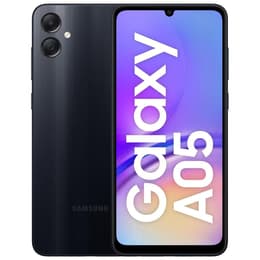


Galaxy A05 Vs Google Pixel 9 Pro

Galaxy A05
Galaxy A05
Starting at

Refurbished price:£89.00

Versus £144.96 new

See options
Google Pixel 9 Pro
Google Pixel 9 Pro
Starting at

Refurbished price:£395.25

Versus £917.17 new

See options

Ratings

The Samsung Galaxy A05, released in October 2023, and the Google Pixel 9 Pro, launched in September 2024, represent distinct segments of the smartphone market. While both operate on the Android platform, the Galaxy A05 is designed as an entry-level device, focusing on core functionalities, whereas the Pixel 9 Pro is a flagship offering, emphasizing advanced performance, camera capabilities, and a premium user experience. These differences are evident across their hardware, software support, and overall feature sets.

Scores

Durability

The expected lifespan and software support differ significantly between these two devices, reflecting their respective market positions.

  • Release Timeline and Age: The Galaxy A05 was released in October 2023, making it an older model compared to the Pixel 9 Pro, which launched in September 2024. This difference in release year directly impacts their remaining software support cycles.
  • OS Support Duration: The Galaxy A05 is expected to receive two major Android OS upgrades and four years of security updates from its release. In contrast, the Google Pixel 9 Pro offers a more extended commitment, with seven years of both OS and security updates. This means the Pixel 9 Pro will continue to receive new features and security patches for a considerably longer period.
  • Build Materials and Durability: The Galaxy A05 features a glass front with a plastic back and frame, offering a practical construction. The Pixel 9 Pro, however, utilizes Gorilla Glass Victus 2 for both its front and back, paired with a metal frame, contributing to enhanced durability. The Pixel 9 Pro also boasts an IP68 rating for dust and water resistance, a feature not typically found on entry-level devices like the Galaxy A05.

Year of Release

2023

2024

Compatible with latest Update

No

Yes

OS

Android

Android

Foldable

No

No

Performance

Performance capabilities vary widely between these two smartphones, catering to different user demands and expectations.

  • Processor Capabilities: The Galaxy A05 is equipped with an octa-core processor designed for everyday tasks such as browsing, social media, and light applications. It handles multitasking for basic usage. The Pixel 9 Pro, powered by a current-generation Google Tensor processor, delivers robust performance suitable for demanding applications, intensive gaming, and complex AI-driven tasks, ensuring smooth operation and responsiveness.
  • Multitasking and Responsiveness: The Galaxy A05 typically comes with 4GB or 6GB of RAM, which is sufficient for managing a few applications simultaneously without significant slowdowns. The Pixel 9 Pro, featuring 16GB of RAM, provides substantial headroom for extensive multitasking, running numerous applications in the background, and handling resource-intensive processes with ease.
  • Storage Options: The Galaxy A05 offers internal storage options of 64GB or 128GB, with the flexibility of expandable storage via a microSD card. The Pixel 9 Pro provides a range of storage capacities from 128GB up to 1TB, but it does not support expandable storage. Users who require vast amounts of internal storage for apps, media, and files without relying on cloud services may find the Pixel 9 Pro's higher tiers beneficial, while the A05 offers flexibility for those who prefer physical expansion.

Memory (GB)

4 GB

16 GB

Screen quality

The visual experience offered by these two devices differs significantly due to their display technologies and specifications.

  • Display Technology and Clarity: The Galaxy A05 features a 6.7-inch PLS LCD display with a resolution of 720 x 1600 pixels, resulting in a pixel density of approximately 262 pixels per inch. This provides a clear viewing experience for general use. The Pixel 9 Pro, on the other hand, boasts a 6.3-inch LTPO OLED display with a much higher resolution of 2856 x 1280 pixels and a pixel density of around 495 pixels per inch. This OLED technology delivers deeper blacks, higher contrast, and more vibrant colors, offering a more immersive visual experience.
  • Refresh Rate and Smoothness: The Galaxy A05 has a standard 60Hz refresh rate, which is suitable for everyday interactions. The Pixel 9 Pro features an adaptive refresh rate that can dynamically adjust from 1Hz to 120Hz. This higher and variable refresh rate contributes to smoother scrolling, more fluid animations, and a more responsive feel during gaming or fast-paced content consumption.
  • Brightness Levels: For outdoor visibility, the Galaxy A05's display offers adequate brightness for typical indoor and shaded outdoor environments. The Pixel 9 Pro's OLED display can reach significantly higher brightness levels, with up to 2000 nits in High Brightness Mode (HBM) and a peak brightness of 3000 nits. This allows for excellent readability even under direct sunlight.

Resolution

720 x 1600

1280 x 2856

Screen type

PLS LCD

LTPO OLED

Audiovisual

The camera systems of the Galaxy A05 and Pixel 9 Pro are designed for different levels of photographic capability and user expectations.

  • Rear Camera System: The Galaxy A05 features a dual-camera setup with a 50MP main sensor and a 2MP depth sensor, suitable for capturing everyday photos and portraits with background blur. The Pixel 9 Pro offers a more versatile triple-camera system, including a 50MP main sensor with optical image stabilization (OIS), a 48MP ultrawide lens with macro focus, and a 48MP telephoto lens capable of 5x optical zoom and 30x Super Res Zoom. This allows for a wider range of photographic styles, from expansive landscapes to detailed close-ups and distant subjects.
  • Photography Performance: The Galaxy A05 performs adequately in well-lit conditions, but users may notice some shutter lag and inconsistencies in challenging lighting. The Pixel 9 Pro excels in various lighting scenarios, including low light, thanks to its larger sensors, OIS on multiple lenses, and advanced computational photography features. It consistently produces detailed images with natural colors and improved white balancing.
  • Video Recording and Front Camera: Both devices can record video at 1080p resolution, with the Galaxy A05 typically at 30 frames per second (fps) and lacking stabilization. The Pixel 9 Pro supports up to 8K video recording at 30fps and 4K at 60fps, featuring robust electronic and optical image stabilization for smooth footage. The Galaxy A05 has an 8MP front camera, while the Pixel 9 Pro features a higher-resolution 42MP front camera with autofocus, providing more detailed selfies and improved video call quality.

Main camera

50 megapixels

50 megapixels

Front camera

8 megapixels

42 megapixels

Miscellaneous

Beyond core specifications, several practical elements differentiate these two smartphones in terms of user experience and functionality.

  • Connectivity Options: The Galaxy A05 supports 4G LTE networks and Wi-Fi 5 (802.11 a/b/g/n/ac). The Pixel 9 Pro offers more advanced connectivity, including 5G capabilities and the newer Wi-Fi 7 standard, providing faster mobile data speeds and more efficient wireless internet connections. Both devices support Bluetooth 5.3.
  • Ports and Sensors: The Galaxy A05 includes a USB-C 2.0 port for charging and data transfer, along with a traditional 3.5mm headphone jack. It features basic sensors like an accelerometer and proximity sensor, but notably lacks a fingerprint sensor. The Pixel 9 Pro uses a USB-C 3.2 port, offering faster data transfer speeds, and omits the headphone jack. It integrates an in-display ultrasonic fingerprint sensor and face recognition for secure unlocking, alongside a comprehensive suite of sensors including a gyroscope, barometer, and thermometer.
  • Design and Handling: The Galaxy A05 has a glass front with a plastic back and frame, weighing 195 grams. Its larger 6.7-inch display, combined with thicker bezels, can make it somewhat unwieldy for one-handed use. The Pixel 9 Pro, with its 6.3-inch display, glass front and back, and metal frame, weighs 199 grams. Its refined design and slightly more compact form factor, despite premium materials, aim for comfortable handling.

Weight

195 g

199 g

Screen size (in)

6.7

6.3

Mobile network

4G

5G

SIM card

Dual Physical SIM

Physical SIM + eSIM

Carrier compatibility

Unlocked

Unlocked

Connector

USB-C

USB-C

The Samsung Galaxy A05 and Google Pixel 9 Pro cater to distinct user needs and priorities. The Galaxy A05 is praised for its large display, long battery life, and sufficient performance for essential daily tasks, making it a practical choice for users seeking a straightforward smartphone experience. Common criticisms often point to its lower display resolution, lack of a fingerprint sensor, and basic camera performance, particularly in challenging conditions.

The Google Pixel 9 Pro, conversely, receives acclaim for its exceptional camera system, robust performance driven by its advanced processor, vibrant and adaptive OLED display, and extended software support. Users frequently highlight its innovative AI features and impressive battery longevity as key strengths. Some discussions might revolve around its premium positioning, but overall sentiment leans towards its comprehensive feature set and polished user experience.

Users prioritizing a device for communication, social media, and media consumption on a large screen, and who value expandable storage, may find the Galaxy A05 well-suited to their needs. It offers a reliable foundation for essential smartphone functions. Conversely, users who demand top-tier photography and videography capabilities, powerful performance for demanding applications and gaming, a superior display, and long-term software updates will likely lean towards the Google Pixel 9 Pro. Its advanced features and premium build are designed for a more intensive and feature-rich smartphone experience.

For those considering their environmental impact and looking for quality-assured options, exploring refurbished versions of either device can be a sustainable choice, offering a way to extend the life cycle of electronics.


See all articles

Our recent comparisons