

Compare models

Galaxy A04S Vs Google Pixel 10 Pro XL

  • 1-year minimum warranty
  • Free delivery on all items
  • Free 30-day returns
Galaxy A04S
Starting at

Refurbished price:£99.00

Versus £179.00 new

See options
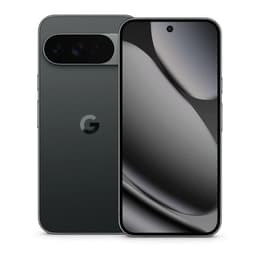
Google Pixel 10 Pro XL
Starting at

Refurbished price:£502.00

Versus £1,196.66 new

See options

Differences at a glance

The Samsung Galaxy A04S (2022) and the Google Pixel 10 Pro XL (2025) represent entirely different tiers and eras of the smartphone market, serving vastly distinct user needs. While the Galaxy A04S focuses on essential communication and everyday utility, the Pixel 10 Pro XL delivers a high-end mobile experience driven by advanced hardware and comprehensive software integrations. Both devices run on the Android operating system, though they offer different interface styles and update schedules suited to their respective device categories.

Available Models

Colour

Storage (GB)

Scores

Durability

When comparing device longevity and support timelines, these two models cater to very different expectations regarding hardware endurance and software updates.

  • Software support timelines: The Google Pixel 10 Pro XL benefits from an extended multi-year software update commitment, ensuring long-term security patches and OS upgrades, whereas the Galaxy A04S operates on a more traditional entry-level update cycle.
  • Hardware resilience and build: The Pixel 10 Pro XL features robust dust and water resistance ratings alongside strengthened glass protection, while the Galaxy A04S relies on standard plastic construction suited for careful everyday handling.
  • Expected practical lifespan: Users can anticipate many years of fluid operation from the higher-tier memory and processor configuration on the Pixel, whereas the Galaxy A04S is best suited for straightforward, shorter-term daily communication tasks.

Year of Release

2022

2025

Compatible with latest Update

Yes

Yes

OS

Android

Android

Foldable

No

No

Performance

System responsiveness and daily multitasking capabilities vary significantly based on internal hardware allocations and memory sizing.

  • Multitasking capacity: The Pixel 10 Pro XL handles demanding applications and heavy background processing effortlessly due to its substantial random-access memory allocation, while the Galaxy A04S manages basic tasks and standard messaging apps with modest efficiency.
  • Storage configurations: Users have access to expansive internal storage capacities on the Pixel 10 Pro XL for large media libraries, whereas the Galaxy A04S provides lighter base storage often supplemented by expandable card slots.
  • Battery behavior: Both devices pack large capacity power cells designed to get typical users through a full day, though charging speeds and power management optimizations differ notably between the entry-level and flagship tiers.

Screen quality

Visual output and screen interactions differ sharply in panel technology, sharpness, and motion fluidity.

  • Display technology: The Pixel 10 Pro XL utilizes a vibrant OLED panel offering deep contrast levels and rich color reproduction, whereas the Galaxy A04S employs a standard PLS LCD screen configured for basic media viewing.
  • Refresh rate and motion: The Pixel 10 Pro XL features an adaptive high refresh rate for exceptionally smooth scrolling, while the Galaxy A04S provides a fixed moderate refresh rate adequate for standard navigation.
  • Outdoor visibility: High peak brightness capabilities on the Pixel 10 Pro XL ensure clear legibility under direct sunlight, whereas the Galaxy A04S requires manual shade adjustment in bright outdoor environments.

Resolution

720 x 1600

1344x2992

Audiovisual

Photography and multimedia output reflect the distinct engineering goals of each device category.

  • Camera versatility: The Pixel 10 Pro XL incorporates a versatile multi-lens rear array featuring dedicated telephoto and ultra-wide capabilities, complemented by advanced computational photography tools, while the Galaxy A04S provides a simpler primary sensor setup for basic snapshots.
  • Low-light performance: Advanced sensor processing allows the Pixel 10 Pro XL to capture sharp, detailed night images, whereas the Galaxy A04S performs best in well-lit daylight conditions.
  • Media and audio output: Stereo speaker configurations on the Pixel 10 Pro XL deliver an immersive soundstage for video streaming, while the Galaxy A04S relies on a simpler mono speaker layout for casual audio playback.

Front camera

5 megapixels

42 megapixels

Miscellaneous

Practical daily usability elements encompass connectivity standards, physical dimensions, and security sensors.

  • Connectivity options: The Pixel 10 Pro XL supports rapid modern network standards including advanced Wi-Fi and 5G connectivity, whereas the Galaxy A04S focuses primarily on standard 4G networks and traditional wireless bands.
  • Biometric security: Secure authentication is handled via responsive in-display scanning on the Pixel 10 Pro XL, compared to a convenient side-mounted fingerprint sensor integrated into the power button of the Galaxy A04S.
  • Physical handling: The Galaxy A04S offers a lightweight plastic build that is easy to hold, while the Pixel 10 Pro XL presents a heavier, premium glass and metal chassis that feels substantial in the hand.

Weight

195 g

232 g

Screen size (in)

6.5

6.8

Mobile network

4G

5G

SIM card

Dual Physical SIM

Physical SIM + eSIM

Carrier compatibility

Unlocked

Unlocked

What the community thinks

Choosing between these two smartphones depends entirely on individual daily requirements and intended use cases. Users prioritizing high-end photography, seamless multitasking, long-term software support, and a premium viewing experience will find the Google Pixel 10 Pro XL well-suited to their needs. Conversely, users seeking a straightforward, reliable communication tool for basic calls, messaging, and light web browsing will find the Galaxy A04S aligns better with minimal requirements.

For those exploring sustainable purchasing routes, opting for a quality-assured refurbished option provides an eco-friendly alternative that extends device life cycles without compromising performance standards. Evaluating these core differences ensures an informed decision that matches personal workflow and usage habits.


Our recent comparisons