
Tech Experts

Updated on 5 October 2026
5 October 2026
8 mins read

Jamie Richards
Freelance technology journalist
The new iPhone Duo has everyone talking about folding phones – but the reality is these complex, cutting-edge devices negatively impact the environment more than your average device. Writer Jamie Richards spoke to industry experts to find out about the true carbon cost.
After years of speculation from industry analysts and diehard fans, Apple has finally announced the iPhone Duo – its first-ever folding phone. Naturally, the iPhone Duo has already sparked a lot of discussion. From its passport shape to its specialised version of iOS (with unique animations and splitscreen app control), as well as its extremely high starting price (£1,999 / €2,339), the tech world is abuzz with discourse and debate around Apple’s latest handset. With their complex hinged mechanisms, flexible inner displays, and powerful internal components, foldable phones are considered cutting-edge devices, and typically sit right at the top of a given phone maker’s lineup. However, this complexity comes at a cost… and I’m not just talking about the iPhone Duo’s wallet-busting price tag.
Folding phones require more individual parts and more precise engineering than conventional ‘slab’ phones, and are known to wear down more quickly due to the relative fragility of their flexible polymer screens. In theory, that means more faults, more repairs, and quicker replacement than a hardier slab phone. And even though Apple has pledged to achieve carbon neutrality by 2030, this year’s iPhone keynote made no mention of the environmental impact of the company’s new foldable devices.
So, what is the environmental impact that comes from foldables? The best data we have on the increased carbon impact of folding phones versus regular slab phones comes from phone makers’ own reporting. Apple and Google have published ‘Product Environmental Reports’ for the latest iPhone and Pixel phones respectively.


According to Apple’s latest product environmental reports, the iPhone 18 Pro’s production accounts for 46kg of CO2 equivalent emissions (CO2e). In comparison, producing an iPhone Duo creates 75kg of CO2 equivalent emissions – 63 per cent more than the iPhone 18 Pro. The report breaks down the iPhone Duo’s production-related emissions into 47kg CO2e of electricity emissions and 27kg CO2e of emissions related to materials and processing. Being a physically larger, more complex device means the iPhone Duo requires more materials, machining, and ultimately carbon emissions than its slab phone counterpart.
Google comes in with a smaller, but still significant, gap between its latest slab and foldable phones. The company’s latest reports says that Pixel 11 Pro production emits 68kg of CO2e, while the Pixel 11 Pro Fold’s production accounts for 91.4kg of CO2e – a difference of 34 per cent.
"At manufacturer-authorized repair shops, they are likely to come to the conclusion that it’s easier to just replace foldable phones than to actually repair them" - Liz Chamberlain, the director of sustainability at iFixit
Folding phones make up a very small proportion of all phone sales. According to SellCell, a total of 1.85 billion smartphones were sold in 2025, with Omdia reporting that 18.2 million folding phones were shipped. Under these estimates, just under 1 per cent of all phone shipments are folding phones. Yet Omdia estimates that folding phone shipments will reach 36 million units by 2028, driven by wide-format folding phones like the iPhone Duo and Galaxy Z Fold 8. That could lead to millions of tons of extra CO2 equivalent emissions.
Of course, there’s more to a phone’s climate impact than manufacturing and production, and how we use our devices over their life span can determine their ultimate climate cost. Liz Chamberlain is the director of sustainability at iFixit. She tells me that folding phones present new challenges when it comes to long-term use: “From a repairability perspective, they’re a very difficult category to deal with. And for that reason, I’m worried from a sustainability perspective, too. Even at manufacturer-authorized shops, they may come to the conclusion that it’s easier to just replace than to repair.”
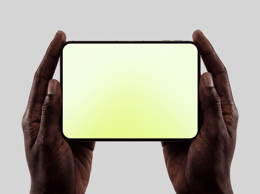
Apple's iPhone Duo
Famous for scoring devices on repairability, iFixit has never awarded a folding phone more than a four out of ten. Chamberlain tells me that the complexity of entering the phone through a folding screen, and the two-sided nature of the internal components, make repair extremely difficult: “The flexible OLED is a huge, expensive component that is adhered to the phone in a way meant to keep dust and water out. That involves a lot of adhesive. The Motorola Razr 2020, for example, had a battery glued directly to the screen.”
It seems the features that make folding phones so desirable also make them fragile in comparison to standard smartphones. As Chamberlain explains, anything that makes it harder to hold onto phones for longer amplifies their climate effects: “If we all kept our smartphones for five years instead of four years, that would reduce the overall impact of smartphones by about 30%. Replacing a phone more often means significantly more mining and manufacturing impact.”
We tend to forget about our devices once we’re done with them – but the increased material and carbon cost of folding phones could have implications even at the end of their life cycle.
Scott Butler is executive director at UK non-profit Material Focus, which leads campaigns on tech recycling and material conservation. He tells me that the impact of phone manufacturing stretches across the globe: “All that material that’s sitting in our mobile phones is the same material that we need for smart and green tech development. A lot of trouble has gone into getting that out of the ground, a lot of social impact, a lot of environmental impact, a lot of economic impact.”

The iPhone Duo is Apple's first foray into foldable phones
Butler adds that the climate impact of new devices can be amplified by rare elements and designs making it harder to recover materials. The iPhone Duo, for example, uses grade 5 titanium in its frame. “I’m not aware of any UK recycler of electrical products that focuses on recovering titanium from electricals,” he says, “material decisions are being made with no mind to their recovery.”
“We did some work looking at copper demand in the UK by 2030 – around 30% of the copper in the UK is sitting idle in cables and remote controls. Cumulatively, given the extent of technology, it really adds up.”
Still, Butler is adamant that recycling is a better way to deal with unused phones than throwing them out or consigning them to a bedroom drawer: “It’s easy to underestimate the adaptability and the innovations that these recyclers have. They do know their stuff, and I think they will adapt. It’s also important to reflect that the foldable market is relatively very small.”
As mentioned, folding phones make up about one per cent of phone sales – but iFixit’s Liz Chamberlain expects the iPhone Duo to change that: “What worries me about the iPhone Duo is less any technical problem than the fact that people who were not aware of this category are now thinking ‘maybe I want a foldable smartphone’. That kind of volume will change the game.”
If you’re looking to buy a folding phone, choosing to buy refurbished can limit your climate impact. Allan Rifat is senior refurbishment operations manager at Back Market, and he tells me that the harder a phone is to manufacture, the greater the environmental benefit of giving it a second life.
“A foldable is exactly the kind of device you’d want to be extra cautious about buying ‘as-is’ from a stranger,” says Rifat. “Back Market is a marketplace of professional refurbishers that have to adhere to our Quality Charter [...] Every device goes through an up-to-100-point quality inspection before being listed*”.
“The iPhone uses grade 5 titanium in its frame, a material that is very difficult to recover so will make repairs more complex." - Scott Butler, executive director at Material Focus
Back Market’s Premium grade refurbishments come with genuine manufacturer parts and a manufacturer-made battery with at least 90 per cent of its original capacity remaining, which Rifat says is especially valuable for folding phones. “These genuine manufacturer parts go to the heart of the device, because the hinge and flexible screen are central to how it works,” says Rifat.
Rifat adds that the inner screen and hinge of a folding phone are “genuine wear points” due to mechanical stress, so buyers should always seek to make an informed choice before purchasing. “Check the cosmetic grade that works for you, look at the battery health, and make sure there is a real warranty behind your purchase,” she advises. “That’s true whether you buy from us or anyone else.”
It’s unlikely that folding phones will overtake slab phones in terms of sales anytime soon – but the Apple effect is real, and it’s reasonable to expect a rise in popularity for this cutting-edge, but carbon-intensive, form factor. While the iPhone Duo and other foldables continue to immerse tech fans in new features and folding screens, they also tell us that the priorities of big tech may still be out of sync with the planet.
Jamie Richards is a freelance tech and culture journalist. His work has appeared in titles including TechRadar, Tom's Guide, and No Bells.