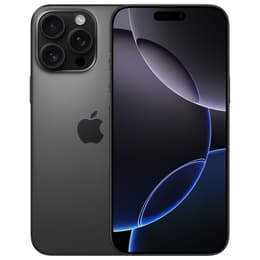

Google Pixel Fold Vs iPhone 16 Pro Max

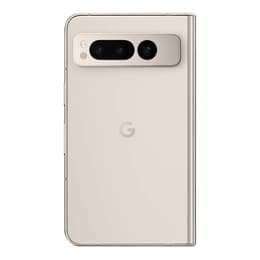
Google Pixel Fold
Google Pixel Fold
Starting at

Refurbished price:£371.00

Versus £1,499.00 new

See options
iPhone 16 Pro Max
iPhone 16 Pro Max
Starting at

Refurbished price:£658.00

Versus £1,199.00 new

See options

Ratings

The Google Pixel Fold, released in June 2023, marked Google's entry into the foldable smartphone market, offering a unique dual-screen experience. In contrast, the iPhone 16 Pro Max, launched in September 2024, represents Apple's latest iteration of its traditional flagship smartphone, focusing on a large, immersive display and advanced capabilities. The primary distinction lies in their form factors: the Pixel Fold transforms from a compact device into a larger tablet-like screen, while the iPhone 16 Pro Max maintains a conventional, expansive smartphone design. Both devices operate on their respective ecosystems, Android for the Pixel Fold and iOS for the iPhone 16 Pro Max, each offering distinct user interfaces and app experiences.

Scores

Durability

The longevity of a smartphone is influenced by its release timeline, software support, and physical durability. These two devices offer different profiles in terms of expected lifespan and resilience.

  • Release Timeline: The Google Pixel Fold was released in June 2023, making it an earlier model compared to the iPhone 16 Pro Max, which launched in September 2024. This difference in release date inherently means the iPhone 16 Pro Max will likely receive software updates for a longer period.
  • Software Support: Google typically provides up to five major Android upgrades for its Pixel devices, with the Pixel Fold expected to receive updates up to Android 18 or 19. Apple is known for its extended software support, offering major iOS updates for approximately five to seven years from a device's release. The iPhone 16 Pro Max, having launched in late 2024, is anticipated to receive iOS updates well into the early 2030s, potentially offering a longer period of new features and security patches.
  • Physical Durability: The Pixel Fold features a foldable design with a plastic protective layer on its internal screen, which can be more susceptible to damage than a traditional glass display. Its cover screen is protected by Gorilla Glass Victus. The iPhone 16 Pro Max utilizes a titanium frame and a Ceramic Shield front, designed for enhanced resistance against drops and scratches.

Year of Release

2023

2024

Compatible with latest Update

Yes

Yes

Foldable

Yes

No

Performance

Performance in modern smartphones is crucial for handling demanding applications, multitasking, and ensuring a responsive user experience. Both devices are equipped with powerful internal components tailored to their respective operating systems.

  • Processing Power: The Google Pixel Fold is powered by a Google Tensor G2 processor, designed to efficiently handle everyday tasks, AI-driven features, and moderate gaming. The iPhone 16 Pro Max features Apple's A18 Pro chip, which provides robust performance for intensive applications, advanced graphics, and complex computational tasks, often leading to smoother operation in high-demand scenarios.
  • Multitasking and Responsiveness: With 12GB of RAM, the Pixel Fold is well-equipped for managing multiple applications simultaneously and switching between them fluidly. The iPhone 16 Pro Max, while potentially featuring a different RAM configuration, is optimized through its iOS ecosystem to deliver seamless multitasking and a highly responsive interface, ensuring applications launch quickly and operate without delay.
  • Storage and Battery Behavior: Both devices offer ample storage options, with the Pixel Fold available in 256GB and 512GB configurations, and the iPhone 16 Pro Max offering 256GB, 512GB, and 1TB. The Pixel Fold houses a 4821 mAh battery, designed to power its dual-screen setup. The iPhone 16 Pro Max features a 4676 mAh battery, which, combined with software optimizations and an efficient processor, delivers extended usage times, with some tests indicating over 25 hours of video playback.

Memory (GB)

12 GB

8 GB

Screen quality

The display is a primary interaction point for users, and these two devices offer distinct visual experiences due to their form factors and display technologies.

  • Display Technology and Size: The Google Pixel Fold features two OLED displays: a 5.8-inch cover screen and a 7.6-inch internal foldable screen when unfolded. The iPhone 16 Pro Max boasts a single, expansive 6.9-inch Super Retina XDR OLED display. Both devices utilize OLED technology, known for deep blacks and vibrant colors.
  • Resolution and Clarity: The Pixel Fold's cover display has a resolution of 1080 x 2092 pixels (408 ppi), while its internal screen offers 2208 x 1840 pixels (380 ppi). The iPhone 16 Pro Max provides a resolution of 2868 x 1320 pixels (460 ppi), offering a sharp and detailed viewing experience across its larger surface.
  • Brightness and Refresh Rate: Both devices feature high refresh rates of up to 120Hz, contributing to smoother scrolling and more fluid animations. The Pixel Fold's cover screen can reach up to 1550 nits peak brightness, and its internal screen up to 1450 nits. The iPhone 16 Pro Max offers a peak brightness of 2000 nits outdoors, enhancing visibility in bright conditions.

Resolution

1840 x 2208

1320 x 2868

Screen type

Foldable OLED

LTPO Super Retina XDR OLED

Audiovisual

Both the Google Pixel Fold and the iPhone 16 Pro Max are designed to deliver high-quality photographic and videographic capabilities, albeit with different approaches to their camera systems.

  • Rear Camera Systems: The Pixel Fold features a triple rear camera setup, including a 48MP main sensor, a 10.8MP ultrawide lens, and a 10.8MP telephoto lens with 5x optical zoom. The iPhone 16 Pro Max also comes with a triple camera system, featuring a 48MP main sensor, a 48MP ultrawide lens, and a 12MP telephoto lens with 5x optical zoom and a tetraprism design for enhanced stability.
  • Photography Performance: The Pixel Fold leverages Google's computational photography for excellent image processing, particularly in everyday and low-light conditions. The iPhone 16 Pro Max, with its upgraded sensors and advanced image processing, is expected to deliver bright, detailed photos with improved low-light performance and accurate color reproduction.
  • Video Recording and Audio: Both devices offer high-quality video recording. The Pixel Fold supports up to 4K at 60fps. The iPhone 16 Pro Max can record video at up to 4K at 120fps, including ProRes 4K at 120fps when connected to external storage, catering to users with professional video needs. Both devices are expected to provide clear audio capture and robust speaker output for media consumption.

Main camera

48 megapixels

48 megapixels

Front camera

8 megapixels

12 megapixels

Miscellaneous

Beyond core performance and display, several practical elements contribute to the overall user experience and daily usability of these smartphones.

  • Connectivity and Ports: Both devices offer modern connectivity options, including 5G capabilities. The Pixel Fold supports Wi-Fi 6 and Bluetooth 5.2. The iPhone 16 Pro Max steps up with Wi-Fi 7 support and features a USB-C port with faster data transfer speeds, allowing for versatile connectivity and charging.
  • Biometrics and User Interaction: The Pixel Fold incorporates a fingerprint sensor for secure unlocking. The iPhone 16 Pro Max relies on Face ID for facial recognition. Additionally, the iPhone 16 Pro Max introduces an Action Button and a dedicated Camera Control button, offering customizable shortcuts and quick access to camera functions.
  • Design and Handling: The Pixel Fold, when folded, measures 139.7 x 79.5 x 12.1 mm and weighs 283 grams, offering a compact yet thick profile. Unfolded, it becomes a larger, thinner tablet-like device at 139.7 x 158.7 x 5.8 mm. The iPhone 16 Pro Max, with its traditional form factor, measures 163.0 x 77.6 x 8.25 mm and weighs 227 grams, featuring a titanium design for a balance of durability and reduced weight.

Weight

283 g

227 g

Screen size (in)

7.6

6.9

Mobile network

5G

5G

SIM card

Physical SIM + eSIM

Physical SIM + eSIM

Carrier compatibility

Unlocked

Unlocked

Connector

USB-C

USB-C (USB 3)

The Google Pixel Fold and the iPhone 16 Pro Max cater to different user preferences, primarily distinguished by their form factors and operating systems. Users of the Pixel Fold often praise its innovative foldable design, which offers the versatility of a large tablet screen in a pocketable format, along with Google's renowned computational photography. Some common criticisms have included its initial weight and the perceived durability of the internal folding screen. Early adopters also noted the aspect ratio of the cover screen as being somewhat narrow for typical smartphone use.

The iPhone 16 Pro Max is frequently lauded for its powerful performance, exceptional camera system, and industry-leading battery life, often exceeding a full day of heavy use. Its large, vibrant display and robust build quality are also consistent points of praise. Potential concerns for some users might revolve around its substantial size and weight, which can impact one-handed usability.

Users prioritizing a versatile device that can transform from a standard smartphone into a larger screen for productivity or media consumption may find the Google Pixel Fold well-suited to their needs. Its unique form factor and Android's flexibility offer a distinct experience. Conversely, users who value a consistently powerful, long-lasting, and highly refined traditional smartphone experience with a top-tier camera and extensive software support will likely lean toward the iPhone 16 Pro Max. Both devices represent premium offerings in their respective categories, and considering a quality-assured refurbished option can be a sustainable choice for either model.

See all articles

Our recent comparisons