
Google Pixel 9 Pro Vs iPhone 15 Plus

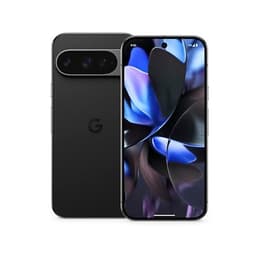
Google Pixel 9 Pro
Google Pixel 9 Pro
Starting at

Refurbished price:£395.25

Versus £917.17 new

See options
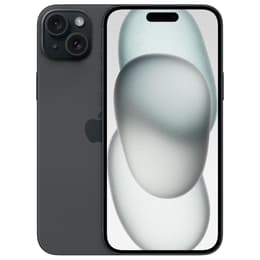
iPhone 15 Plus
iPhone 15 Plus
Starting at

Refurbished price:£344.00

Versus £799.00 new

See options

Ratings

The Google Pixel 9 Pro, released in August 2024, and the Apple iPhone 15 Plus, launched in September 2023, represent distinct approaches to the modern smartphone experience. While both offer large displays and capable camera systems, they diverge significantly in their operating systems, core performance philosophies, and camera features. The Pixel 9 Pro runs on Android, emphasizing AI integration and computational photography, whereas the iPhone 15 Plus operates on iOS, focusing on a streamlined ecosystem and consistent performance.

Scores

Durability

When considering the long-term usability of these devices, their respective release timelines and software support policies are key factors.

  • Release Timeline: The Google Pixel 9 Pro was released in August 2024, making it a newer device compared to the iPhone 15 Plus, which launched in September 2023. This difference in release year can impact the duration of future software support.
  • OS Support Duration: Google typically provides seven years of OS and security updates for its Pixel Pro models, meaning the Pixel 9 Pro is expected to receive support until Android 22. Apple generally offers 5-6 years of iOS updates for its iPhones. This suggests the Pixel 9 Pro may have a longer official software support window.
  • Practical Lifespan: Both devices are constructed with durable materials and are designed for several years of use. The iPhone 15 Plus features Ceramic Shield protection and IP68 water resistance, while the Pixel 9 Pro also boasts IP68 rating and Gorilla Glass Victus 2. Users can expect both phones to remain functional and receive critical updates for an extended period, though the Pixel 9 Pro's longer software commitment offers an edge in future-proofing.

Year of Release

2024

2023

Compatible with latest Update

Yes

Yes

OS

Android

iOS

Foldable

No

No

Performance

Both the Google Pixel 9 Pro and the iPhone 15 Plus deliver robust performance for everyday tasks, though their underlying architectures and real-world impacts differ.

  • Everyday Responsiveness: The Pixel 9 Pro, powered by its current-generation Tensor G4 processor, handles demanding applications and multitasking smoothly, with a focus on efficient AI processing for features like real-time language translation and computational photography. The iPhone 15 Plus, featuring the A16 Bionic chip, provides consistently fluid performance across iOS applications and offers strong gaming capabilities.
  • Multitasking and Storage: The Pixel 9 Pro typically comes with 16GB of RAM, which aids in managing numerous open applications and complex tasks. The iPhone 15 Plus, with 6GB of RAM, leverages iOS's optimized memory management to ensure a smooth multitasking experience. Both devices offer various storage options, including 128GB, 256GB, and 512GB, with the Pixel 9 Pro also offering a 1TB option.
  • Battery Behavior: The Pixel 9 Pro is equipped with a 4,700mAh battery, providing impressive longevity, with users reporting it can last through a full day of heavy use and often beyond. The iPhone 15 Plus, with a 4,383mAh battery, is also noted for its excellent battery life, often lasting more than a day with moderate to heavy usage.

Memory (GB)

16 GB

6 GB

Screen quality

The visual experience on both devices is characterized by vibrant displays, though there are distinctions in their underlying technology and refresh rates.

  • Display Technology and Clarity: Both phones feature OLED displays, offering deep blacks and vibrant colors. The Pixel 9 Pro has a 6.3-inch Super Actua OLED panel with a resolution of 2856 x 1280 pixels, resulting in a sharp image. The iPhone 15 Plus sports a 6.7-inch Super Retina XDR OLED display with a resolution of 2796 x 1290 pixels, also providing excellent clarity.
  • Brightness and Outdoor Visibility: The Pixel 9 Pro offers a peak brightness of 3,000 nits, ensuring good visibility even in bright sunlight. The iPhone 15 Plus reaches a peak outdoor brightness of 2,000 nits, making it easy to read outdoors.
  • Refresh Rate and Smoothness: A notable difference lies in the refresh rate. The Pixel 9 Pro features an adaptive refresh rate that ranges from 1Hz to 120Hz, providing a very smooth scrolling and animation experience. The iPhone 15 Plus, however, has a standard 60Hz refresh rate, which is consistent but does not offer the same level of visual fluidity as a higher refresh rate display.

Resolution

1280 x 2856

1290 x 2796

Screen type

LTPO OLED

Super Retina XDR OLED

Audiovisual

Both smartphones offer advanced camera systems, each with its own strengths in capturing photos and videos.

  • Rear Camera System: The Google Pixel 9 Pro features a versatile triple-lens setup, including a 50MP main camera, a 48MP ultrawide camera, and a 48MP telephoto camera with 5x optical zoom. It is known for its computational photography, producing detailed images with natural colors. The iPhone 15 Plus has a dual-camera system with a 48MP main camera and a 12MP ultrawide camera. Its 48MP main sensor can also enable a 2x telephoto-like zoom by cropping the sensor.
  • Photography Performance: The Pixel 9 Pro excels in low-light conditions and offers innovative AI photography tools like 'Add Me' and enhanced Super Res Zoom. The iPhone 15 Plus delivers consistent image quality with accurate exposure and white balance, and its main camera produces detailed 24MP shots.
  • Video Recording and Audio: iPhones are generally praised for their video recording capabilities, with the iPhone 15 Plus offering 4K video recording at various frame rates and excellent stabilization. The Pixel 9 Pro also supports 4K 60fps video capture, with Google's Video Boost tool capable of upscaling footage to 8K. Both devices provide good microphone quality for calls and recording, and stereo speakers for media consumption.

Main camera

50 megapixels

48 megapixels

Front camera

42 megapixels

12 megapixels

Miscellaneous

Beyond core performance and camera, several practical elements contribute to the overall user experience of these smartphones.

  • Connectivity and Ports: Both the Pixel 9 Pro and iPhone 15 Plus support 5G connectivity, Wi-Fi 6 (with the Pixel 9 Pro potentially supporting Wi-Fi 7), and Bluetooth 5.3. A significant change for the iPhone 15 Plus is the adoption of a USB-C port, aligning it with the Pixel 9 Pro, which also uses USB-C.
  • Biometric Security: The Pixel 9 Pro features an in-display ultrasonic fingerprint sensor for secure unlocking. The iPhone 15 Plus relies on Face ID for facial recognition.
  • Design and Handling: The Pixel 9 Pro has dimensions of 152.8 x 72 x 8.5 mm and weighs 199 grams, offering a relatively compact feel for a Pro model. The iPhone 15 Plus is larger, measuring 160.9 x 77.8 x 7.8 mm and weighing 201 grams. Both devices feature premium build materials, including glass backs and aluminum frames, and are IP68 rated for dust and water resistance.

Weight

199 g

201 g

Screen size (in)

6.3

6.7

Mobile network

5G

5G

SIM card

Physical SIM + eSIM

Physical SIM + eSIM

Carrier compatibility

Unlocked

Unlocked

Connector

USB-C

USB-C

User sentiment for the Google Pixel 9 Pro often highlights its exceptional camera capabilities, particularly its advanced AI features and computational photography, which produce detailed and natural-looking images. Users also praise its long software support and the smooth integration of Android's latest features. Some discussions point to the Pixel's unique software experience and smart functionalities as key advantages. Criticisms, while less frequent for this model, sometimes touch upon the consistency of battery performance under extreme loads, though overall battery life is generally well-regarded.

The iPhone 15 Plus is frequently lauded for its outstanding battery life, often cited as one of the best among smartphones, capable of lasting well over a day for many users. Its consistent performance, robust iOS ecosystem, and strong video recording capabilities are also common points of praise. Some users appreciate the larger display for media consumption and the transition to USB-C connectivity. A frequent point of discussion, however, is the 60Hz refresh rate, which some users find less fluid compared to devices with higher refresh rates. The absence of a dedicated telephoto lens is also occasionally noted as a limitation for advanced photography.

Users prioritizing an advanced and AI-driven camera experience, coupled with a long software support timeline and a highly customizable Android operating system, may find the Google Pixel 9 Pro well-suited to their needs. Conversely, individuals who value exceptional battery longevity, a highly stable and secure ecosystem, consistent performance, and strong video capabilities will likely lean towards the iPhone 15 Plus. Both devices offer a quality-assured refurbished option, providing an eco-friendly alternative for consumers seeking reliable technology.


See all articles

Our recent comparisons