
Galaxy S25+ Vs Sony Xperia 1 IV

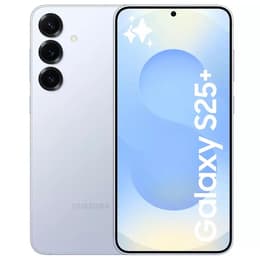
Galaxy S25+
Galaxy S25+
Starting at

Refurbished price:£549.00

Versus £958.39 new

See options
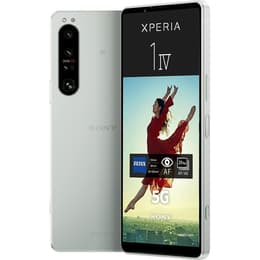
Sony Xperia 1 IV
Sony Xperia 1 IV
Starting at

Refurbished price:£347.00

Versus £1,500.00 new

See options

Ratings

The Samsung Galaxy S25 Plus, a flagship smartphone released in February 2025, and the Sony Xperia 1 IV, launched in May 2022, represent distinct approaches to high-end mobile technology. While both devices offer premium experiences, they diverge significantly in their core philosophies, particularly concerning display technology, camera capabilities, and software longevity. The Galaxy S25 Plus emphasizes a powerful, AI-driven user experience with extensive software support, whereas the Xperia 1 IV caters to multimedia enthusiasts with its unique 4K display and advanced camera controls.

Scores

Durability

The practical lifespan of a smartphone is influenced by its build quality, software support, and the availability of replacement parts. These two devices offer different trajectories in terms of longevity.

  • Release Timeline and OS Support: The Galaxy S25 Plus, released in February 2025, benefits from Samsung's commitment to seven years of operating system and security updates, with support extending into 2032. This provides a long window for software relevance and security. In contrast, the Sony Xperia 1 IV, launched in May 2022, typically receives three years of Android OS updates and three years of security patches for its flagship models, having initially shipped with Android 12 and being upgradable to Android 14.
  • Physical Durability: Both smartphones feature robust construction. The Galaxy S25 Plus incorporates Gorilla Glass Ceramic 2 or Gorilla Glass Victus 2 on the front and Gorilla Glass Victus Plus on the back, alongside an IP68 rating for dust and water resistance. The Xperia 1 IV also uses Corning Gorilla Glass Victus for its display and back panel and carries an IP68 rating, indicating similar levels of protection against environmental elements.
  • Repairability and Practical Lifespan: While specific repairability scores can vary, the newer Galaxy S25 Plus may benefit from more readily available parts and service infrastructure due to its recent release. The Xperia 1 IV, being an older model, might face increasing challenges in sourcing components over time. Users prioritizing extended software support and a longer period of manufacturer-backed updates will find the Galaxy S25 Plus more aligned with their needs, while the Xperia 1 IV, though well-built, has a shorter expected software support window.

Year of Release

2025

2022

OS

Android

Android

Foldable

No

No

Performance

Performance is a critical aspect for daily smartphone use, encompassing everything from app responsiveness to handling demanding tasks. Both devices deliver capable performance, though they originate from different generations of mobile processing technology.

  • Processing Power: The Galaxy S25 Plus is equipped with a current-generation processor, the Qualcomm Snapdragon 8 Elite for Galaxy, fabricated on a 3nm process. This chipset is designed for enhanced on-device AI capabilities and delivers significant improvements in CPU, GPU, and Neural Processing Unit (NPU) performance compared to previous generations, ensuring smooth operation for demanding applications and multitasking. The Xperia 1 IV, released earlier, features the Qualcomm Snapdragon 8 Gen 1 processor, built on a 4nm process. While still a powerful chipset, it represents an earlier generation of mobile processing.
  • Multitasking and Storage: Both devices offer 12GB of RAM, providing ample capacity for running multiple applications simultaneously without significant slowdowns. The Galaxy S25 Plus comes with 256GB or 512GB of internal storage, without expandable options. The Xperia 1 IV also offers 256GB or 512GB storage variants, but uniquely includes a microSD card slot for expansion up to 1TB, catering to users with extensive media libraries or large file storage needs.
  • Battery Behavior: The Galaxy S25 Plus houses a 4900 mAh battery, which, combined with its efficient processor and adaptive display, generally provides good battery life, often lasting over 13 hours in various tests. The Xperia 1 IV features a slightly larger 5000 mAh battery. However, user experiences with its battery life are mixed; while some report a full day of use, others note higher power consumption, particularly due to its 4K display and the Snapdragon 8 Gen 1 processor. The Xperia 1 IV supports 30W fast charging and wireless charging, while the S25 Plus supports 45W wired and 15W wireless charging.

Memory (GB)

12 GB

12 GB

Screen quality

The display is a primary interface for smartphone interaction, and both the Galaxy S25 Plus and the Xperia 1 IV offer high-quality viewing experiences with distinct characteristics.

  • Display Technology and Resolution: The Galaxy S25 Plus features a 6.7-inch Dynamic AMOLED 2X display with a QHD+ resolution of 3120x1440 pixels, resulting in a pixel density of approximately 513 ppi. This panel delivers deep blacks and vibrant colors. The Xperia 1 IV stands out with a 6.5-inch 4K HDR OLED display, offering a resolution of 3840x1644 pixels and a pixel density of around 643 ppi, providing exceptional sharpness, particularly for compatible content.
  • Brightness and Refresh Rate: The Galaxy S25 Plus boasts a high peak brightness of up to 2600 nits, ensuring excellent visibility even in bright outdoor conditions. Its adaptive refresh rate ranges from 1Hz to 120Hz, optimizing power consumption while providing smooth scrolling and responsiveness. The Xperia 1 IV also features a 120Hz refresh rate and an improved brightness over its predecessor, making it more usable outdoors, though some users note it may not reach the peak brightness levels of some competitors. It has a 240Hz touch sampling rate for responsive input.
  • Viewing Experience: The Galaxy S25 Plus offers a vibrant and bright display well-suited for general media consumption and daily tasks. The Xperia 1 IV's 21:9 aspect ratio and 4K resolution are particularly geared towards cinematic content, providing an immersive viewing experience for movies and high-resolution videos, though the 4K resolution is primarily active when viewing compatible media.

Resolution

1440x3120

1644 x 3840

Audiovisual

Both smartphones offer advanced camera systems, but they approach mobile photography and videography with different philosophies and feature sets.

  • Rear Camera Systems: The Galaxy S25 Plus features a versatile triple-camera setup: a 50 MP main sensor with optical image stabilization (OIS) and phase-detection autofocus (PDAF), a 12 MP ultra-wide camera with a 120° field of view, and a 10 MP telephoto lens offering 3x optical zoom, also with OIS and PDAF. The Xperia 1 IV also has a triple 12 MP camera system, all with ZEISS T* coating. It includes a 12 MP main sensor with OIS and PDAF, a 12 MP ultra-wide sensor with a 124° field of view and PDAF, and a unique 12 MP telephoto lens that provides continuous optical zoom between 85mm and 125mm (approximately 3.5x to 5.2x), also with OIS and PDAF.
  • Photography and Video Features: The Galaxy S25 Plus leverages advanced computational photography and AI features for image processing, delivering sharp and vibrant photos in various conditions, including improved low-light performance. It supports 8K video recording from its main camera. The Xperia 1 IV emphasizes manual controls and professional-grade video features through its Cinematography Pro and Videography Pro apps. All three rear cameras can record 4K video at up to 120fps, a notable feature for content creators. Its continuous optical zoom offers flexibility for framing subjects.
  • Front Camera and Audio: Both devices are equipped with a 12 MP front-facing camera. The Galaxy S25 Plus's front camera supports 4K video recording. The Xperia 1 IV's front camera also supports 4K video recording and features a larger sensor compared to its predecessor. For audio, the Xperia 1 IV includes front-facing dual stereo speakers and a 3.5mm headphone jack, catering to audio enthusiasts. The Galaxy S25 Plus offers stereo speakers but omits the headphone jack.

Miscellaneous

Beyond the core specifications, several practical elements contribute to the overall user experience and differentiate these two smartphones.

  • Connectivity and Ports: Both devices support 5G connectivity for high-speed mobile data. The Galaxy S25 Plus supports current Wi-Fi standards (likely Wi-Fi 6E or 7) and Bluetooth (likely 5.3 or 5.4), along with a USB-C port for charging and data transfer. The Xperia 1 IV supports Wi-Fi 6 and Bluetooth 5.2. A key differentiator for the Xperia 1 IV is the inclusion of a 3.5mm headphone jack and a dedicated microSD card slot for expandable storage, features not present on the Galaxy S25 Plus.
  • Biometrics and Sensors: The Galaxy S25 Plus typically features an in-display fingerprint sensor and supports facial recognition for secure unlocking. The Xperia 1 IV utilizes a side-mounted fingerprint sensor. Both devices include a standard array of sensors such as accelerometers, gyroscopes, and proximity sensors. The Galaxy S25 Plus also integrates advanced Galaxy AI features, enhancing various aspects of the user experience.
  • Design and Handling: The Galaxy S25 Plus measures 158.4 x 75.8 x 7.3 mm and weighs 190 grams, offering a balanced feel. The Xperia 1 IV is slightly taller and narrower at 165 x 71 x 8.2 mm and weighs 185 grams. Its 21:9 aspect ratio results in a taller, more slender form factor that can be comfortable for one-handed grip, though reaching the top of the screen may require adjustment. The Xperia 1 IV also includes a dedicated physical shutter button, appealing to photography enthusiasts.

Weight

190 g

185 g

Screen size (in)

6.7

6,5

Mobile network

5G

5G

SIM card

Dual Physical SIM

Physical SIM + eSIM

Carrier compatibility

Unlocked

Unlocked

The Samsung Galaxy S25 Plus and the Sony Xperia 1 IV cater to different user priorities, reflecting their respective design philosophies and release timelines. User feedback for the Galaxy S25 Plus often praises its powerful performance, vibrant and bright display, and the extensive software support provided by Samsung. Its integrated AI features are also frequently highlighted as enhancing the overall user experience. Some criticisms have occasionally pointed to the camera hardware being similar to its predecessor, though software improvements aim to refine image quality.

The Sony Xperia 1 IV is frequently lauded for its unique 4K OLED display, offering exceptional clarity for cinematic content, and its advanced camera system with continuous optical zoom and manual controls, which appeals to photography and videography enthusiasts. The inclusion of a 3.5mm headphone jack and expandable storage are also common points of praise. However, some users have noted mixed battery life performance, potentially due to the demanding 4K display and earlier-generation processor, and its software update policy is less extensive compared to newer flagships.

Users prioritizing a device with the latest processing power, a highly visible display, and a long-term software commitment, coupled with advanced AI capabilities, may find the Galaxy S25 Plus well-suited to their needs. Conversely, individuals who value a unique 4K display for media consumption, a highly customizable camera experience with true optical zoom, and traditional features like a headphone jack and expandable storage, might lean towards the Sony Xperia 1 IV. Both devices offer compelling features, and choosing between them depends on which specific aspects align best with individual usage patterns. For those considering either device, exploring a quality-assured refurbished option can be a sustainable choice.


See all articles

Our recent comparisons