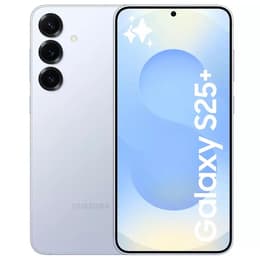


Galaxy S25+ Vs Google Pixel 9 Pro

Galaxy S25+
Galaxy S25+
Starting at

Refurbished price:£550.00

Versus £958.39 new

See options
Google Pixel 9 Pro
Google Pixel 9 Pro
Starting at

Refurbished price:£395.25

Versus £917.17 new

See options

Ratings

The Samsung Galaxy S25 Plus, released in early 2025, and the Google Pixel 9 Pro, launched in late 2024, are both advanced Android smartphones designed to offer a premium user experience. While both devices provide robust performance and sophisticated camera systems, they differentiate themselves through their display characteristics and approach to software-driven features. Both operate on the Android platform, ensuring a familiar experience for many users.

Scores

Durability

When considering the long-term usability of a smartphone, factors like release timeline, software support, and physical resilience are key.

  • Release and Support: The Samsung Galaxy S25 Plus was released in February 2025, while the Google Pixel 9 Pro arrived earlier, in August or September 2024, depending on the specific model variant. Both manufacturers offer extensive software support, with the Galaxy S25 Plus and Pixel 9 Pro each promising seven years of operating system upgrades and security updates from their respective launch dates. This commitment means both devices are designed for prolonged use, receiving updates well into the future.
  • Physical Durability: Both smartphones feature an IP68 rating for dust and water resistance, indicating protection against immersion in water and dust ingress. The Galaxy S25 Plus utilizes Gorilla Glass Victus 2 for both its front display and rear panel, alongside an aluminum frame. Similarly, the Pixel 9 Pro also incorporates Corning Gorilla Glass Victus 2 for its display and a silky matte glass back with a polished metal frame, which includes 100% recycled aluminum.
  • Expected Lifespan: Given the extended software support and robust build materials, both the Galaxy S25 Plus and Pixel 9 Pro are built to offer a practical lifespan that extends beyond typical upgrade cycles, making them suitable for users seeking a device they can rely on for many years.

Year of Release

2025

2024

OS

Android

Android

Foldable

No

No

Performance

The performance of a smartphone is central to its daily usability, influencing everything from app responsiveness to multitasking capabilities.

  • Processing Power: The Samsung Galaxy S25 Plus is equipped with a current-generation processor, designed to deliver smooth performance for demanding applications and multitasking. User reports indicate it handles gaming and intensive tasks without significant heating. The Google Pixel 9 Pro features its own custom-designed processor, optimized for artificial intelligence and machine learning tasks, which contributes to efficient everyday performance and advanced computational features.
  • Multitasking and Responsiveness: Both devices offer ample internal memory, with the Galaxy S25 Plus typically featuring 12 GB of RAM and the Pixel 9 Pro commonly equipped with 16 GB of RAM. This allows for fluid transitions between applications and efficient handling of multiple tasks simultaneously. The system responsiveness on both phones is generally high, ensuring a quick and seamless user experience.
  • Storage Options: The Galaxy S25 Plus is available with 256 GB or 512 GB of internal storage. The Pixel 9 Pro offers a wider range of storage configurations, including 128 GB, 256 GB, 512 GB, and up to 1 TB, providing more flexibility for users with varying storage needs.

Memory (GB)

12 GB

16 GB

Screen quality

The display is a primary interface for smartphone interaction, and both the Galaxy S25 Plus and Pixel 9 Pro offer high-quality viewing experiences with distinct characteristics.

  • Display Technology and Clarity: The Samsung Galaxy S25 Plus features a 6.7-inch Dynamic LTPO AMOLED 2X display, offering a QHD+ resolution of 3120x1440 pixels, resulting in a high pixel density for sharp and clear visuals. The Google Pixel 9 Pro comes with a 6.3-inch LTPO OLED display, providing a resolution of 2856x1280 pixels. Both displays deliver vibrant colors and deep blacks characteristic of OLED technology.
  • Brightness and Refresh Rate: Both phones support an adaptive refresh rate that can scale from 1 Hz to 120 Hz, ensuring smooth scrolling and fluid animations while conserving battery life when static content is displayed. The Galaxy S25 Plus can reach a peak brightness of up to 2600 nits, providing good visibility in bright outdoor conditions. The Pixel 9 Pro offers an even higher peak brightness of up to 3000 nits, enhancing outdoor readability and HDR content viewing.
  • Special Features: The Galaxy S25 Plus includes ProScaler, an AI-based technology designed to upscale lower-resolution content for improved viewing on its high-resolution display.

Resolution

1440x3120

1280 x 2856

Audiovisual

Both the Samsung Galaxy S25 Plus and the Google Pixel 9 Pro are equipped with advanced camera systems, each with its own strengths in capturing photos and videos.

  • Rear Camera Systems: The Galaxy S25 Plus features a triple rear camera setup, including a 50 MP main wide-angle lens, a 12 MP ultra-wide lens, and a 10 MP telephoto lens with 3x optical zoom. It is known for producing sharp, vibrant photos with punchy colors. The Pixel 9 Pro also sports a versatile triple rear camera system, comprising a 50 MP main sensor, a 48 MP ultrawide lens, and a 48 MP telephoto lens offering 5x optical zoom.
  • Photography Features: The Pixel 9 Pro is particularly recognized for its computational photography capabilities and AI-driven features such as Night Sight for low-light conditions, Astrophotography, and advanced Magic Editor tools like 'Add Me' and 'Auto Frame'. The Galaxy S25 Plus benefits from Samsung's Pro Visual Engine for enhanced image processing and offers various shooting modes including Portrait, Night, and Food.
  • Video Recording and Front Camera: Both devices are capable of high-quality video recording, with the Galaxy S25 Plus supporting 8K video capture. The Pixel 9 Pro also offers 8K video via its cloud-based Video Boost feature, which enhances video quality. For selfies and video calls, the Galaxy S25 Plus has a 12 MP front-facing camera, while the Pixel 9 Pro features a higher-resolution 42 MP front camera with autofocus.

Miscellaneous

Beyond core performance and camera, several practical elements contribute to the overall user experience of these smartphones.

  • Connectivity and Ports: Both the Galaxy S25 Plus and Pixel 9 Pro support modern connectivity standards, including 5G for fast mobile data, and advanced Wi-Fi and Bluetooth versions for efficient wireless connections. The Galaxy S25 Plus features a USB Type-C port, supporting USB 3.1 Gen 1 for data transfer and DisplayPort functionality.
  • Biometrics and Sensors: Both devices incorporate in-screen fingerprint sensors for secure and convenient unlocking. The Galaxy S25 Plus uses an ultrasonic sensor. Both phones also include a range of sensors such as accelerometers, gyroscopes, and ambient light sensors to enhance functionality.
  • Design and Handling: The Galaxy S25 Plus measures 158.4 x 75.8 x 7.3 mm and weighs 190 grams. The Pixel 9 Pro is slightly more compact at 152.8 x 72 x 8.5 mm and weighs 199 grams. The Galaxy S25 Plus features an aluminum frame and glass back, with recycled materials integrated into its construction. The Pixel 9 Pro also uses an aluminum frame made from 100% recycled content and a glass back.

Weight

190 g

199 g

Screen size (in)

6.7

6.3

Mobile network

5G

5G

SIM card

Dual Physical SIM

Physical SIM + eSIM

Carrier compatibility

Unlocked

Unlocked

The Samsung Galaxy S25 Plus and Google Pixel 9 Pro each present a compelling package for users seeking a high-end Android smartphone, though they cater to slightly different priorities. User feedback for the Galaxy S25 Plus often praises its excellent battery life, with many reporting it comfortably lasts a full day or even longer with moderate use. Its display is frequently highlighted for its vibrancy and clarity, and its overall performance is considered very smooth. Some users, however, have noted that while the camera is good, it might not represent a significant leap over previous generations in terms of hardware, with improvements largely coming from software.

The Google Pixel 9 Pro is consistently lauded for its exceptional camera capabilities, particularly its advanced computational photography and AI-driven features that simplify complex shots and enhance image quality. Its pure Android experience and immediate software updates are also strong points for many users. While its battery life is generally considered good, some users might find the Galaxy S25 Plus to offer slightly longer endurance.

Users prioritizing a larger, highly vibrant display with AI-enhanced upscaling and robust all-day battery performance may find the Samsung Galaxy S25 Plus to be a well-suited option. Conversely, individuals who place a premium on cutting-edge computational photography, exclusive AI features, and a streamlined Android experience with rapid updates will likely lean towards the Google Pixel 9 Pro. Both devices offer a long support life, making them sustainable choices, especially when considering quality-assured refurbished options as an eco-friendly alternative.


See all articles

Our recent comparisons