
Galaxy S24 Vs Google Pixel 6A

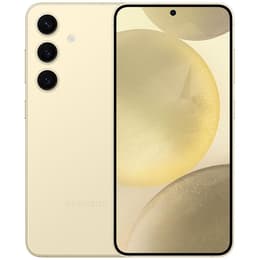
Galaxy S24
Galaxy S24
Starting at

Refurbished price:£273.00

Versus £817.67 new

See options
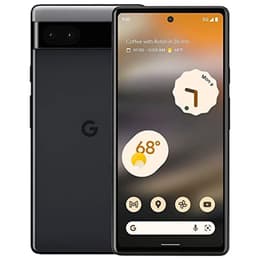
Google Pixel 6A
Google Pixel 6A
Starting at

Refurbished price:£107.00

Versus £459.00 new

See options

Ratings

The Samsung Galaxy S24, released in January 2024, and the Google Pixel 6A, launched in July 2022, represent distinct offerings within the Android smartphone market. While both devices operate on the Android platform, the Galaxy S24 is positioned as a modern flagship with advanced features, whereas the Pixel 6A was introduced as a mid-range option focusing on core Google experiences. The primary differentiators lie in their release timelines, performance capabilities, and camera systems, catering to different user priorities.

Scores

Durability

The expected lifespan of a smartphone is influenced by its physical durability and the duration of software support it receives. These two devices show notable differences in both aspects.

  • Release Timeline: The Galaxy S24 is a significantly newer device, released in January 2024. The Google Pixel 6A was released earlier, in July 2022. This age difference directly impacts their remaining software support and hardware modernity.
  • Software Longevity: Samsung has committed to an extensive seven years of OS and security updates for the Galaxy S24 series, meaning it will receive support until approximately 2031. The Google Pixel 6A was promised five years of updates from its release, extending its support until around 2027. This makes the Galaxy S24 a more future-proof option in terms of software.
  • Physical Durability: The Galaxy S24 features Corning Gorilla Glass Victus 2 on both its front and back, along with an aluminum frame, providing robust protection. It also boasts an IP68 rating for dust and water resistance, indicating it can withstand immersion in up to 1.5 meters of fresh water for 30 minutes. The Pixel 6A uses Corning Gorilla Glass 3 for its display and has a plastic back with an aluminum frame. It carries an IP67 rating, offering protection against dust and immersion in up to 1 meter of fresh water for 30 minutes.

Year of Release

2024

2022

Compatible with latest Update

Yes

Yes

OS

Android

Android

Foldable

No

No

Performance

Performance is a key area where the two devices diverge, largely due to their different market segments and release dates.

  • Processing Power: The Galaxy S24 is equipped with a current-generation processor (Snapdragon 8 Gen 3 in some regions, Exynos 2400 in others), enabling it to handle demanding applications, intensive multitasking, and graphic-heavy gaming with smooth responsiveness. The Pixel 6A features Google's first-generation Tensor chip, which provides capable performance for everyday tasks, general app usage, and moderate gaming within its segment.
  • Memory and Storage: The Galaxy S24 offers configurations with 8GB or 12GB of RAM, paired with storage options of 128GB, 256GB, or 512GB, utilizing faster UFS 3.1 or 4.0 storage depending on the capacity. The Pixel 6A comes with 6GB of RAM and 128GB of UFS 3.1 internal storage, which is sufficient for typical user needs but offers less headroom for heavy multitasking or extensive media libraries.
  • Battery Performance: The Galaxy S24 houses a 4000 mAh battery. The Pixel 6A has a slightly larger 4410 mAh battery. However, the S24's more efficient processor and adaptive display technology can optimize power consumption, leading to varying real-world battery experiences depending on usage patterns.

Memory (GB)

8 GB

6 GB

Screen quality

The visual experience offered by these smartphones differs significantly, primarily due to advancements in display technology over time.

  • Display Technology and Brightness: The Galaxy S24 features a Dynamic AMOLED 2X display with LTPO technology, allowing for a variable refresh rate and exceptional brightness, peaking at up to 2600 nits. This ensures excellent visibility even in bright outdoor conditions and vibrant color reproduction. The Pixel 6A uses an OLED display, which provides deep blacks and good contrast for an enjoyable viewing experience, though its peak brightness levels are generally lower than those of the S24.
  • Resolution and Clarity: The Galaxy S24 has a 6.2-inch display with a 2340 x 1080 pixel resolution, resulting in a clear and detailed image. The Pixel 6A features a 6.1-inch display with a 2400 x 1080 pixel resolution, offering a slightly higher pixel density due to its marginally smaller screen size. Both provide sharp visuals for everyday content consumption.
  • Refresh Rate: A key difference is the refresh rate. The Galaxy S24 boasts an adaptive refresh rate that can scale from 1Hz to 120Hz, providing smooth scrolling and fluid animations while conserving battery life when a high refresh rate isn't needed. The Pixel 6A has a standard 60Hz refresh rate, which is adequate for most tasks but will not offer the same level of visual fluidity as the S24.

Resolution

1080 x 2340

1080 x 2400

Screen type

Dynamic LTPO AMOLED 2X

OLED

Audiovisual

Both devices offer capable camera systems, but their approaches to photography and available features reflect their different market positions.

  • Rear Camera System: The Galaxy S24 features a versatile triple-camera setup on the rear, including a 50-megapixel main sensor, a 12-megapixel ultrawide lens, and a 10-megapixel telephoto lens with 3x optical zoom. This provides flexibility for various shooting scenarios, from wide landscapes to zoomed-in subjects. The Pixel 6A comes with a dual-camera system, comprising a 12.2-megapixel main sensor and a 12-megapixel ultrawide lens. It lacks a dedicated telephoto lens.
  • Photography Features and Quality: The Galaxy S24 benefits from Samsung's ProVisual Engine and advanced AI features, enhancing image processing, low-light performance (Nightography), and offering tools like Instant Slow-mo and Dual Recording. The Pixel 6A relies heavily on Google's renowned computational photography, which excels at producing consistently good images, especially in challenging lighting conditions, and includes features like Real Tone and Magic Eraser.
  • Front Camera and Video: For selfies and video calls, the Galaxy S24 has a 12-megapixel front camera. The Pixel 6A features an 8-megapixel front camera. In terms of video recording, the Galaxy S24 is capable of 8K video recording, along with advanced features for stabilization and dynamic range. The Pixel 6A supports 4K video recording at up to 60 frames per second.

Main camera

50 megapixels

12.2 megapixels

Front camera

12 megapixels

8 megapixels

Miscellaneous

Beyond the core specifications, several practical elements contribute to the overall user experience of each device.

  • Connectivity and Ports: The Galaxy S24 supports the latest connectivity standards, including 5G, Wi-Fi 6E (and potentially Wi-Fi 7 in some configurations), and Bluetooth 5.3, ensuring fast and reliable wireless connections. The Pixel 6A also offers 5G connectivity, Wi-Fi 6/6E, and Bluetooth 5.2. Both devices utilize a USB-C port for charging and data transfer.
  • Biometrics and Sensors: The Galaxy S24 incorporates an ultrasonic in-screen fingerprint sensor for secure and convenient unlocking, alongside face recognition. The Pixel 6A also features an in-display fingerprint sensor. Both devices include a standard array of sensors for navigation and functionality.
  • Design and Handling: The Galaxy S24 measures 147 x 70.6 x 7.6 mm and weighs 168g, offering a relatively compact and lightweight design. The Pixel 6A is slightly larger and heavier at 152.2 x 71.8 x 8.7 mm and 178g. The S24's more refined build materials contribute to a premium feel, while the Pixel 6A's design is more utilitarian.

Weight

167 g

250 g

Screen size (in)

6.2

6.1

Mobile network

5G

5G

SIM card

Dual Physical SIM + eSIM

Physical SIM + eSIM

Carrier compatibility

Unlocked

Unlocked

Connector

USB-C

USB-C

The Samsung Galaxy S24 and Google Pixel 6A cater to different user needs and expectations, largely due to their distinct positioning in the market and the two-year gap in their release dates. The Galaxy S24 is praised for its cutting-edge performance, vibrant and bright adaptive display, and a versatile camera system enhanced by advanced AI features. Users often highlight its extended software support as a significant advantage for long-term use. Some discussions around the S24 might touch upon regional processor variations, though both are powerful.

The Google Pixel 6A, on the other hand, is frequently lauded for its exceptional camera capabilities, particularly its computational photography, which delivers impressive results for its segment. Users appreciate its clean Android experience and the reliable performance offered by its Google Tensor chip for everyday tasks. Common feedback for the Pixel 6A often points to its 60Hz display as a limitation compared to newer devices, and its slightly less premium build materials.

Users prioritizing the latest technology, extended software longevity, a highly fluid display, and a comprehensive camera system with advanced features will find the Galaxy S24 well-suited to their needs. Conversely, users who value a strong camera performance, a pure Android experience, and reliable day-to-day functionality without needing the absolute latest flagship specifications may lean towards the Google Pixel 6A. Both devices offer a quality-assured refurbished option, providing an eco-friendly alternative for consumers seeking to make informed and sustainable choices.

See all articles

Our recent comparisons