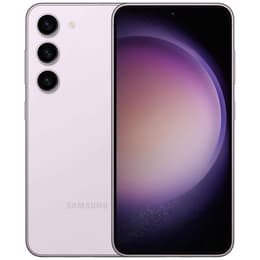
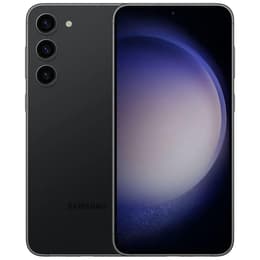
Galaxy S23 Vs Galaxy S23+

Galaxy S23
Galaxy S23
Starting at

Refurbished price:£186.84

Versus £1,019.00 new

See options
Galaxy S23+
Galaxy S23+
Starting at

Refurbished price:£257.00

Versus £1,199.99 new

See options

Ratings

The Samsung Galaxy S23 and Galaxy S23 Plus, both released in February 2023, are core models in Samsung's flagship smartphone lineup. While they share many advanced features and the same operating system, Android 13 with One UI 5.1, their primary distinctions lie in physical size, battery capacity, and charging speed. These differences cater to varying user preferences regarding portability and power endurance.

Scores

Durability

Both the Galaxy S23 and S23 Plus offer a robust foundation for long-term use, benefiting from identical software support and durable construction.

  • Software Longevity: Both devices launched with Android 13 and One UI 5.1, with Samsung promising four years of operating system updates and five years of security updates, extending support until approximately 2028. This commitment ensures a prolonged period of up-to-date features and security patches.
  • Physical Resilience: Both models feature Corning Gorilla Glass Victus 2 on the front and back, along with an Armor Aluminum frame, providing enhanced resistance against drops and scratches. They also carry an IP68 rating, signifying resistance to dust and water immersion up to 1.5 meters for 30 minutes.
  • Repairability Considerations: While both phones are built with strong materials, drop tests indicate that significant impacts can still cause damage, particularly to the screen. Users are generally advised to use protective accessories to extend the practical lifespan and maintain the aesthetic condition of their devices.

Year of Release

2023

2023

Compatible with latest Update

Yes

Yes

OS

Android

Android

Foldable

No

No

Performance

The internal components of the Galaxy S23 and S23 Plus are largely identical, ensuring a consistent and responsive user experience across both models.

  • Processing Power: Both devices are equipped with the same current-generation processor, designed to handle demanding applications, complex multitasking, and graphic-intensive games smoothly. This ensures a fluid experience for everyday tasks and more intensive workloads.
  • Memory and Storage: Both phones come with 8GB of RAM, providing ample capacity for running multiple applications simultaneously without significant slowdowns. The Galaxy S23 offers storage options starting from 128GB, while the S23 Plus begins at 256GB, with both models also available in 512GB. Neither model supports expandable storage via a microSD card.
  • Battery Endurance and Charging: The Galaxy S23 features a 3900 mAh battery, while the S23 Plus includes a larger 4700 mAh battery. This difference translates to longer usage times for the S23 Plus, with some reports indicating it can comfortably last two days for normal use. The S23 supports 25W wired charging, whereas the S23 Plus benefits from faster 45W wired charging, allowing it to regain a significant charge more quickly. Both also support wireless charging.

Memory (GB)

8 GB

8 GB

Screen quality

The display experience on both the Galaxy S23 and S23 Plus is vibrant and clear, though they differ in physical dimensions.

  • Display Technology and Clarity: Both phones feature Dynamic AMOLED 2X displays with a Full HD+ resolution (1080 x 2340 pixels), delivering deep blacks and vivid colors. The screens offer a peak brightness of 1750 nits, ensuring good visibility even in bright outdoor conditions.
  • Size and Viewing Experience: The Galaxy S23 has a 6.1-inch display, offering a more compact form factor. The S23 Plus, with its 6.6-inch display, provides a larger viewing area, which can enhance media consumption and productivity tasks. While the S23 has a slightly higher pixel density due to its smaller size, this difference is generally not perceptible to the average user.
  • Smoothness: Both displays feature an adaptive refresh rate that can scale up to 120Hz, providing smooth scrolling and responsive interactions, particularly beneficial for gaming and fast-paced content.

Resolution

1080 x 2340

1080 x 2340

Screen type

Dynamic AMOLED 2X

Dynamic AMOLED 2X

Audiovisual

The camera systems on the Galaxy S23 and S23 Plus are identical, offering versatile photography and videography capabilities.

  • Rear Camera System: Both phones are equipped with a triple-camera setup on the rear: a 50MP main sensor with optical image stabilization, a 12MP ultra-wide lens, and a 10MP telephoto lens with 3x optical zoom. This configuration allows for a range of photographic styles, from expansive landscapes to detailed zoomed-in shots.
  • Photography Performance: In good lighting conditions, both devices capture detailed and colorful images. The main sensor performs well in various scenarios, though some users have noted that the 50MP mode can sometimes lead to over-processed images with color shifts in specific lighting. Low-light performance is generally good with the main lens, but quality can decrease when using the ultra-wide or telephoto lenses in very dark environments.
  • Video and Front Camera: Both models support video recording up to 8K resolution at 30 frames per second. The front-facing camera is a 12MP sensor, providing clear selfies and improved performance compared to previous generations.

Main camera

50 megapixels

50 megapixels

Front camera

12 megapixels

12 megapixels

Miscellaneous

Beyond their core features, the Galaxy S23 and S23 Plus share several practical elements that contribute to their overall user experience.

  • Connectivity and Ports: Both devices offer modern connectivity options, including 5G capability, Wi-Fi 6E for fast wireless internet, and Bluetooth 5.3 for efficient accessory pairing. They feature a USB-C 3.2 port for charging and data transfer, but neither includes a traditional 3.5mm headphone jack or a slot for expandable storage.
  • Biometrics and Security: For secure unlocking, both phones incorporate an ultrasonic in-display fingerprint sensor and support 2D face recognition. They also come with Samsung Knox for enhanced device security.
  • Physical Characteristics: The Galaxy S23 is the more compact option, measuring 146.3 x 70.9 x 7.6 mm and weighing 168g. The S23 Plus is larger at 157.8 x 76.2 x 7.6 mm and weighs 196g. Both feature a flat display and a design that is comfortable to hold.

Weight

350 g

196 g

Screen size (in)

6.1

6.6

Mobile network

5G

5G

SIM card

Physical SIM + eSIM

Dual Physical SIM + eSIM

Carrier compatibility

Unlocked

Unlocked

Connector

USB-C

USB-C

User feedback for both the Samsung Galaxy S23 and S23 Plus generally highlights their strong performance and reliable camera systems. The S23 is frequently praised for being an excellent compact Android phone, offering a premium experience in a more manageable size. Users appreciate its good cameras and sufficient battery life for its form factor. However, some reports mention potential image over-processing issues with the 50MP camera in specific conditions.

The Galaxy S23 Plus is often lauded for its exceptional battery life, with many users reporting comfortable multi-day usage, and its balanced size that offers a larger display without being overly cumbersome. Its powerful performance and capable cameras also receive consistent positive remarks. While its display is not the highest resolution in the market, users generally find it vibrant and clear, with the difference in pixel density from higher-end models being largely unnoticeable.

Users prioritizing a more compact device that is easy to handle with one hand may find the Galaxy S23 well-suited to their needs. Those who value extended battery life, a larger screen for media consumption or productivity, and faster charging will likely lean towards the Galaxy S23 Plus. Both devices offer a robust and feature-rich Android experience, backed by Samsung's commitment to long-term software support and durable construction. For those considering these models, exploring quality-assured refurbished options can provide an eco-friendly alternative.

See all articles

Our recent comparisons