
Compare models

Galaxy S21 Ultra 5G Vs iPhone 13 Pro Max

  • 1-year minimum warranty
  • Free delivery on all items
  • Free 30-day returns
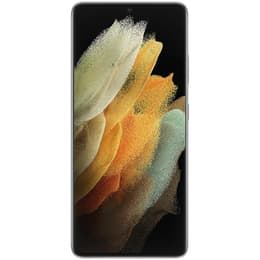
Galaxy S21 Ultra 5G
Galaxy S21 Ultra 5G
Starting at

Refurbished price:£193.00

Versus £1,316.00 new

See options
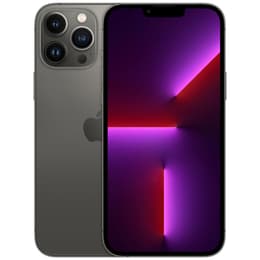
iPhone 13 Pro Max
iPhone 13 Pro Max
Starting at

Refurbished price:£273.00

Versus £1,049.00 new

See options

Differences at a glance

The Samsung Galaxy S21 Ultra 5G, released in January 2021, and the Apple iPhone 13 Pro Max, launched in September 2021, represent flagship smartphones from their respective manufacturers. While both devices offer premium mobile experiences, they differ significantly in their operating systems and core design philosophies. The Galaxy S21 Ultra operates on Android, offering a customizable interface, while the iPhone 13 Pro Max runs on iOS, known for its integrated ecosystem and streamlined user experience. Key differentiators include camera versatility, display technology, and overall software longevity.

Scores

Durability

The expected practical lifespan of a smartphone is influenced by its release timeline, software support, and physical durability.

  • Release Timeline and Age: The Galaxy S21 Ultra 5G was released in January 2021, making it slightly older than the iPhone 13 Pro Max, which launched in September 2021. This difference in release dates can impact the remaining period of official software support.
  • OS Support Duration: Samsung initially committed to four generations of Android OS updates for the S21 series, with the final major update being Android 15 (One UI 7) in May 2025. Security updates for the S21 series (excluding the S21 FE) ceased in February 2026. The iPhone 13 Pro Max, launched with iOS 15, has received updates up to iOS 26.3.1 as of March 2026, indicating a longer typical software support cycle from Apple.
  • Repairability and Build: Both devices feature robust builds. The Galaxy S21 Ultra 5G uses Corning Gorilla Glass Victus for both its front and back, with an aluminum frame, and carries an IP68 rating for dust and water resistance. The iPhone 13 Pro Max features Ceramic Shield protection on the front and a matte glass finish on the back, also with an IP68 rating for water and dust resistance. Users seeking to extend the life of their devices can consider quality-assured refurbished options, which often come with warranties.

Year of Release

2021

2021

Compatible with latest Update

Yes

Yes

OS

Android

iOS

Foldable

No

No

Performance

Both devices deliver strong performance for daily tasks and demanding applications, though they approach processing power from different architectural standpoints.

  • Processor Capabilities: The Galaxy S21 Ultra 5G is powered by a high-performance processor (Qualcomm Snapdragon 888 or Exynos 2100 depending on region), enabling smooth multitasking and efficient handling of graphics-intensive games. The iPhone 13 Pro Max features a powerful chip designed for high efficiency and performance, resulting in fluid navigation and rapid app loading. Benchmarking tests have shown the iPhone 13 Pro Max often outperforming the Galaxy S21 Ultra in raw processing power, particularly in single-core tasks.
  • Multitasking and Responsiveness: The Galaxy S21 Ultra 5G offers significant RAM options, up to 16GB, which contributes to its ability to manage numerous applications simultaneously without slowdowns. The iPhone 13 Pro Max, with 6GB of RAM, leverages iOS optimization to provide a highly responsive user experience, efficiently handling background processes and app switching.
  • Battery Behavior: The Galaxy S21 Ultra 5G is equipped with a 5000 mAh battery, while the iPhone 13 Pro Max has a 4352 mAh battery. Despite the larger capacity in the S21 Ultra, real-world tests often show the iPhone 13 Pro Max achieving longer battery life, with some reports indicating it can last significantly longer on a single charge under similar usage conditions. This suggests Apple's hardware and software optimization plays a substantial role in power efficiency.

Memory (GB)

12 GB

6 GB

Screen quality

Both smartphones feature large, high-quality displays that offer vibrant visuals and smooth interactions, though with some distinctions in their underlying technology and characteristics.

  • Display Technology and Resolution: The Galaxy S21 Ultra 5G boasts a 6.8-inch Dynamic AMOLED 2X display with a resolution of 3200 x 1440 pixels, resulting in a pixel density of 515 PPI. The iPhone 13 Pro Max features a 6.7-inch Super Retina XDR OLED display with a resolution of 2778 x 1284 pixels, yielding a pixel density of 458 PPI. Both displays offer deep blacks and vibrant colors, characteristic of OLED technology.
  • Refresh Rate and Brightness: Both devices offer an adaptive refresh rate of up to 120Hz, providing smooth scrolling and fluid animations. The Galaxy S21 Ultra 5G can reach a peak brightness of 1500 nits, while the iPhone 13 Pro Max can achieve up to 1200 nits peak brightness (HDR) and 1000 nits typical maximum brightness. This means both screens are well-suited for outdoor visibility, with the S21 Ultra having a slight edge in peak brightness.
  • Viewing Experience: The slightly larger screen of the S21 Ultra 5G offers a marginally more expansive viewing area. Both displays are protected by durable glass, with the S21 Ultra featuring Gorilla Glass Victus and the iPhone 13 Pro Max utilizing Ceramic Shield.

Resolution

1440 x 3200

1284 x 2778

Screen type

Dynamic AMOLED 2X

Super Retina XDR OLED

Audiovisual

Both the Galaxy S21 Ultra 5G and the iPhone 13 Pro Max are equipped with advanced camera systems designed to capture high-quality photos and videos, each with distinct strengths.

  • Camera System Capabilities: The Galaxy S21 Ultra 5G features a versatile quad-camera setup, including a 108MP main sensor, a 12MP ultrawide lens, and two 10MP telephoto lenses offering 3x and 10x optical zoom. The iPhone 13 Pro Max has a triple 12MP camera system, comprising wide, ultrawide, and telephoto lenses with 3x optical zoom. The S21 Ultra's dual telephoto lenses provide greater flexibility for long-range photography.
  • Photography Performance: The S21 Ultra's 108MP main sensor allows for capturing highly detailed images, and its improved Bright Night sensor enhances low-light photography. The iPhone 13 Pro Max features larger sensors and wider apertures on its main and ultrawide cameras, leading to improved light gathering and better low-light performance compared to its predecessors. Both phones offer dedicated night modes across all lenses. The iPhone 13 Pro Max also introduced a macro photography mode, allowing for sharp close-up shots.
  • Video Recording Quality: The Galaxy S21 Ultra 5G supports 8K video recording at 24fps and 4K at 30/60fps. The iPhone 13 Pro Max records up to 4K at 60fps and introduced Cinematic Mode, which provides a shallow depth of field effect for videos. While Cinematic Mode on the 13 Pro Max is limited to 1080p, it offers advanced video features for creative users.

Main camera

108 megapixels

12 megapixels

Front camera

40 megapixels

12 megapixels

Miscellaneous

Beyond core performance and display, several practical elements differentiate these two flagship devices, impacting daily usability and connectivity.

  • Connectivity Options: Both smartphones support 5G networks, ensuring fast mobile data speeds. The Galaxy S21 Ultra 5G supports Wi-Fi 6E and Bluetooth 5.2, offering enhanced wireless performance and connectivity with accessories. The iPhone 13 Pro Max supports Wi-Fi 6 and Bluetooth 5.0.
  • Port Types and Sensors: The Galaxy S21 Ultra 5G features a USB-C 3.2 port and supports the S Pen, which can be purchased separately, offering additional functionality for note-taking and drawing. The iPhone 13 Pro Max uses Apple's proprietary Lightning port. Both devices include essential sensors like fingerprint (ultrasonic in-screen for S21 Ultra, Face ID for iPhone 13 Pro Max) and face recognition for secure unlocking. Neither device includes a 3.5mm headphone jack.
  • Weight and Dimensions: The Galaxy S21 Ultra 5G measures 165.1 x 75.6 x 8.9 mm and weighs 227g (Sub6) or 229g (mmWave). The iPhone 13 Pro Max measures 160.8 x 78.1 x 7.65 mm and weighs 240g. The iPhone is slightly heavier and wider, while the S21 Ultra is taller and thicker.

Weight

227 g

238 g

Screen size (in)

6.8

6.7

Mobile network

5G

5G

SIM card

Physical SIM + eSIM

Physical SIM + eSIM

Carrier compatibility

Unlocked

Unlocked

Connector

USB-C

Lightning

What the community thinks

Users often praise the Samsung Galaxy S21 Ultra 5G for its highly versatile camera system, particularly its impressive zoom capabilities and detailed main sensor, making it a strong choice for photography enthusiasts who value flexibility. Its expansive, high-resolution display and S Pen support are also frequently highlighted as significant advantages for productivity and media consumption. Some users, however, have noted that while its battery capacity is large, real-world endurance can vary, and its software update cycle is shorter compared to its competitor.

The iPhone 13 Pro Max is consistently lauded for its exceptional battery life, often outperforming devices with larger battery capacities due to efficient hardware and software integration. Its smooth performance, robust build quality, and consistent camera output, especially in video recording with features like Cinematic Mode, are also strong points for users. Criticisms sometimes point to its proprietary charging port and the absence of extreme telephoto zoom capabilities found on some Android flagships.

Users prioritizing extensive camera versatility, particularly long-range zoom, and a highly customizable Android experience may find the Galaxy S21 Ultra 5G well-suited to their needs. Conversely, users who value extended battery life, a streamlined operating system, and strong video recording features may lean towards the iPhone 13 Pro Max. Both devices offer premium experiences, and choosing between them often comes down to individual preferences for operating system and specific feature priorities. For those considering these powerful devices, exploring quality-assured refurbished options can provide a sustainable choice.