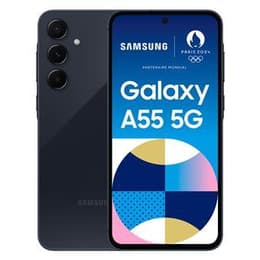


Galaxy A55 Vs Motorola Moto G14

Galaxy A55
Galaxy A55
Starting at

Refurbished price:£193.21

Versus £479.00 new

See options
Motorola Moto G14
Motorola Moto G14
See options

Ratings

The Samsung Galaxy A55 (2024) and the Motorola Moto G14 (2023) are two smartphones designed for different user needs within the Android ecosystem. While the Galaxy A55 positions itself as a feature-rich mid-range device with a focus on display quality and long-term software support, the Moto G14 serves as a straightforward entry-level option for those who prioritise essential functionality. Both devices run on the Android operating system, though the Galaxy A55 offers a more customised interface compared to the near-standard Android experience found on the Motorola.

Scores

Durability

The Galaxy A55 and Moto G14 differ significantly in their expected software longevity and physical build resilience, which impacts how long they remain useful.

  • Software Support: The Galaxy A55 is designed for long-term use, with the manufacturer promising four generations of operating system updates and five years of security patches. In contrast, the Moto G14 typically receives fewer updates, often limited to one major version jump, which may affect its compatibility with new apps sooner.
  • Build Quality: Featuring a metal frame and toughened glass on both sides, the Galaxy A55 offers a sturdy feel and a high rating for dust and water resistance. The Moto G14 uses a lightweight plastic construction with a water-repellent coating, making it resilient against light splashes but less protected against full immersion.
  • Repairability: Both devices follow standard modern smartphone construction, though the Galaxy A55's glass back requires more care during repairs compared to the Moto G14's plastic shell, which is generally more flexible.

Year of Release

2024

2023

Compatible with latest Update

Yes

Yes

OS

Android

Android

Foldable

No

No

Performance

When comparing how these devices handle daily tasks, the Galaxy A55 provides a more fluid experience for demanding users, while the Moto G14 focuses on efficiency for basic applications.

  • System Responsiveness: The Galaxy A55 handles multitasking and heavy applications with ease, ensuring that switching between several open apps remains smooth. The Moto G14 is better suited for lighter tasks such as web browsing, messaging, and social media, where it maintains steady performance.
  • Gaming and Media: Users who enjoy mobile gaming will find the Galaxy A55 more capable of running modern titles at higher settings without lag. The Moto G14 can run casual games effectively but may struggle with graphically intensive software that requires more processing power.
  • Battery and Charging: Both phones feature large batteries that comfortably last through a full day of typical use. However, the Galaxy A55 supports faster charging speeds, allowing users to top up the battery more quickly during short breaks compared to the Moto G14.

Memory (GB)

8 GB

4 GB

Screen quality

The viewing experience is one of the most noticeable differences between these two models, particularly regarding brightness and motion smoothness.

  • Display Technology: The Galaxy A55 uses an advanced screen technology that produces deep blacks and high contrast, making it ideal for watching films. The Moto G14 features a standard liquid crystal display (LCD) that provides natural colours and clear text for everyday reading and browsing.
  • Smoothness of Motion: With a high refresh rate, the Galaxy A55 offers very smooth scrolling and animations, which reduces eye strain during long browsing sessions. The Moto G14 uses a standard refresh rate, which is functional but lacks the fluid feel of its counterpart.
  • Outdoor Visibility: The Galaxy A55 reaches higher brightness levels, ensuring the screen remains legible even under direct sunlight. The Moto G14 is clear indoors but may require shading the screen when used outside on very bright days to see details clearly.

Resolution

1080 x 2340

1080 x 2400

Screen type

Super AMOLED

IPS LCD

Audiovisual

Photography and media playback capabilities reflect the different tiers these devices occupy, with one offering more versatility for creators and the other focusing on simplicity.

  • Camera Versatility: The Galaxy A55 includes a multi-lens system with a dedicated ultra-wide sensor, allowing users to capture expansive landscapes or group photos. The Moto G14 focuses on a primary lens that takes clear photos in good lighting but lacks the wide-angle flexibility for diverse shooting scenarios.
  • Low-Light Performance: In darker environments, the Galaxy A55 uses advanced processing and physical stabilisation to produce clearer, less grainy images. The Moto G14 performs best in well-lit conditions and may struggle to capture fine detail in the evening or in dimly lit rooms.
  • Audio Experience: Both devices provide stereo sound, but the Galaxy A55 offers a fuller audio profile for watching videos. The Moto G14 includes a traditional headphone jack, a feature many users still appreciate for connecting wired audio equipment without needing an adapter.

Main camera

50 megapixels

50 megapixels

Front camera

32 megapixels

8 megapixels

Miscellaneous

Practical features like connectivity and physical handling play a large role in the daily user experience for both smartphones.

  • Connectivity: The Galaxy A55 supports the latest high-speed mobile networks (5G), ensuring faster download speeds and better future-proofing as networks evolve. The Moto G14 is limited to 4G networks, which remains perfectly adequate for standard browsing and streaming in most areas today.
  • Security and Sensors: For unlocking the device, the Galaxy A55 uses a sensor hidden beneath the display, while the Moto G14 integrates a fingerprint reader into the power button on the side. Both methods are reliable, though the side-mounted sensor is often praised for its ergonomic placement.
  • Weight and Handling: The Moto G14 is notably lighter due to its plastic build, making it comfortable for one-handed use over long periods. The Galaxy A55 has a more substantial weight, giving it a solid feel that some users associate with durability and a more robust construction.

Weight

213 g

177 g

Screen size (in)

6.6

6.5

Mobile network

5G

4G

SIM card

Dual Physical SIM

Dual Physical SIM

Carrier compatibility

Unlocked

Unlocked

Connector

USB-C

USB-C + Jack 3.5mm

The choice between the Samsung Galaxy A55 and the Motorola Moto G14 depends largely on how a user intends to interact with their device daily. Based on user feedback from various tech communities, the Galaxy A55 is frequently praised for its vibrant screen and the peace of mind provided by its long-term software update schedule. Some users, however, find it slightly heavier than expected. On the other hand, the Moto G14 is often highlighted for its straightforward interface and the inclusion of a headphone jack, though some note that it is less suited for heavy gaming or professional photography.

Users who prioritise a high-quality display for media consumption and want a phone that will remain current for several years will find the Galaxy A55 aligns well with their needs. Conversely, those who require a simple, lightweight device for communication and basic tasks may lean toward the Moto G14. For those looking to make a sustainable choice, choosing a quality-assured refurbished option is an eco-friendly alternative that helps reduce electronic waste. Both devices offer distinct advantages, and selecting the right one involves balancing the need for advanced features against the requirement for simple, reliable functionality.


See all articles

Our recent comparisons