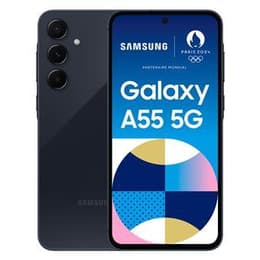


Galaxy A55 Vs Google Pixel 9 Pro XL

Galaxy A55
Galaxy A55
Starting at

Refurbished price:£193.21

Versus £479.00 new

See options
Google Pixel 9 Pro XL
Starting at

Refurbished price:£384.00

Versus £1,093.99 new

See options

Ratings

The Samsung Galaxy A55 (2024) and the Google Pixel 9 Pro XL (2024) are contemporary smartphones offering distinct experiences within the Android ecosystem. While both devices provide robust performance for daily tasks, they differentiate themselves through their camera philosophies, software approaches, and overall design. The Galaxy A55 runs on Samsung's One UI atop Android, emphasizing a feature-rich interface, whereas the Pixel 9 Pro XL offers a pure Android experience with a strong focus on artificial intelligence and computational photography.

Scores

Durability

Evaluating the practical lifespan of a smartphone involves considering its software support, physical resilience, and ease of repair.

  • Software Longevity: The Google Pixel 9 Pro XL stands out with an extensive commitment to software updates, promising seven years of OS upgrades and security patches from its release, extending its support until Android 22. The Samsung Galaxy A55 offers four major OS updates and five years of security updates, providing a solid, though shorter, period of software relevance.
  • Physical Durability: Both devices incorporate robust materials for protection. The Galaxy A55 features Gorilla Glass Victus+ on the front and back, coupled with an IP67 rating for dust and water resistance. The Pixel 9 Pro XL utilizes Gorilla Glass Victus 2 and boasts an IP68 rating, indicating a slightly higher level of water and dust protection.
  • Repairability: The Galaxy A55 has received a high repairability score of 8.5 out of 10, with components like the battery designed for easier replacement. The Pixel 9 Pro XL presents a more complex picture; while some reports indicate a lower repairability score due to strong adhesives, it also features a dual-entry design that can simplify certain repairs, such as the USB-C port, though the screen remains delicate.

Year of Release

2024

2024

Compatible with latest Update

Yes

Yes

OS

Android

Android

Foldable

No

No

Performance

The performance of these devices is tailored to different user expectations, influencing how smoothly applications run and how efficiently power is managed.

  • Processing Power: The Google Pixel 9 Pro XL is equipped with Google's Tensor G4 chipset, designed to handle demanding applications and advanced AI features with smooth and responsive operation. The Samsung Galaxy A55 features an Exynos 1480 chipset, which provides good speed for daily use, fast app loading, and smooth multitasking.
  • Multitasking and Storage: The Pixel 9 Pro XL typically comes with 16GB of RAM, facilitating extensive multitasking and ensuring applications remain active in the background. The Galaxy A55 offers 8GB or 12GB of RAM, which is sufficient for most users' multitasking needs. Both devices offer various internal storage options, and the Galaxy A55 also supports expandable storage via a microSD card.
  • Battery Behavior: The Pixel 9 Pro XL houses a 5060 mAh battery, often providing a full day of use for many users, with some reporting multi-day endurance under lighter usage. The Galaxy A55 includes a 5000 mAh battery, with users generally satisfied with its ability to last a full day with average use, though heavy usage might require more frequent charging.

Memory (GB)

8 GB

16 GB

Screen quality

The visual experience on a smartphone is largely defined by its display, with both devices offering vibrant and clear screens, but with key differences in technology and resolution.

  • Display Technology and Clarity: The Google Pixel 9 Pro XL features a 6.8-inch QHD+ LTPO OLED display, offering a higher resolution (2992x1344 pixels) and a wider dynamic refresh rate range (1-120Hz) for exceptionally sharp images and fluid motion. The Samsung Galaxy A55 comes with a 6.6-inch FHD+ Super AMOLED display (2340x1080 pixels) with a 120Hz refresh rate, providing vibrant colors and deep blacks.
  • Brightness and Outdoor Visibility: The Pixel 9 Pro XL boasts a high peak brightness of up to 3000 nits, making it highly visible even in bright outdoor conditions. The Galaxy A55 offers a brightness level around 1000 nits, which is generally sufficient for outdoor use, though it may not perform as well under direct, intense sunlight.
  • Viewing Experience: The larger, higher-resolution screen of the Pixel 9 Pro XL provides a more expansive and detailed viewing experience, particularly beneficial for high-definition content and intricate tasks. The Galaxy A55's display offers a good balance of size and clarity for everyday media consumption and general use.

Resolution

1080 x 2340

1344 x 2992

Screen type

Super AMOLED

LTPO OLED

Audiovisual

Both smartphones offer capable camera systems, but they approach photography with different strengths and features.

  • Rear Camera Systems: The Google Pixel 9 Pro XL features a versatile triple-camera setup, including a 50MP main sensor, a 48MP ultrawide lens, and a 48MP telephoto lens with 5x optical zoom. This configuration, combined with Google's computational photography, excels in delivering consistent color accuracy, dynamic range, and exposure across various lighting conditions, including low light. The Samsung Galaxy A55 also has a triple-camera system with a 50MP main sensor (with OIS), a 12MP ultrawide, and a 5MP macro lens. It produces acceptable and sometimes good photo clarity, with solid exposures for social media sharing.
  • Low-Light and Everyday Photography: The Pixel 9 Pro XL is widely praised for its low-light performance and ability to capture moments accurately. The Galaxy A55 offers decent low-light photos, though some users note that it loses detail quickly in very dim settings.
  • Video Recording and Front Camera: The Pixel 9 Pro XL supports high-quality video recording, with optical image stabilization on its main and telephoto lenses, and a 42MP front camera capable of HDR photos and video. It also includes a 'Video Boost' feature for enhancing video quality. The Galaxy A55 records video up to 4K at 30fps with stabilization and features a 32MP front camera, which generally produces sharp and clear selfies, though some users have noted an occasional yellowish tone.

Main camera

50 megapixels

50 megapixels

Front camera

32 megapixels

42 megapixels

Miscellaneous

Beyond the core specifications, several practical elements contribute to the overall user experience and daily convenience of these devices.

  • Connectivity and Ports: Both phones support 5G connectivity for fast mobile data. The Pixel 9 Pro XL is expected to feature the latest Wi-Fi standards and Bluetooth, along with a USB-C port. It also includes satellite connectivity for emergency messaging. The Galaxy A55 supports Wi-Fi 6, Bluetooth 5.3, and uses a USB Type-C 2.0 port.
  • Biometric Security: The Pixel 9 Pro XL incorporates an ultrasonic in-display fingerprint sensor and face unlock for secure access. The Galaxy A55 also features an in-display fingerprint sensor.
  • Build Materials and Handling: The Galaxy A55 features a metal frame and Gorilla Glass Victus+ on both the front and back, contributing to a premium feel. The Pixel 9 Pro XL also boasts a premium build with Gorilla Glass Victus 2 and metal sides, designed for enhanced durability. The Pixel 9 Pro XL is slightly larger than the Galaxy A55, which can impact one-handed use.

Weight

213 g

221 g

Screen size (in)

6.6

6.8

Mobile network

5G

5G

SIM card

Dual Physical SIM

Physical SIM + eSIM

Carrier compatibility

Unlocked

Unlocked

Connector

USB-C

USB-C

User feedback for the Samsung Galaxy A55 often highlights its premium design, vibrant display, and generally reliable battery life as strong points. Many appreciate its capability for everyday tasks and casual photography. However, some users have noted that its performance, while good, isn't top-tier for intensive gaming, and its camera software can sometimes over-process images. The software update policy, while solid, is not as extended as some competitors.

The Google Pixel 9 Pro XL receives consistent praise for its exceptional camera performance, particularly its ability to capture detailed and color-accurate photos in various conditions, including low light. Its long-term software support is a significant advantage, ensuring the device remains current for many years. Users also commend its smooth performance and robust battery life. Criticisms sometimes point to the complexity of repairs and, for some, the charging speed not being as rapid as other flagship devices.

Users prioritizing an extended software lifespan, advanced computational photography, and a pure Android experience may find the Google Pixel 9 Pro XL well-suited to their needs. Its larger, higher-resolution display also caters to those who consume a lot of media. Conversely, users who value a premium design, expandable storage, and a feature-rich custom Android interface might lean toward the Samsung Galaxy A55. Its strong repairability score also makes it an appealing choice for those who consider long-term maintenance. Both devices offer a quality-assured refurbished option, providing an eco-friendly alternative for consumers seeking reliable technology.


See all articles

Our recent comparisons