

Galaxy A34 Vs Motorola Moto E13

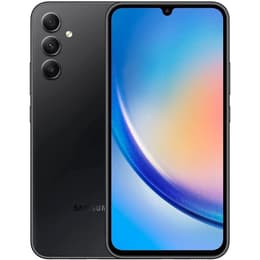
Galaxy A34
Galaxy A34
Starting at

Refurbished price:£105.00

Versus £399.00 new

See options
Motorola Moto E13
Motorola Moto E13
Starting at

Refurbished price:£74.00

Versus £83.99 new

See options

Ratings

The Samsung Galaxy A34 and the Motorola Moto E13, both released in 2023, cater to different segments of the smartphone market. While both devices operate on the Android platform, the Galaxy A34 offers a more robust feature set and enhanced performance, positioning it as a mid-range option. In contrast, the Moto E13 is designed for essential smartphone functions, focusing on simplicity and accessibility.

Scores

Durability

When considering the long-term usability of these devices, several factors contribute to their expected practical lifespan, including software support and physical resilience.

  • Software Longevity: The Samsung Galaxy A34, launched in March 2023, benefits from Samsung's commitment to providing four generations of Android OS upgrades and five years of security updates, extending its software support well into the future. The Moto E13, released in January 2023, runs on Android Go Edition, a lighter version of Android, and typically receives fewer major OS updates and security patches compared to its counterpart.
  • Physical Durability: The Galaxy A34 features an IP67 rating for dust and water resistance, meaning it can withstand immersion in up to 1 meter of water for 30 minutes, and its display is protected by Corning Gorilla Glass 5. User experiences often highlight the A34's resilience to drops and daily wear. The Moto E13, on the other hand, comes with an IP52 rating, offering basic protection against splashes and dust. Its construction primarily uses plastic for the body and a standard glass front, which some users have reported as being less resistant to impacts.
  • Repairability Considerations: While specific repairability scores can vary by region and component availability, devices with more common parts and simpler internal designs may offer easier repair pathways. Both devices, as consumer electronics, are subject to standard repair practices, with refurbished options providing an eco-friendly alternative for extending their life cycle.

Year of Release

2023

2023

Compatible with latest Update

Yes

No

OS

Android

Android

Foldable

No

No

Performance

The performance capabilities of these two smartphones are tailored to different user expectations, impacting how smoothly applications run and how efficiently daily tasks are handled.

  • Processing Power: The Galaxy A34 is equipped with a processor designed to handle a wider range of applications, from routine social media browsing to more demanding mobile games and multitasking. Users generally report smooth operation and good thermal management during typical use, though intensive gaming can lead to some warmth. The Moto E13 features an entry-level processor, which is optimized for basic communication, web browsing, and light applications. Some users have noted that the device can become slow and experience app crashes after a few months of use, particularly with more resource-intensive applications.
  • Memory and Storage: The Galaxy A34 offers configurations with 6GB or 8GB of RAM and 128GB or 256GB of internal storage, providing ample space for apps and media, and supporting efficient multitasking. The Moto E13 typically comes with 2GB or 4GB of RAM and 64GB or 128GB of storage, which is suitable for essential apps and limited media storage. The lower RAM on the Moto E13 can affect its ability to keep multiple applications open simultaneously without needing to reload them.
  • Battery Behavior: Both devices house a 5000mAh battery. The Galaxy A34, despite its more powerful components and vibrant display, is often praised by users for its extended battery life, capable of lasting a full day with moderate to heavy use. The Moto E13 also offers good battery endurance for its intended use, benefiting from its less demanding hardware and the optimized Android Go Edition.

Memory (GB)

6 GB

2 GB

Screen quality

The visual experience on these smartphones differs significantly due to their display technologies and specifications, influencing clarity, color reproduction, and outdoor visibility.

  • Display Technology and Clarity: The Samsung Galaxy A34 features a 6.6-inch Super AMOLED display with a resolution of 1080x2340 pixels, delivering vibrant colors, deep blacks, and sharp image quality. This technology enhances the viewing experience for photos, videos, and detailed content. The Motorola Moto E13 has a 6.5-inch IPS LCD with a resolution of 720x1600 pixels, providing clear visuals suitable for everyday tasks and casual media consumption.
  • Brightness and Refresh Rate: The Galaxy A34's display boasts a 120Hz refresh rate, contributing to smoother scrolling and more fluid animations, and can reach a peak brightness of 1000 nits, making it highly visible even in bright outdoor conditions. The Moto E13 operates at a standard 60Hz refresh rate, which is adequate for general use, and its brightness levels are suitable for indoor environments, though it may be less comfortable to view under direct sunlight.
  • Viewing Experience: The Super AMOLED panel of the A34 offers superior contrast and wider viewing angles, which can be particularly beneficial for media consumption and sharing content with others. The IPS LCD of the E13 provides consistent color accuracy across different angles, offering a reliable viewing experience for its class.

Resolution

1080 x 2340

720 x 1600

Screen type

Super AMOLED

IPS LCD

Audiovisual

The camera systems on the Galaxy A34 and Moto E13 are designed with different photographic capabilities, impacting the quality and versatility of captured images and videos.

  • Rear Camera System: The Samsung Galaxy A34 is equipped with a versatile triple-camera setup on the rear, including a 48-megapixel main sensor with optical image stabilization (OIS), an 8-megapixel ultra-wide lens, and a 5-megapixel macro lens. This configuration allows for detailed photos, wider landscape shots, and close-up photography, with OIS aiding in sharper images and more stable video, even in challenging lighting. Users generally find the photo and video quality to be good for its category, though zoom performance may not be as strong. The Motorola Moto E13 features a single 13-megapixel rear camera, which is suitable for basic photography in well-lit conditions.
  • Front Camera and Video Recording: For selfies and video calls, the Galaxy A34 has a 13-megapixel front camera, capable of recording 4K video. The Moto E13 includes a 5-megapixel front camera, which is adequate for casual selfies and video calls, with video recording up to 1080p. The camera application on the Moto E13 has been noted by some users to be slow to launch and process images.
  • Audio Experience: The Galaxy A34 features stereo speakers, providing a more immersive audio experience for media consumption. The Moto E13 typically comes with a mono speaker, which is functional for calls and basic audio playback.

Main camera

48 megapixels

13 megapixels

Front camera

13 megapixels

5 megapixels

Miscellaneous

Beyond core features, several practical elements contribute to the overall user experience, including connectivity, physical design, and additional functionalities.

  • Connectivity and Ports: The Samsung Galaxy A34 supports 5G connectivity, offering faster mobile data speeds where available, along with Wi-Fi 5 and Bluetooth 5.3 for robust wireless connections. It features a USB-C port for charging and data transfer. The Motorola Moto E13 supports 4G LTE networks, Wi-Fi 5, and Bluetooth 5.0. It also uses a USB-C port and retains a 3.5mm headphone jack, which can be a convenience for users with wired audio accessories.
  • Biometric Security and Sensors: The Galaxy A34 incorporates an under-display fingerprint sensor for secure and convenient unlocking. It also includes a range of sensors such as an accelerometer, gyroscope, and compass. The Moto E13 may include a rear-mounted fingerprint sensor in some regions, though some variants do not feature one. It typically includes an accelerometer and proximity sensor.
  • Design and Handling: The Galaxy A34 weighs 199 grams and has dimensions that provide a substantial feel, with a glass front and plastic back. The Moto E13 is lighter at 179.5 grams, with a plastic body and glass front, offering a more lightweight handling experience.

Weight

199 g

181 g

Screen size (in)

6.6

6.5

Mobile network

5G

4G

SIM card

Dual Physical SIM

Dual Physical SIM

Carrier compatibility

Unlocked

Unlocked

The Samsung Galaxy A34 and Motorola Moto E13 serve distinct user needs, reflecting their different design philosophies and feature sets. User feedback for the Galaxy A34 often highlights its strong battery life, vibrant display, and reliable performance for daily tasks and moderate gaming. Criticisms sometimes point to its thicker bezels or camera zoom quality. For the Moto E13, users appreciate its affordability and decent battery life for light usage. However, common concerns include its limited performance for anything beyond basic applications, potential for sluggishness over time, and a less durable screen.

Users who prioritize a more immersive visual experience, consistent performance across a wider range of applications, and a more capable camera system will find the Samsung Galaxy A34 well-suited to their needs. Its extended software support also makes it a compelling choice for those seeking a device with a longer usable lifespan. Conversely, individuals primarily needing a smartphone for essential communication, light web browsing, and basic media consumption may find the Motorola Moto E13 to be a practical option. It caters to users who value simplicity and a straightforward mobile experience.

Both models are available as quality-assured refurbished options, offering a sustainable choice for consumers looking to make an eco-friendly purchase while still acquiring a device that meets their specific requirements.


See all articles

Our recent comparisons