
Compare models
Galaxy A25 Vs Google Pixel 10 Pro XL
- 1-year minimum warranty
- Free delivery on all items
- Free 30-day returns
Differences at a glance
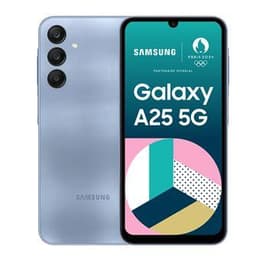
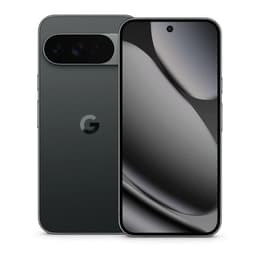
The Samsung Galaxy A25 (2023) and the Google Pixel 10 Pro XL (2025) represent entirely different tiers of the smartphone market, catering to distinct user priorities and everyday needs. While the Galaxy A25 focuses on essential daily communication and dependable core functions, the Pixel 10 Pro XL delivers a comprehensive suite of advanced capabilities, sophisticated photography tools, and high-end processing power. Both devices operate on the Android ecosystem, though they offer different interface experiences and software customization options. Understanding how these structural differences influence real-world usability helps users determine which model aligns best with their daily requirements.
Available Models
Colour
Storage (GB)
Scores
Durability
When evaluating the long-term utility of the Galaxy A25 and the Pixel 10 Pro XL, software support timelines and hardware endurance play central roles in determining how well each device maintains its usefulness over several years.
- Software support timelines: The Pixel 10 Pro XL benefits from an extended multi-year update commitment covering both security patches and major operating system upgrades, whereas the Galaxy A25 offers a shorter, more standard update window aligned with its device category.
- Build quality and repairs: The Pixel 10 Pro XL features reinforced glass and metal construction designed to withstand everyday wear, while the Galaxy A25 utilizes durable plastics that handle minor impacts well. Both models benefit from professional repair infrastructure, making a quality-assured refurbished option a sustainable choice that extends the functional lifecycle of either device.
Year of Release
2023
2025
Compatible with latest Update
Yes
Yes
OS
Android
Android
Foldable
No
No
Performance
Processing capabilities and day-to-day responsiveness vary significantly between these two models, directly influencing how smoothly demanding applications, multitasking, and casual gaming run during heavy usage.
- Multitasking and app switching: The Pixel 10 Pro XL handles intensive background tasks and heavy applications smoothly with ample system memory, while the Galaxy A25 manages standard daily workflows like messaging, web browsing, and media streaming reliably.
- Storage and battery behavior: The Pixel 10 Pro XL offers larger high-speed storage configurations and efficient power management for extended daily use, whereas the Galaxy A25 provides expandable storage via a memory card slot alongside a battery that comfortably lasts through standard daily routines.
Screen quality
Visual clarity, brightness, and panel technology define the viewing experience, affecting how easily content can be consumed indoors under dim lighting or outdoors in direct sunlight.
- Display technology and fluidity: Both devices utilize vibrant OLED panels that deliver deep blacks and rich colors, but the Pixel 10 Pro XL incorporates a high refresh rate for smoother scrolling and animation transitions compared to the standard refresh rate on the Galaxy A25.
- Outdoor visibility and resolution: The Pixel 10 Pro XL achieves higher peak brightness levels and sharper resolution for detailed media viewing, while the Galaxy A25 provides clear, legible text and balanced color reproduction suitable for everyday viewing tasks.
Resolution
1080 x 2340
1344x2992
Audiovisual
Capture quality, audio recording, and media playback hardware shape how each device handles multimedia creation and consumption during daily use.
- Camera versatility: The Pixel 10 Pro XL features a sophisticated multi-lens camera system including an advanced telephoto lens for distant subjects and powerful computational photography tools for low-light environments, whereas the Galaxy A25 relies on a straightforward main and ultra-wide setup for everyday snapshots.
- Audio and video output: The Pixel 10 Pro XL provides immersive stereo sound and high-definition video recording capabilities with advanced microphone isolation, while the Galaxy A25 offers clear single or stereo speaker output adequate for casual video calls and media playback.
Front camera
13 megapixels
42 megapixels
Miscellaneous
Physical dimensions, connectivity standards, and hardware integration details impact the overall ergonomics, handling comfort, and everyday utility of each smartphone.
- Connectivity and ports: Both models support modern 5G networks and fast Wi-Fi standards, utilizing reversible USB-C ports for charging and data transfer, though the Galaxy A25 uniquely retains a traditional headphone jack for wired audio accessories.
- Physical handling and security: The Pixel 10 Pro XL features a larger physical footprint with a heavier build and an under-display fingerprint sensor, whereas the Galaxy A25 is lighter and more compact, incorporating a side-mounted fingerprint scanner integrated into the power button for convenient unlocking.
Weight
197 g
232 g
Screen size (in)
6.5
6.8
Mobile network
5G
5G
SIM card
Dual Physical SIM
Physical SIM + eSIM
Carrier compatibility
Unlocked
Unlocked
Connector
USB-C
USB-C
What the community thinks
Real-world user feedback highlights distinct strengths for each device across online discussion platforms. Users frequently praise the Pixel 10 Pro XL for its exceptional camera versatility, smooth display fluidity, and long-term software commitment, though some note its larger physical size and weight require two-handed use. Conversely, users appreciate the Galaxy A25 for its reliable daily battery performance, expandable storage flexibility, and straightforward, no-nonsense interface, while noting that its processing speeds and charging rates are more modest.
Users prioritizing advanced photography, maximum processing capability, and a high-refresh-rate viewing experience may prefer the Pixel 10 Pro XL, while users seeking a straightforward, reliable device for essential communication and media consumption may lean toward the Galaxy A25. Choosing a quality-assured refurbished model provides an eco-friendly alternative that reduces electronic waste while offering access to either device. Ultimately, selecting the right smartphone depends on matching individual daily habits and workflow demands with the specific strengths of each model.