

Compare models
Galaxy A17 Vs Google Pixel 7 Pro
- 1-year minimum warranty
- Free delivery on all items
- Free 30-day returns
Differences at a glance
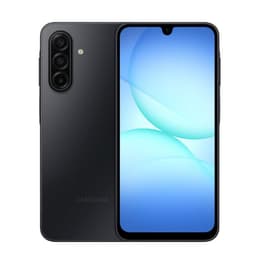
The Samsung Galaxy A17 (2025) and the Google Pixel 7 Pro (2022) occupy different spaces in the smartphone market, balancing practical everyday usability with distinct engineering approaches. While the Galaxy A17 is a modern mid-range device focused on long-term software support and efficiency, the Google Pixel 7 Pro is a former flagship built to deliver advanced photographic capabilities and higher-tier hardware processing. Both models run on the Android operating system, though they offer distinct user interface designs and feature sets. Understanding how their core specifications and practical capabilities compare helps clarify which device aligns with your daily routine.
Available Models
Colour
Storage (GB)
Scores
Durability
When evaluating hardware longevity and software support, both devices offer robust lifespans driven by extended manufacturer commitment and solid build standards.
- Release timeline and update support: The Galaxy A17 benefits from an exceptionally long software support window spanning multiple years, matching the longevity usually reserved for high-end releases. The Google Pixel 7 Pro provides several years of major operating system upgrades and security patches from its earlier launch date, maintaining active software relevancy.
- Expected practical lifespan: Both smartphones handle routine multi-year usage reliably, though the Pixel 7 Pro relies on high-tier internal components to age gracefully under heavy computational demands, while the Galaxy A17 sustains utility through efficient resource management and extended patch availability.
- Repairability and durability: The Pixel 7 Pro features robust glass and metal construction backed by high-tier dust and water resistance ratings. The Galaxy A17 incorporates modern weather sealing and sturdy composite materials, making both options dependable for daily travel when paired with a quality-assured refurbished option from Back Market.
Year of Release
2025
2022
OS
Android
Android
Foldable
No
No
Performance
Performance characteristics differ notably between the two models, reflecting their respective positions in the manufacturer lineups.
- Everyday responsiveness and multitasking: The Pixel 7 Pro utilizes a high-performance processing architecture paired with generous random access memory, ensuring smooth switching between demanding applications and resource-heavy tasks. The Galaxy A17 employs a balanced processor focused on steady execution for everyday messaging, media streaming, and web browsing.
- Storage capacity and memory: The Pixel 7 Pro offers expansive internal storage configurations and high random access memory allocations well-suited for intensive power users. The Galaxy A17 provides practical storage tiers adequate for standard media collections and mobile applications.
- Battery behavior: Both devices house large capacity batteries designed to endure a full day of standard use, though intensive gaming or prolonged video recording will cause the Pixel 7 Pro to draw power more rapidly due to its higher-resolution display and demanding processor tasks.
Screen quality
Display engineering shapes the visual experience, offering distinct advantages in brightness, fluidity, and resolution.
- Display technology and clarity: The Pixel 7 Pro features a high-resolution organic light-emitting diode panel with curved edges, delivering deep contrast, sharp text clarity, and wide viewing angles. The Galaxy A17 utilizes a bright flat organic light-emitting diode screen that renders vibrant colors and sharp imagery for daily media consumption.
- Refresh rate and smoothness: The Pixel 7 Pro supports an adaptive high refresh rate reaching up to 120 hertz for fluid scrolling, whereas the Galaxy A17 operates at a steady 90 hertz refresh rate that balances visual smoothness with power conservation.
- Outdoor visibility: Both screens offer sufficient peak brightness levels to remain legible under direct sunlight, ensuring comfortable outdoor navigation and reading.
Resolution
1080x2340
1440 x 3120
Screen type
Super AMOLED
LTPO AMOLED
Audiovisual
Audio-visual capabilities vary significantly, particularly regarding specialized photography and speaker performance.
- Camera hardware and versatility: The Pixel 7 Pro includes a sophisticated triple-lens array featuring a dedicated telephoto lens with optical zoom capabilities, making it well-suited for distant subjects and detailed close-ups. The Galaxy A17 equips a reliable multi-lens setup that captures sharp everyday photos and steady video footage under normal lighting conditions.
- Low-light and video performance: Google's image processing software enables detailed low-light photography and stable cinematic video recording on the Pixel 7 Pro, while the Galaxy A17 provides dependable point-and-shoot results for casual social sharing.
- Media and audio output: Both models incorporate stereo speakers that deliver clear dialogue for calls and videos, though neither includes a traditional headphone jack.
Main camera
50 megapixels
50 megapixels
Miscellaneous
Practical physical traits and connectivity standards dictate how each device handles day-to-day handling and network interaction.
- Connectivity and ports: Both smartphones support fast 5G cellular networks, modern Wi-Fi protocols, and near-field communication for mobile payments. Data transfer and charging are handled via reversible USB-C ports on both models.
- Biometrics and sensors: The Pixel 7 Pro relies on an under-display fingerprint reader alongside secure facial recognition, while the Galaxy A17 integrates a responsive side-mounted or under-display fingerprint sensor for quick unlocking.
- Dimensions and handling: The Galaxy A17 offers a slightly lighter chassis and a flat screen design that many users find secure to grip, whereas the Pixel 7 Pro features a heavier, premium glass-and-metal build with curved display edges that provides a more substantial feel in the hand.
Weight
192 g
212 g
Screen size (in)
6.7
6.7
Mobile network
5G
5G
SIM card
Physical SIM
Physical SIM + eSIM
Carrier compatibility
Unlocked
Unlocked
What the community thinks
User feedback from online communities highlights distinct preferences for each device based on individual habits. Owners of the Google Pixel 7 Pro frequently praise its advanced camera versatility, sharp high-refresh display, and fluid system animations for photography and media consumption. At the same time, some users note that its heavier frame and power-intensive processor can lead to faster battery depletion during heavy tasks. Conversely, Galaxy A17 users frequently commend its reliable all-day battery endurance, dependable daily performance, and unusually long software update commitment for an accessible device. Criticisms for the Samsung model typically center on its standard charging speeds and absence of advanced machine-learning photography additions.
Choosing between these two smartphones depends heavily on your specific workflow. Users prioritizing advanced photography features, long-range zoom capabilities, and a high-resolution fluid display will find the Google Pixel 7 Pro well-suited to their needs. Meanwhile, users prioritizing straightforward daily reliability, extended software support, and steady battery endurance will lean toward the Samsung Galaxy A17. Exploring a quality-assured refurbished option through Back Market provides a sustainable path to acquiring either device while reducing electronic waste.