
Compare models

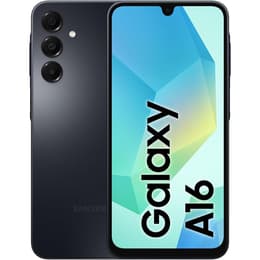
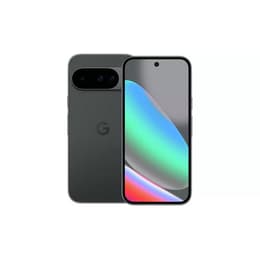
Galaxy A16 Vs Google Pixel 10

  • 1-year minimum warranty
  • Free delivery on all items
  • Free 30-day returns
Galaxy A16
Starting at

Refurbished price:£113.00

Versus £209.16 new

See options
Google Pixel 10
Starting at

Refurbished price:£425.00

Versus £999.00 new

See options

Differences at a glance

The Samsung Galaxy A16 (2024) and the Google Pixel 10 (2025) represent two distinct approaches to everyday smartphone design, catering to varying user preferences for functionality and software integration. While the Galaxy A16 focuses on long-term software support within an accessible format, the Google Pixel 10 delivers flagship-tier processing and advanced photo capabilities.

Both devices run the Android operating system, though they offer different user interfaces and feature sets tailored to distinct everyday requirements.

Available Models

Colour

Storage (GB)

Scores

Durability

Both smartphones provide robust long-term software support, though they differ in their hardware durability foundations and expected update timelines.

    Software longevity: The Galaxy A16 provides an extended update commitment of six years of operating system upgrades, matching the multi-year support window of the Google Pixel 10.Build and repairability: The Google Pixel 10 features higher-tier water resistance and structural materials, whereas the Galaxy A16 incorporates expandable storage via a memory card slot to maintain long-term usability.Practical lifespan: Both devices are engineered to handle daily routines reliably over several years, making a quality-assured refurbished option a sustainable choice for eco-conscious consumers.

Year of Release

2024

2025

OS

Android

Android

Foldable

No

No

Performance

System responsiveness and multitasking capabilities vary significantly between these two models based on their internal hardware configurations.

    Multitasking and memory: The Google Pixel 10 handles demanding applications and heavy multitasking smoothly thanks to its high RAM capacity, while the Galaxy A16 manages routine daily tasks like web browsing and messaging reliably.Storage configurations: Both models offer standard storage capacities starting at 128GB, though the Galaxy A16 supports external memory expansion for media storage.Battery behavior: Both devices sustain a full day of typical moderate use on a single charge, though heavy gaming or navigation will deplete the power reserves more quickly on both platforms.

Screen quality

Display characteristics differ in size, panel technology, and responsiveness, influencing everyday media consumption and outdoor visibility.

    Display technology: The Galaxy A16 features a large Super AMOLED panel with deep contrast, while the Google Pixel 10 utilizes an Actua OLED display offering high peak brightness levels for outdoor readability.Refresh rate and smoothness: Both devices support a smooth refresh rate that ensures fluid scrolling through menus, web pages, and social media feeds.Viewing experience: The Galaxy A16 offers a more expansive screen real estate for watching videos, whereas the Google Pixel 10 provides a more compact form factor with higher pixel density.

Resolution

1080x2340

1080x2424

Screen type

Super AMOLED

OLED

Audiovisual

The photography hardware and media output capabilities reflect each device's intended position within the broader smartphone market.

    Camera systems: The Google Pixel 10 includes a versatile triple-lens array featuring a dedicated telephoto zoom lens, while the Galaxy A16 relies on a simpler multi-lens setup focused on standard wide and macro shots.Low-light performance: Image processing on the Google Pixel 10 excels in challenging lighting conditions, whereas the Galaxy A16 captures clear photos in daylight environments.Audio and video: Both smartphones record crisp high-definition video and feature dependable microphones for calls, paired with clear built-in speakers for casual media playback.

Miscellaneous

Practical physical traits, connectivity standards, and daily handling aspects shape how each phone fits into routine activities.

    Connectivity and ports: Both devices support modern 5G networks, fast Wi-Fi standards, and reliable Bluetooth pairing, utilizing standard USB-C ports for charging and data transfer.Security features: Both models incorporate biometric authentication through responsive fingerprint sensors for secure device access.Handling and dimensions: The Galaxy A16 features a larger physical footprint and a lightweight plastic build, while the Google Pixel 10 offers a heavier, more compact structure with premium glass and metal elements.

Weight

200 g

204 g

Screen size (in)

6.7

6.3

Mobile network

4G

5G

SIM card

Physical SIM

Physical SIM + eSIM

Carrier compatibility

Unlocked

Unlocked

Connector

USB-C

USB-C

What the community thinks

Choosing between the Samsung Galaxy A16 and the Google Pixel 10 depends closely on individual usage priorities and everyday needs. Users prioritizing a larger display, expandable storage, and extended software commitments within a straightforward device will find the Galaxy A16 well-suited to their routine. Conversely, users prioritizing advanced photography capabilities, robust multitasking performance, and high display brightness will lean toward the Google Pixel 10.

For those mindful of environmental impact, exploring a quality-assured refurbished model provides an eco-friendly alternative that extends device life cycles without compromising on performance standards.