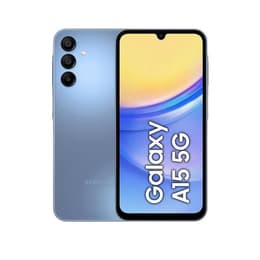


Galaxy A15 5G Vs Google Pixel 9 Pro

Galaxy A15 5G
Galaxy A15 5G
Starting at

Refurbished price:£99.00

Versus £212.30 new

See options
Google Pixel 9 Pro
Google Pixel 9 Pro
Starting at

Refurbished price:£395.25

Versus £917.17 new

See options

Ratings

The Samsung Galaxy A15 5G, released in late 2023 and early 2024, and the Google Pixel 9 Pro, launched in September 2024, represent distinct offerings in the smartphone market. While both devices operate on the Android platform, the Pixel 9 Pro introduces advanced processing capabilities, a more sophisticated camera system, and an extended software support timeline compared to the Galaxy A15 5G.

Scores

Durability

These two smartphones offer different timelines for software support and expected practical lifespan, reflecting their respective market positions.

  • Software Updates: The Google Pixel 9 Pro is designed for long-term use, offering seven years of operating system and security updates, extending its support until at least August 2031. This ensures the device remains current with the latest features and security protocols for an extended period. In contrast, the Samsung Galaxy A15 5G receives four years of OS updates, reaching Android 18, and five years of security updates, with support continuing until 2028. [7, 29, 32, 37, 41, 42]
  • Repairability and Durability: The Pixel 9 Pro features a more robust build with an IP68 rating for dust and water resistance, and its design has been noted for improved durability compared to its predecessors. While the Pixel 9 Pro received a mediocre repairability score of 5 from iFixit, indicating some challenges with battery replacement and display fragility, it is generally considered easier to repair than the Pixel 8 series. [23, 24, 39, 40, 44, 45] The Galaxy A15 5G, with its plastic frame and back, includes Gorilla Glass 5 protection for its display and is generally considered repairable for common issues like screen damage, though a specific iFixit score is not widely available. [38, 46, 48]
  • Practical Lifespan: Users prioritizing the longest possible software longevity and access to the latest Android versions will find the Pixel 9 Pro's extended support particularly appealing. The Galaxy A15 5G still offers a respectable update policy, making it a suitable choice for users who typically upgrade their devices within a four to five-year cycle.

Year of Release

2023

2024

Compatible with latest Update

Yes

Yes

OS

Android

Android

Foldable

No

No

Performance

The performance capabilities of the Galaxy A15 5G and the Pixel 9 Pro cater to different user expectations, primarily due to their internal hardware.

  • Processing Power: The Google Pixel 9 Pro is equipped with a current-generation processor, enabling it to handle demanding applications, complex multitasking, and advanced AI features with fluidity. This results in a highly responsive user experience, even with intensive tasks like high-fidelity gaming or advanced photo and video editing. [16] The Samsung Galaxy A15 5G utilizes a mid-range processor that capably manages everyday tasks such as web browsing, social media, and light gaming. While it performs well for its segment, users may notice longer loading times for heavy applications or occasional stutters during graphically intensive games. [10, 26]
  • Multitasking and Storage: The Pixel 9 Pro typically comes with a substantial amount of RAM, facilitating seamless transitions between numerous open applications and maintaining performance under heavy loads. It offers various storage options, including up to 1TB, though it does not support expandable storage. [9, 12] The Galaxy A15 5G offers up to 8GB of RAM, which is sufficient for most daily multitasking, and provides expandable storage via a microSD card, offering flexibility for users who need more space for media and files. [10, 30]
  • Battery Behavior: The Galaxy A15 5G features a large battery capacity, often providing up to two days of moderate use on a single charge, making it a strong contender for users who prioritize extended battery life. [10, 25, 31] The Pixel 9 Pro, while having a slightly smaller battery, offers good battery life, with many users reporting it comfortably lasts a full day even with heavy usage, representing a notable improvement over previous Pixel generations. [1, 8, 27, 28]

Memory (GB)

4 GB

16 GB

Screen quality

The visual experience on these two devices differs significantly, primarily in display technology, resolution, and brightness.

  • Display Technology and Clarity: The Google Pixel 9 Pro features a 6.3-inch LTPO OLED display with a high resolution, resulting in exceptionally sharp text and detailed images. This technology allows for adaptive refresh rates, contributing to power efficiency. [5, 9, 12, 22] The Samsung Galaxy A15 5G sports a 6.5-inch Super AMOLED display with a Full HD+ resolution, offering vibrant colors and deep blacks. While clear for most content, its resolution is lower than the Pixel 9 Pro. [4, 10, 26, 46]
  • Brightness and Refresh Rate: The Pixel 9 Pro's display can reach significantly higher brightness levels, with peak brightness up to 3000 nits, ensuring excellent visibility even in direct sunlight. It also boasts a 120Hz refresh rate, providing very smooth scrolling and fluid animations. [16, 22] The Galaxy A15 5G offers a 90Hz refresh rate for smoother visuals than standard 60Hz displays and reaches up to 800 nits in high brightness mode, which is adequate for most indoor and outdoor viewing conditions. [4, 10]
  • Viewing Experience: Users who prioritize a highly detailed, exceptionally bright, and ultra-smooth visual experience, especially for media consumption or gaming, will find the Pixel 9 Pro's display more immersive. The Galaxy A15 5G provides a good quality display for everyday use, offering a pleasant viewing experience for general browsing and video playback.

Resolution

1080 x 2340

1280 x 2856

Screen type

Super AMOLED

LTPO OLED

Audiovisual

The camera systems on the Galaxy A15 5G and the Pixel 9 Pro are designed for different levels of photographic capability and user experience.

  • Rear Camera System: The Google Pixel 9 Pro features a versatile triple-camera setup, including a 50 MP main sensor, a 48 MP ultrawide lens, and a 48 MP 5x telephoto lens. This configuration, combined with advanced computational photography, excels in capturing detailed images across various lighting conditions, including impressive low-light performance and optical zoom capabilities. [3, 12, 14, 15, 16, 19] The Samsung Galaxy A15 5G includes a triple camera system with a 50 MP main sensor, a 5 MP ultrawide, and a 2 MP macro lens. It performs well for everyday photography in good lighting, producing vivid and shareable images, but lacks the advanced zoom and low-light prowess of the Pixel 9 Pro. [4, 10, 18, 26]
  • Front Camera and Video: The Pixel 9 Pro is equipped with a high-resolution 42 MP front camera, capable of capturing sharp selfies and supporting advanced video features. Its video recording capabilities are enhanced by features like Video Boost, which can upscale footage to 8K, and Night Sight Video for improved low-light recording. [3, 14, 15, 16, 19] The Galaxy A15 5G has a 13 MP front camera suitable for video calls and casual selfies, and it records video at Full HD resolution. [4, 10]
  • Photography Features: The Pixel 9 Pro integrates extensive AI-driven features such as Pro Controls, Macro Focus, Astrophotography, and Magic Editor enhancements, offering users significant creative control and post-processing capabilities. [3, 14, 15] The Galaxy A15 5G provides a more straightforward camera experience, focusing on ease of use for capturing everyday moments.

Main camera

50 megapixels

50 megapixels

Front camera

13 megapixels

42 megapixels

Miscellaneous

Beyond core specifications, several practical elements differentiate the user experience between these two smartphones.

  • Connectivity and Ports: Both devices support 5G connectivity for fast mobile data. The Google Pixel 9 Pro is expected to feature newer Wi-Fi standards, potentially Wi-Fi 7, and Bluetooth 5.4, along with USB-C 3.2 for faster data transfer. It also includes Ultra Wideband (UWB) support and Satellite SOS service for enhanced connectivity and safety. [12, 20] The Samsung Galaxy A15 5G supports Wi-Fi 5 and Bluetooth 5.3, and features a USB-C 2.0 port. A notable inclusion on the Galaxy A15 5G is a 3.5mm headphone jack, which is absent on the Pixel 9 Pro. [4, 10, 17, 46]
  • Biometric Security and Build: The Pixel 9 Pro incorporates an in-display fingerprint sensor and offers face recognition, alongside an IP68 rating for dust and water resistance, indicating a high level of protection. Its construction involves glass on both the front and back, framed by aluminum. [12, 24] The Galaxy A15 5G typically features a side-mounted fingerprint sensor and a plastic build for its back and frame, with a glass front protected by Gorilla Glass 5. [10, 46, 48]
  • Dimensions and Handling: The Pixel 9 Pro is slightly more compact and lighter, which may appeal to users preferring a device that is easier to handle with one hand. [2, 9, 12] The Galaxy A15 5G is a bit larger and heavier, offering a more expansive screen area for content consumption. [10, 17]

Weight

200 g

199 g

Screen size (in)

6.5

6.3

Mobile network

5G

5G

SIM card

Dual Physical SIM

Physical SIM + eSIM

Carrier compatibility

Unlocked

Unlocked

The Samsung Galaxy A15 5G and the Google Pixel 9 Pro cater to different user priorities, each excelling in specific areas. The Galaxy A15 5G is frequently praised for its exceptional battery life, often lasting well into a second day of use, and its commitment to several years of software updates. Users appreciate its vibrant Super AMOLED display for everyday viewing and the inclusion of a 3.5mm headphone jack. Criticisms sometimes point to its mid-range processing power, which can lead to slower performance with demanding applications, and its more basic camera system compared to higher-end devices. [10, 25, 26, 30, 31]

The Google Pixel 9 Pro, on the other hand, garners acclaim for its powerful processor, delivering a consistently smooth and responsive experience across all tasks. Its advanced camera system, with a telephoto lens and extensive AI-driven features, is a significant highlight, producing high-quality photos and videos in diverse conditions. Users also value its superior LTPO OLED display with high refresh rates and brightness, along with Google's industry-leading seven-year software support policy. Some user feedback indicates that while battery life is good and improved over previous models, it may not always match the multi-day endurance of some larger-battery devices. [1, 8, 16, 27, 28, 29, 32, 37]

Users prioritizing a device with a long-term software commitment, cutting-edge camera capabilities, and top-tier performance for demanding applications will find the Google Pixel 9 Pro well-suited to their needs. Conversely, those who value extended battery life, a solid everyday smartphone experience, and expandable storage, without the need for flagship-level processing or advanced camera features, may lean towards the Samsung Galaxy A15 5G. Both devices offer compelling features for their respective audiences, and considering a quality-assured refurbished option for either model can be a sustainable choice for consumers.


See all articles

Our recent comparisons