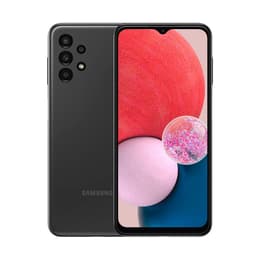


Galaxy A13 Vs Google Pixel 9 Pro

Galaxy A13
Galaxy A13
Starting at

Refurbished price:£73.00

Versus £249.00 new

See options
Google Pixel 9 Pro
Google Pixel 9 Pro
Starting at

Refurbished price:£395.25

Versus £917.17 new

See options

Ratings

The Samsung Galaxy A13 and the Google Pixel 9 Pro represent distinct offerings in the smartphone market, catering to different user priorities. The Galaxy A13, released in March 2022, is a budget-friendly Android device, while the Pixel 9 Pro, launched in August 2024, is a premium flagship smartphone from Google. These devices differ significantly in their core specifications, camera capabilities, and overall user experience, reflecting their respective market segments.

Scores

Durability

The longevity of a smartphone is influenced by its initial release, software support, and physical durability. The Galaxy A13 and Pixel 9 Pro offer contrasting expectations in these areas.

  • Release Timeline: The Samsung Galaxy A13 was released in March 2022, making it an older device compared to the Google Pixel 9 Pro, which launched in August 2024. This age difference inherently impacts their remaining support lifecycles.
  • Software Longevity: The Galaxy A13 typically received 2 major Android OS updates and security updates until late 2025. In contrast, the Google Pixel 9 Pro is designed for extended software support, offering seven years of OS and security updates from its release, ensuring it remains current for a significantly longer period.
  • Build and Practical Lifespan: The Galaxy A13 features a plastic build with Gorilla Glass 5 protection on the front, offering a reasonable level of durability for its class. The Pixel 9 Pro, however, incorporates premium materials like glass on the front and back, an aluminum frame, and IP68 water and dust resistance, suggesting a more robust construction designed to withstand daily use over its extended software support period.

Year of Release

2022

2024

Compatible with latest Update

No

Yes

OS

Android

Android

Foldable

No

No

Performance

Performance is a key differentiator between these two smartphones, impacting everything from app responsiveness to multitasking capabilities.

  • System Responsiveness: The Galaxy A13 provides adequate performance for everyday tasks and light usage, but users may experience slower app loading times and occasional stutters with more demanding applications or heavy multitasking. The Pixel 9 Pro, powered by a current-generation processor, delivers smooth and rapid performance across all tasks, handling demanding apps, complex computations, and seamless multitasking with ease.
  • Multitasking and RAM: The Galaxy A13 comes with varying RAM configurations (3GB, 4GB, 6GB), which can limit its ability to keep many applications open simultaneously without refreshing. The Pixel 9 Pro typically features a higher amount of RAM (16GB), allowing for extensive multitasking and ensuring applications remain active in the background for quick access.
  • Storage Options: Both devices offer multiple internal storage options. The Galaxy A13 is available with 32GB, 64GB, or 128GB of internal storage, with expandable storage via a microSD card. The Pixel 9 Pro offers larger base storage options, typically starting from 128GB and going up to 1TB, but without expandable storage.

Memory (GB)

4 GB

16 GB

Screen quality

The visual experience on a smartphone is largely defined by its display technology and specifications, where the Galaxy A13 and Pixel 9 Pro offer distinct characteristics.

  • Display Technology and Clarity: The Samsung Galaxy A13 features a 6.6-inch PLS TFT LCD display with a resolution of 1080 x 2408 pixels, providing clear visuals for general use. The Google Pixel 9 Pro, on the other hand, boasts a 6.3-inch LTPO OLED display with a higher resolution of 2856 x 1280 pixels, offering superior contrast, deeper blacks, and more vibrant colors.
  • Brightness and Refresh Rate: The Galaxy A13 has a standard 60Hz refresh rate, suitable for typical content consumption. The Pixel 9 Pro features an adaptive refresh rate that can range from 1Hz to 120Hz, providing smoother scrolling and more fluid animations while also optimizing power efficiency. It also offers significantly higher peak brightness levels, reaching up to 3000 nits, which enhances visibility in bright outdoor conditions.
  • Viewing Experience: While the Galaxy A13's larger screen size offers ample viewing area, the Pixel 9 Pro's advanced OLED technology and higher pixel density result in a more immersive and detailed visual experience, particularly for high-definition content.

Resolution

1080 x 2408

1280 x 2856

Screen type

PLS LCD

LTPO OLED

Audiovisual

Camera capabilities are a significant factor for many users, and the Galaxy A13 and Pixel 9 Pro approach photography with different hardware and software philosophies.

  • Rear Camera System: The Samsung Galaxy A13 features a quad-camera setup with a 50MP main sensor, a 5MP ultrawide, and two 2MP sensors for macro and depth. The Google Pixel 9 Pro comes with a triple rear camera system, typically including a 50MP main sensor, a 48MP ultrawide, and a 48MP telephoto lens with 5x optical zoom.
  • Photography Performance: The Galaxy A13's main camera performs well in good lighting conditions, producing decent images for social media, but struggles in low-light environments due to the absence of a dedicated low-light mode. The Pixel 9 Pro excels in computational photography, offering exceptional image quality across various conditions, including challenging low-light scenarios, with features like Night Sight and advanced AI processing.
  • Video and Front Camera: The Galaxy A13 can record video up to 1080p at 30fps and has an 8MP front-facing camera. The Pixel 9 Pro offers more advanced video recording capabilities, including 4K UHD at 60fps and features like Video Boost for enhanced video quality, and a high-resolution 42MP front camera with autofocus for sharper selfies.

Main camera

50 megapixels

50 megapixels

Front camera

8 megapixels

42 megapixels

Miscellaneous

Beyond the core features, several practical elements contribute to the overall user experience and differentiate these two devices.

  • Connectivity and Ports: The Galaxy A13 supports 4G LTE (with a 5G variant available) and Wi-Fi 5, and includes a 3.5mm headphone jack alongside its USB-C port. The Pixel 9 Pro offers more advanced connectivity, including 5G, Wi-Fi 7, and Bluetooth 5.4, and features a USB-C port, but typically omits the traditional headphone jack.
  • Biometric Security: The Galaxy A13 features a side-mounted fingerprint sensor for secure unlocking. The Pixel 9 Pro utilizes an under-display fingerprint sensor and also supports Face Unlock for convenient and secure access.
  • Design and Handling: The Galaxy A13 has a plastic construction, contributing to its lighter weight (195g) and a larger form factor (165.1 x 76.4 x 8.8mm). The Pixel 9 Pro features a more compact design (152.8 x 72 x 8.5mm) with premium materials, weighing slightly more (199g), and offers a refined in-hand feel.

Weight

195 g

199 g

Screen size (in)

6.6

6.3

Mobile network

4G

5G

SIM card

Dual Physical SIM

Physical SIM + eSIM

Carrier compatibility

Unlocked

Unlocked

The Samsung Galaxy A13 and Google Pixel 9 Pro cater to distinct user needs, reflecting their different positions in the smartphone market. Users often praise the Galaxy A13 for its robust battery life, which can extend to two days of casual use, and its capable main camera performance in well-lit conditions. However, common criticisms include its slower performance for demanding tasks and its display's lower refresh rate.

The Google Pixel 9 Pro, conversely, receives high acclaim for its exceptional camera system, particularly its advanced computational photography and low-light capabilities. Its vibrant, high-refresh-rate OLED display and long-term software support are also frequently highlighted as significant advantages. Some users note that while its performance is strong for daily use, it might not always match the raw benchmark scores of some competitors.

Users prioritizing a device for essential communication, social media, and extended battery life without a premium investment may find the Galaxy A13 well-suited to their needs. It serves as a practical choice for those who value affordability and basic smartphone functionality. For individuals who demand cutting-edge camera technology, a fluid and vibrant display, and a commitment to long-term software updates, the Pixel 9 Pro aligns better with their priorities. It is ideal for photography enthusiasts, power users, and those seeking a premium Android experience with advanced AI features.

Both devices are available as quality-assured refurbished options, providing an eco-friendly alternative for consumers looking to make a sustainable choice while still acquiring a device that fits their specific requirements.


See all articles

Our recent comparisons