
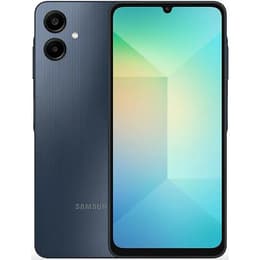
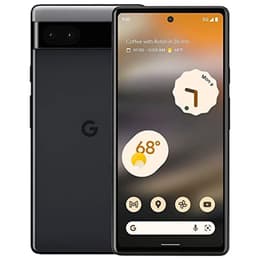

Galaxy A06 Vs Google Pixel 6A

Galaxy A06
Galaxy A06
Starting at

Refurbished price:£70.00

Versus £158.08 new

See options
Google Pixel 6A
Google Pixel 6A
Starting at

Refurbished price:£107.00

Versus £459.00 new

See options

Ratings

The Samsung Galaxy A06, released in August 2024, and the Google Pixel 6A, launched in July 2022, are both Android smartphones designed for everyday use. While the Galaxy A06 offers a larger display and a more recent release, the Pixel 6A distinguishes itself with a more advanced processor and a focus on computational photography. Both devices run on the Android operating system, providing access to a wide ecosystem of applications and services.

Scores

Durability

The practical lifespan of a smartphone is significantly influenced by its software support and physical resilience.

  • Release Timeline and Software Support: The Galaxy A06 (4G version) was released in August 2024, shipping with Android 14. It is guaranteed to receive two major OS upgrades, with its final Android version being Android 16, expected around October 2025. Security updates are planned until 2028. In contrast, the Google Pixel 6A, released in July 2022 with Android 12, has an extended support policy, receiving OS and security updates until July 2027. This means the Pixel 6A will continue to receive major Android updates for a longer period than the Galaxy A06. [1, 3, 5, 7, 9, 10, 15, 16, 22, 23, 24, 29, 30]
  • Physical Durability: The Pixel 6A features an IP67 rating for dust and water resistance, meaning it can withstand immersion in up to 1 meter of water for 30 minutes, and its display is protected by Corning Gorilla Glass 3. The Galaxy A06 (4G version) does not carry an official IP rating, suggesting less protection against dust and water exposure, and typically uses a standard glass front. Users prioritizing robust protection against environmental elements might find the Pixel 6A more suitable. [2, 7]
  • Repairability: While specific repairability scores can vary, both devices are generally designed with components that can be replaced by skilled technicians. However, the availability of parts and repair guides can differ between manufacturers.

Year of Release

2024

2022

Compatible with latest Update

Yes

Yes

OS

Android

Android

Foldable

No

No

Performance

Performance in smartphones is about how smoothly tasks are handled, from daily navigation to more demanding applications.

  • Processor Capabilities: The Google Pixel 6A is equipped with a processor designed for efficient handling of complex tasks, including advanced image processing and machine learning operations, resulting in a responsive user experience across various applications and multitasking scenarios. The Galaxy A06 features a processor that capably handles everyday activities such as browsing, social media, and light gaming. Users report that it performs smoothly for basic tasks, though some note potential slowdowns with the 64GB storage variant or when many applications are open simultaneously. [6, 9, 15, 25, 26]
  • Memory and Storage: The Pixel 6A comes with 6GB of RAM and 128GB of internal storage, which is a fixed configuration without expansion options. The Galaxy A06 offers more flexibility with configurations including 4GB or 6GB of RAM and 64GB or 128GB of internal storage, alongside the ability to expand storage up to 1TB via a microSD card. This expandable storage is a practical advantage for users who require significant space for photos, videos, and applications. [2, 3, 11, 12, 14, 20]
  • Battery Behavior: The Galaxy A06 houses a 5000mAh battery, providing ample power for extended use, with users often reporting it lasts through a full day of moderate activity. The Pixel 6A has a 4410mAh battery, which Google states can offer up to 24 hours of typical usage and significantly longer with extreme battery saver modes. Both devices support fast charging, though the Pixel 6A's charging speed has been noted by some users as being slower compared to other devices. [2, 3, 12, 13, 18]

Memory (GB)

4 GB

6 GB

Screen quality

The display is a primary interface for smartphone interaction, and differences in technology and specifications can impact the visual experience.

  • Display Technology and Clarity: The Google Pixel 6A features a 6.1-inch OLED display with a Full HD+ resolution (2400 x 1080 pixels), offering deep blacks, high contrast, and vibrant colors. The Samsung Galaxy A06 comes with a larger 6.7-inch PLS LCD display, providing a more expansive viewing area, but with a lower HD+ resolution (720 x 1600 pixels). This results in a lower pixel density for the A06, meaning the Pixel 6A generally offers sharper text and more detailed images. [2, 3, 7, 12, 14, 19, 20, 26]
  • Brightness and Refresh Rate: Both devices feature a standard 60Hz refresh rate, which provides a smooth experience for typical scrolling and video playback, though it does not offer the enhanced fluidity of higher refresh rate displays found on some other smartphones. The Pixel 6A's OLED panel typically provides good brightness for indoor and outdoor viewing, while the Galaxy A06's PLS LCD display is generally considered adequate for most lighting conditions, though some users have noted it can be quite dim and reflective. [2, 3, 8, 13, 17, 26]
  • Viewing Experience: The Pixel 6A's smaller size and OLED technology make it suitable for users who prefer a more compact device with a premium visual experience. The Galaxy A06's larger screen size caters to those who prioritize screen real estate for media consumption or productivity, despite the lower resolution.

Resolution

720 x 1600

1080 x 2400

Screen type

PLS LCD

OLED

Audiovisual

Camera capabilities are a significant factor for many users, influencing how they capture and share moments.

  • Rear Camera System: The Google Pixel 6A features a dual-camera setup with a 12.2-megapixel main sensor and a 12-megapixel ultrawide lens. Its strength lies in its advanced computational photography, which enhances image quality, particularly in challenging lighting conditions, and includes features like Night Sight and Magic Eraser. The Samsung Galaxy A06 is equipped with a 50-megapixel primary camera and a 2-megapixel depth sensor. While the A06 boasts a higher megapixel count for its main sensor, the Pixel 6A's software processing often results in more consistent and detailed photos, especially in varied scenarios. [2, 3, 9, 11, 12, 19, 26, 27]
  • Front Camera and Video Recording: Both devices include an 8-megapixel front-facing camera for selfies and video calls. The Pixel 6A is capable of recording 4K video at 60 frames per second, offering higher resolution and smoother video capture. The Galaxy A06 records video at lower resolutions, typically Full HD. User feedback for the Pixel 6A often praises its camera for producing excellent daytime and low-light photos, while the Galaxy A06's camera is generally considered suitable for casual photography but less impressive in demanding situations or for moving subjects. [2, 6, 8, 12, 17, 26]
  • Audio Experience: The Pixel 6A offers a balanced audio experience through its stereo speakers, suitable for media consumption. The Galaxy A06 typically features a single bottom-firing speaker, which provides adequate sound for calls and casual listening. The Galaxy A06 also retains a 3.5mm headphone jack, a feature absent on the Pixel 6A, which can be a consideration for users who prefer wired audio accessories. [2, 8, 18, 26]

Main camera

50 megapixels

12.2 megapixels

Front camera

8 megapixels

8 megapixels

Miscellaneous

Beyond core specifications, several practical features contribute to the overall user experience and device utility.

  • Connectivity and Ports: The Google Pixel 6A supports 5G connectivity, including both mmWave and Sub-6GHz bands, offering faster mobile data speeds where available. It features a USB-C port for charging and data transfer but lacks a 3.5mm headphone jack. The Samsung Galaxy A06 (4G version) supports 4G LTE networks and includes a USB-C port, along with a 3.5mm headphone jack, which is convenient for users with wired headphones. The A06 does not support NFC, a feature present on the Pixel 6A, which is used for contactless payments and quick pairing. [2, 3, 12, 18, 26]
  • Biometric Security and Design: The Pixel 6A incorporates an in-display fingerprint sensor for secure unlocking. Its design features a plastic back that feels like glass and a metal frame, contributing to a premium feel and an IP67 rating. The Galaxy A06 utilizes a side-mounted fingerprint sensor, which some users find intuitive. Its build consists of a plastic back and frame, offering a comfortable grip and a larger form factor. [2, 3, 6, 7, 8, 12, 17, 19, 26]
  • Dimensions and Handling: The Pixel 6A is a more compact device, weighing 178 grams and featuring a 6.1-inch display, making it easier for one-handed use. The Galaxy A06 is larger and slightly heavier at 196 grams with its 6.7-inch display, appealing to users who prefer a bigger screen for viewing content. [3, 4, 7, 12, 18]

Weight

189 g

250 g

Screen size (in)

6.7

6.1

Mobile network

4G

5G

SIM card

Dual Physical SIM

Physical SIM + eSIM

Carrier compatibility

Unlocked

Unlocked

Connector

USB-C + Jack 3.5mm

USB-C

The Samsung Galaxy A06 and Google Pixel 6A cater to different user priorities within the Android smartphone market. Users frequently praise the Pixel 6A for its exceptional camera performance, driven by Google's advanced software processing, and its robust software update policy, ensuring longevity. Its compact size and premium feel are also commonly highlighted as positive attributes. However, some users have noted concerns regarding its slower charging speed and occasional inconsistencies with the in-display fingerprint sensor. [8, 9, 13, 17, 18, 21]

Conversely, the Galaxy A06 is often commended for its large display, substantial battery capacity, and the convenience of expandable storage and a 3.5mm headphone jack. Its performance is generally considered adequate for daily tasks, and the side-mounted fingerprint sensor receives positive feedback for its responsiveness. Criticisms sometimes point to its lower display resolution, less impressive camera performance in challenging conditions, and a shorter software update commitment compared to the Pixel 6A. [6, 12, 25, 26, 27, 28]

Users prioritizing a superior camera experience, longer software support, and a more compact, durable design may find the Google Pixel 6A to be a more fitting choice. Conversely, individuals who value a larger screen for media consumption, extended battery life, expandable storage, and the presence of a headphone jack might lean towards the Samsung Galaxy A06. Both devices offer a reliable Android experience, and considering a quality-assured refurbished option for either model can be an eco-friendly alternative for making an informed purchasing decision.


See all articles

Our recent comparisons






