
Compare models
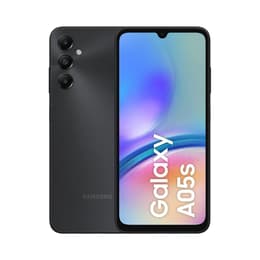
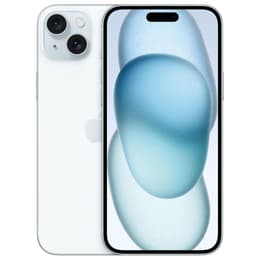
Galaxy A05s Vs iPhone 15 Plus
- 1-year minimum warranty
- Free delivery on all items
- Free 30-day returns
Differences at a glance
The Samsung Galaxy A05S, released in October 2023, and the iPhone 15 Plus, launched in September 2023, are both smartphones designed for different user experiences. The Galaxy A05S operates on the Android platform, offering a large display and a focus on essential functionalities. In contrast, the iPhone 15 Plus runs on Apple's iOS, providing a premium ecosystem experience with advanced features and performance. These devices primarily differ in their operating systems and the overall performance tiers they represent.
Available Models
Colour
Storage (GB)
Scores
Durability
When considering the long-term usability of these devices, their release timelines and software support are key factors.
- Release and Software Support: The Samsung Galaxy A05S was released in October 2023 and typically receives two to three major Android operating system updates, alongside four years of security updates from its launch date. This suggests software support extending into late 2027. The iPhone 15 Plus, launched in September 2023, began with iOS 17 and is compatible with iOS 26, indicating a longer period of major software updates, often spanning five to seven years from its release.
- Physical Durability: The iPhone 15 Plus features a Ceramic Shield front cover and an IP68 rating for water and dust resistance, offering protection against submersion up to 6 meters for 30 minutes. The Galaxy A05S, constructed with a plastic chassis, does not carry an official IP rating, suggesting less resistance to environmental elements.
- Practical Lifespan: Users can expect the iPhone 15 Plus to remain current with software features and security updates for a considerably longer duration than the Galaxy A05S, which is a common distinction between devices from these two manufacturers. The iPhone 15 Plus was discontinued in September 2025, but continues to receive software updates.
Year of Release
2023
2023
Compatible with latest Update
No
Yes
OS
Android
iOS
Foldable
No
No
Performance
The performance capabilities of these two smartphones cater to different user demands, influenced by their internal components and software optimization.
- Processing Power: The iPhone 15 Plus is equipped with a current-generation processor, enabling smooth operation for demanding applications, complex multitasking, and graphically intensive games. The Galaxy A05S features a processor designed for everyday tasks, handling basic applications and general usage adequately, though it may exhibit slower responsiveness with more intensive apps or multitasking.
- System Responsiveness: Users of the iPhone 15 Plus generally report a fluid and lag-free experience across the operating system and applications. In contrast, some users of the Galaxy A05S have noted occasional delays and slower app loading times, particularly with the 4GB RAM variant.
- Battery Endurance: The Galaxy A05S includes a 5000mAh battery, which typically provides a full day of use, and often extends beyond with moderate usage patterns. The iPhone 15 Plus, with its 4383mAh battery, is recognized for its exceptional battery life, frequently lasting more than a full day even under heavy usage scenarios.
Screen quality
The visual experience offered by each device's display technology presents distinct characteristics for users.
- Display Technology and Clarity: The iPhone 15 Plus features a 6.7-inch Super Retina XDR OLED display, providing deep blacks, high contrast, and vibrant colors with a resolution of 2796 x 1290 pixels, resulting in sharp and clear visuals. The Galaxy A05S has a 6.7-inch PLS LCD screen with a 1080 x 2400 (FHD+) resolution, offering a clear picture, though its color reproduction and contrast may not be as pronounced as an OLED panel.
- Brightness and Outdoor Visibility: The iPhone 15 Plus achieves a typical brightness of 1000 nits and a peak outdoor brightness of 2000 nits, ensuring excellent visibility even in direct sunlight. The Galaxy A05S has a maximum brightness around 500-720 nits, which can make outdoor viewing challenging in bright conditions.
- Refresh Rate and Smoothness: The Galaxy A05S offers a 90Hz refresh rate, contributing to smoother scrolling and more fluid animations compared to a standard 60Hz display. The iPhone 15 Plus maintains a 60Hz refresh rate, which provides a consistent visual experience, though some users accustomed to higher refresh rates might notice a difference in fluidity. The iPhone 15 Plus also incorporates the Dynamic Island, an interactive area around the front camera that displays alerts and live activities.
Resolution
1080 x 2400
1290 x 2796
Screen type
PLS LCD
Super Retina XDR OLED
Audiovisual
The camera systems on both devices are designed to capture different levels of detail and offer varying photographic capabilities.
- Rear Camera System: The iPhone 15 Plus features an advanced dual-camera system with a 48MP main sensor that can capture detailed 24MP photos by default, and a 12MP ultra-wide lens. It also offers a 2x telephoto option using the main sensor's capabilities. The Galaxy A05S is equipped with a triple rear camera setup, including a 50MP main sensor, a 2MP macro lens, and a 2MP depth sensor.
- Photography Performance: The iPhone 15 Plus delivers strong image quality in various lighting conditions, including improved low-light performance, and offers excellent video stabilization. The Galaxy A05S performs well in good daylight conditions, producing vivid images, but its low-light performance is less capable, often showing noise and lacking optical image stabilization (OIS).
- Video Recording and Front Camera: The iPhone 15 Plus supports video recording up to 4K HDR at 60 frames per second, with features like Cinematic mode. Its 12MP TrueDepth front camera provides clear selfies and supports advanced features like Face ID. The Galaxy A05S records video up to 1080p at 60 frames per second, though some reviews indicate 30fps without stabilization in certain modes. It has a 13MP front camera suitable for video calls and selfies in good lighting.
Main camera
50 megapixels
48 megapixels
Front camera
13 megapixels
12 megapixels
Miscellaneous
Beyond core performance and display, several practical elements differentiate these two smartphones in daily use.
- Connectivity and Ports: The iPhone 15 Plus supports 5G connectivity, Wi-Fi 6 (802.11ax), and Bluetooth 5.3, offering fast wireless communication. It features a USB-C 2.0 port for charging and data transfer. The Galaxy A05S supports 4G networks, Wi-Fi 5 (802.11ac), and Bluetooth 5.1. It also uses a USB-C 2.0 port and retains a 3.5mm headphone jack, which is absent on the iPhone 15 Plus.
- Security and Biometrics: The iPhone 15 Plus relies on Face ID for secure authentication and unlocking. The Galaxy A05S incorporates a side-mounted fingerprint sensor for biometric security.
- Physical Characteristics: The iPhone 15 Plus has an aluminum design with a color-infused glass back and Ceramic Shield front, weighing 201 grams. The Galaxy A05S features a plastic chassis and weighs 194 grams, making it slightly lighter. Both devices have a similar screen size of 6.7 inches.
Weight
194 g
201 g
Screen size (in)
6.7
6.7
Mobile network
4G
5G
SIM card
Dual Physical SIM
Physical SIM + eSIM
Carrier compatibility
Unlocked
Unlocked
Connector
USB-C
USB-C
What the community thinks
The Samsung Galaxy A05S and the iPhone 15 Plus cater to distinct user needs and preferences. User feedback for the Galaxy A05S often highlights its substantial battery life and large display as key advantages for its segment. However, some users note that its performance can be slow for more demanding tasks, and its camera system, while capable in good lighting, struggles in low-light conditions.
Conversely, the iPhone 15 Plus receives praise for its exceptional battery life, vibrant OLED display with Dynamic Island, and consistently strong camera performance across various scenarios. Its smooth and responsive user experience is also a frequently mentioned positive. A common point of discussion among users, particularly those transitioning from other devices, is its 60Hz refresh rate, which some find less fluid compared to phones with higher refresh rates.
Users prioritizing a large screen and extended battery life for everyday communication, social media, and casual media consumption, without requiring top-tier performance or advanced photographic capabilities, may find the Galaxy A05S a suitable option. For individuals seeking a premium smartphone experience with a highly capable camera, a vibrant display, robust performance for demanding applications, and a longer software support lifespan within the iOS ecosystem, the iPhone 15 Plus aligns well with those priorities. Both devices offer a pathway to mobile connectivity, and for those considering a more sustainable choice, quality-assured refurbished options are available for both models.