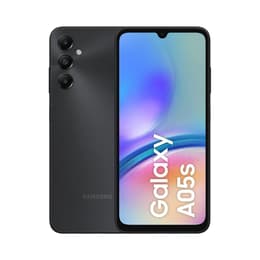
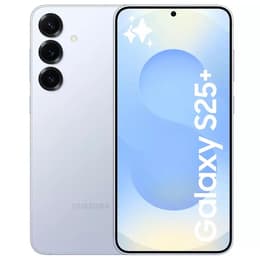

Galaxy A05s Vs Galaxy S25+

Galaxy A05s
Galaxy A05s
Starting at

Refurbished price:£89.00

Versus £129.00 new

See options
Galaxy S25+
Galaxy S25+
Starting at

Refurbished price:£550.00

Versus £958.39 new

See options

Ratings

The Samsung Galaxy A05S, released in October 2023, and the Samsung Galaxy S25 Plus, launched in February 2025, represent distinct tiers within Samsung's smartphone lineup. While both devices operate on the Android platform, the S25 Plus offers a significantly more advanced and feature-rich experience compared to the A05S, which is designed for essential smartphone functions. The primary differentiators lie in their performance capabilities, display quality, and camera systems, reflecting their respective market positions.

Scores

Durability

The expected lifespan and software support differ considerably between these two Galaxy smartphones.

  • Release Timeline and Age: The Galaxy A05S was released in October 2023, making it a more established device. The Galaxy S25 Plus, a newer model, launched in February 2025. This difference in release year impacts their respective software support cycles.
  • OS Support Duration: The Galaxy A05S typically receives two major Android OS updates and up to four years of security updates from its release. For instance, launching with Android 13, it is expected to receive updates up to Android 15. In contrast, the Galaxy S25 Plus, as a flagship device, is part of Samsung's extended support policy, offering seven years of major OS updates and seven years of security updates. This means the S25 Plus will maintain current software and security features for a considerably longer period.
  • Repairability: The Galaxy A05S has an average repairability score, with some sources indicating a score of 7.5 out of 10 or 8.8 out of 10, noting accessible battery replacement but challenges with adhesive for the back cover. Premium Galaxy S-series devices, like the S25 Plus, have seen improvements in repairability, with some models achieving scores around 5 out of 10 or higher, often featuring easier battery access with pull tabs, though screen removal can still be complex due to strong adhesives.

Year of Release

2023

2025

OS

Android

Android

Foldable

No

No

Performance

The performance capabilities of the Galaxy A05S and Galaxy S25 Plus cater to different user demands, reflecting their internal hardware.

  • Processor Capabilities: The Galaxy A05S is equipped with a processor suitable for everyday tasks such as browsing, social media, and light gaming. Users generally find it capable for seamless viewing and sharing, though some may experience occasional stutters or delays with more demanding applications. The Galaxy S25 Plus, featuring a current-generation flagship processor, offers a significant leap in performance. It is designed to handle intensive multitasking, graphic-heavy gaming, and advanced applications with smooth animations and enhanced responsiveness.
  • Storage and Multitasking: The A05S typically comes with 64GB or 128GB of internal storage, which can be expanded using a microSD card. This provides flexibility for users who need more space for photos and apps. The S25 Plus offers larger base storage options, usually starting from 256GB and going up to 512GB, but it does not support expandable storage. The S25 Plus also includes more RAM, which contributes to smoother transitions between multiple open applications and a more fluid overall user experience.
  • Battery Behavior: Both devices feature large battery capacities. The Galaxy A05S, with its 5000 mAh battery, is noted for its long-lasting power, often providing a full day or even two days of use for some users, and supports 25W wired fast charging. The Galaxy S25 Plus, with a 4900 mAh battery, is also expected to deliver excellent battery life, potentially lasting up to two days for some users, and supports faster 45W wired charging.

Memory (GB)

4 GB

12 GB

Screen quality

The visual experience on these two devices is a key area of distinction, primarily due to their display technologies and specifications.

  • Display Technology and Resolution: The Galaxy A05S features a 6.7-inch PLS LCD display with a Full HD+ resolution (1080 x 2400 pixels). This panel provides clear visuals and vibrant colors for everyday viewing. The Galaxy S25 Plus, on the other hand, boasts a 6.7-inch Dynamic AMOLED 2X display with a Quad HD+ resolution (1440 x 3120 pixels). This advanced display technology offers deeper blacks, higher contrast, and more vivid colors, contributing to a more immersive viewing experience.
  • Brightness and Refresh Rate: The A05S has a 90Hz refresh rate, which provides a smoother scrolling experience compared to standard 60Hz displays. Its brightness levels are suitable for indoor and moderate outdoor use. The S25 Plus features an adaptive 120Hz refresh rate, which dynamically adjusts based on content, offering exceptionally smooth motion while optimizing power consumption. It also achieves significantly higher peak brightness levels, making it more comfortable to view content clearly even in bright outdoor conditions.
  • Viewing Experience: Users of the A05S generally find its display sharp, crisp, and vibrant for media consumption and general use. The S25 Plus's display is described as punchy and vibrant, providing an excellent visual experience with its higher resolution and superior brightness, making it well-suited for detailed content and outdoor visibility.

Resolution

1080 x 2400

1440x3120

Audiovisual

The camera systems on the Galaxy A05S and Galaxy S25 Plus are designed for different levels of photographic capability.

  • Rear Camera System: The Galaxy A05S is equipped with a triple rear camera setup, including a 50 MP main sensor, a 2 MP macro lens, and a 2 MP depth sensor. This configuration is capable of capturing detailed photos in good lighting conditions, with the depth sensor assisting in portrait shots. The Galaxy S25 Plus features a more advanced triple camera array, typically comprising a 50 MP main sensor, a 12 MP ultrawide lens, and a 10 MP telephoto lens with 3x optical zoom. This setup offers greater versatility and higher quality across various photographic scenarios.
  • Photography Performance: The A05S performs well in daylight, producing detailed and vibrant photos, but its performance can diminish in low-light environments. The S25 Plus is expected to deliver sharp and vibrant photos consistently, benefiting from its larger sensors, advanced image processing, and computational photography features, which enhance performance in challenging lighting conditions.
  • Video Recording and Audio: The A05S supports Full HD (1080p) video recording at up to 60 frames per second. User feedback suggests that its video quality may not be its strongest feature. The S25 Plus is capable of recording high-resolution video, including 8K and 4K, with advanced stabilization and features. Its microphone quality for calls and recording, along with its speaker output for media consumption, is expected to be of a higher standard, providing a more robust audio-visual experience.

Miscellaneous

Beyond core specifications, several practical elements differentiate the Galaxy A05S and Galaxy S25 Plus in daily use.

  • Connectivity Options: The Galaxy A05S supports 4G LTE networks, Wi-Fi 5 (802.11ac), and Bluetooth 5.1. It does not include NFC for contactless payments. The Galaxy S25 Plus offers more advanced connectivity, including 5G network support, newer Wi-Fi standards like Wi-Fi 7, and Bluetooth 5.3, ensuring faster and more reliable wireless connections.
  • Port Types and Sensors: The A05S retains a 3.5mm headphone jack, which is convenient for users with wired audio accessories, alongside a USB-C 2.0 port for charging and data transfer. It features a side-mounted fingerprint sensor for biometric authentication. The S25 Plus typically omits the headphone jack, relying solely on its USB-C port (likely a faster version for data transfer) for connectivity. It incorporates an under-display fingerprint sensor and advanced face recognition for secure unlocking.
  • Build Materials and Handling: The Galaxy A05S features a plastic frame and back, contributing to its lighter weight and potentially greater resistance to minor impacts. Its dimensions are 168 x 77.8 x 8.8 mm and it weighs 194 grams. The S25 Plus utilizes premium materials such as an aluminum frame and glass on both the front and back, providing a more refined feel and enhanced durability features. Its dimensions are approximately 158.4 x 75.8 x 7.3 mm, with a weight of around 190 grams.

Weight

194 g

190 g

Screen size (in)

6.7

6.7

Mobile network

4G

5G

SIM card

Physical SIM

Dual Physical SIM

Carrier compatibility

Unlocked

Unlocked

The Samsung Galaxy A05S and Galaxy S25 Plus cater to distinct user needs, with each device offering a tailored experience. User feedback for the Galaxy A05S often praises its long-lasting battery, clear display, and sufficient performance for social media and everyday tasks. Common criticisms include its camera performance in low light and occasional stutters with demanding applications. The Galaxy S25 Plus, as a flagship, receives acclaim for its powerful performance, vibrant and high-resolution display, and advanced camera capabilities. Users appreciate its extended software support and premium build quality.

Users prioritizing essential smartphone functions, extended battery life, and a traditional headphone jack may find the Galaxy A05S well-suited to their needs. It serves as a practical device for communication, browsing, and light media consumption. Conversely, users who require robust performance for demanding applications, superior photography and videography, a high-quality display for immersive viewing, and long-term software support will lean towards the Galaxy S25 Plus. Its advanced features and premium construction are designed for a more intensive and refined smartphone experience.

For those considering either device, exploring quality-assured refurbished options can provide an eco-friendly alternative, allowing access to these technologies while making a sustainable choice.


See all articles

Our recent comparisons