iPhone 13 Vs iPhone 14 Plus

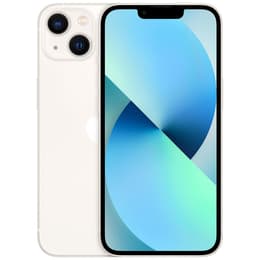
iPhone 13
iPhone 13
Starting at

Refurbished price:£187.00

Versus £599.00 new

See options
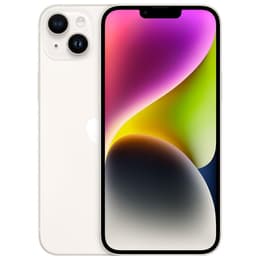
iPhone 14 Plus
iPhone 14 Plus
Starting at

Refurbished price:£237.00

Versus £699.00 new

See options

Ratings

The iPhone 13, released in September 2021, and the iPhone 14 Plus, launched in October 2022, represent different approaches within Apple's smartphone lineup. While both devices operate on Apple's iOS platform, the iPhone 14 Plus distinguishes itself with a larger display, enhanced battery capacity, and notable camera improvements, alongside new safety features.

Scores

Durability

When considering the long-term usability of these devices, their release timelines and software support are key factors.

  • Release Timeline: The iPhone 13 was introduced in September 2021, making it approximately one year older than the iPhone 14 Plus, which arrived in October 2022. This difference means the iPhone 14 Plus is likely to receive software updates for a longer period.
  • Software Longevity: Both models are compatible with current iOS versions, but the iPhone 14 Plus, being newer, is expected to support future iOS updates for an additional year compared to the iPhone 13.
  • Repairability: The iPhone 13 initially received a repairability score of 5 out of 10 from iFixit, which later improved to 6 out of 10 with a software update addressing Face ID repair issues. Both devices feature a Ceramic Shield front cover and an IP68 rating for water and dust resistance, contributing to their physical durability.

Year of Release

2021

2022

Compatible with latest Update

Yes

Yes

OS

iOS

iOS

Foldable

No

No

Performance

Both the iPhone 13 and iPhone 14 Plus deliver robust performance for daily tasks, though there are distinctions in their underlying hardware that impact responsiveness and multitasking.

  • Processor Capabilities: Both devices are powered by the A15 Bionic chip. However, the iPhone 14 Plus utilizes a version of the A15 Bionic with a 5-core GPU, similar to the iPhone 13 Pro, while the standard iPhone 13 features an A15 Bionic with a 4-core GPU. This difference means the iPhone 14 Plus offers slightly enhanced graphics processing, which can benefit demanding applications and gaming.
  • System Responsiveness and RAM: The iPhone 14 Plus includes 6GB of RAM, an increase from the iPhone 13's 4GB. This additional RAM allows the iPhone 14 Plus to handle more applications simultaneously and switch between them more smoothly, leading to a more fluid multitasking experience.
  • Battery Behavior: The iPhone 14 Plus is equipped with a larger 4325 mAh battery, significantly exceeding the iPhone 13's 3240 mAh battery. This translates to noticeably longer battery life on the iPhone 14 Plus, with up to 26 hours of video playback compared to the iPhone 13's 19 hours. Users who prioritize extended usage without frequent charging will find the iPhone 14 Plus better suited to their needs.

Memory

4 GB

6 GB

Screen quality

The visual experience on both devices is characterized by vibrant displays, but the iPhone 14 Plus offers a larger canvas.

  • Display Technology and Size: Both smartphones feature Super Retina XDR OLED displays, providing deep blacks, high contrast, and vibrant colors. The primary difference lies in their physical dimensions: the iPhone 13 has a 6.1-inch display, while the iPhone 14 Plus boasts a larger 6.7-inch screen. This larger screen on the 14 Plus enhances the viewing experience for media consumption and provides more screen real estate for productivity.
  • Resolution and Brightness: The iPhone 13 offers a resolution of 2532x1170 pixels at 460 pixels per inch (ppi), while the iPhone 14 Plus has a resolution of 2778x1284 pixels at 458 ppi. Both displays achieve a typical brightness of 800 nits and a peak HDR brightness of 1200 nits, ensuring good visibility in various lighting conditions.
  • Refresh Rate: Both models feature a standard 60Hz refresh rate. This provides a smooth experience for most everyday interactions, though it does not offer the adaptive high refresh rates found in some other devices.

Resolution

1170 x 2532

1284 x 2778

Screen type

Super Retina XDR OLED

Super Retina XDR OLED

Audiovisual

Both devices offer capable camera systems, but the iPhone 14 Plus introduces enhancements for improved image and video capture.

  • Rear Camera System: The iPhone 13 features a dual 12MP camera system with a Wide (f/1.6) and Ultra Wide (f/2.4) lens, including sensor-shift optical image stabilization on the main sensor. The iPhone 14 Plus also has a dual 12MP system, but its Main camera features a larger sensor and a wider f/1.5 aperture, allowing it to capture more light. This results in improved low-light performance on the iPhone 14 Plus, further enhanced by the Photonic Engine, which processes images earlier in the pipeline.
  • Video Capabilities: Both support Cinematic Mode, which adds a shallow depth of field effect to videos. The iPhone 14 Plus extends this capability to 4K HDR at 30fps, compared to the iPhone 13's 1080p at 30fps. The iPhone 14 Plus also introduces Action Mode, providing advanced video stabilization for dynamic shots.
  • Front Camera: The iPhone 13 has a 12MP TrueDepth front camera with an f/2.2 aperture. The iPhone 14 Plus upgrades this with a 12MP TrueDepth camera featuring a wider f/1.9 aperture and autofocus, leading to better low-light selfies and clearer video calls.

Main camera

12 megapixels

12 megapixels

Front camera

12 megapixels

12 megapixels

Miscellaneous

Beyond core specifications, several practical elements differentiate the user experience between these two iPhone models.

  • Connectivity and Ports: Both devices support 5G cellular connectivity, Wi-Fi 6, and Bluetooth 5.0. Both also utilize the Lightning port for charging and data transfer.
  • Dimensions and Weight: The iPhone 13 measures 146.7 x 71.5 x 7.65 mm and weighs 174 grams. The iPhone 14 Plus is a larger device, measuring 160.8 x 78.1 x 7.8 mm and weighing 203 grams. The increased size and weight of the 14 Plus are due to its larger screen and battery.
  • Additional Features: The iPhone 14 Plus introduces new safety features, including Crash Detection and Emergency SOS via satellite (available in select regions). Both devices feature Face ID for secure authentication.

Weight

173 g

203 g

Screen size (in)

6.1

6.7

Network

5G

5G

SIM card

Physical SIM + eSIM

Physical SIM + eSIM

Carrier compatibility

Unlocked

Unlocked

Connector

Lightning

Lightning

The iPhone 13 and iPhone 14 Plus cater to slightly different user preferences, primarily concerning device size, battery endurance, and camera capabilities. Users often praise the iPhone 13 for its comfortable 6.1-inch form factor, which is easy to handle for many, while still offering strong performance for everyday tasks. Its camera system is generally well-regarded for producing high-quality photos and videos in good lighting conditions. Some users, however, might find its battery life sufficient but not exceptional for heavy use, and its 60Hz display is standard rather than cutting-edge.

The iPhone 14 Plus, on the other hand, frequently receives acclaim for its significantly larger 6.7-inch display, which enhances media consumption and provides a more expansive view for various applications. Its standout feature is often cited as its extended battery life, making it a preferred choice for users who need their device to last longer between charges. The camera improvements, including better low-light performance and the addition of Action Mode, are also positive points for those who prioritize photography and videography. Some users might find its larger size and increased weight less convenient for one-handed use.

Users prioritizing a more compact device that still offers solid performance and camera quality will find the iPhone 13 a suitable option. For individuals who value a larger screen, extended battery life, and the latest camera enhancements and safety features, the iPhone 14 Plus presents a compelling choice. Both models offer a reliable iOS experience, and opting for a quality-assured refurbished option can be an eco-friendly alternative for either device.


See all articles

Our recent comparisons