

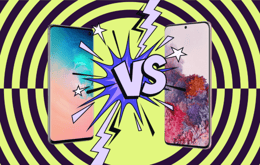
Galaxy S10 Vs Galaxy S10+

Galaxy S10
Galaxy S10
Starting at

Refurbished price:£108.00

Versus £459.00 new

See options
Galaxy S10+
Galaxy S10+
Starting at

Refurbished price:£115.32

Versus £330.00 new

See options

Ratings

The Samsung Galaxy S10 and Galaxy S10 Plus, both released in March 2019, represent Samsung's flagship Android smartphones from that year. While they share a core design and many features, the S10 Plus distinguishes itself with a larger display, a more substantial battery, and an enhanced front-facing camera system. Both devices run on the Android operating system, offering a familiar experience for users.

Scores

Durability

Given their 2019 release, both the Galaxy S10 and S10 Plus have reached or are nearing the end of their major Android operating system update cycles. However, they may still receive security updates for a period, extending their practical usability for those who prioritize security over the latest features.

  • Software Longevity: Both models launched with Android 9.0 and received major OS updates up to Android 12. Samsung committed to three years of OS updates and four years of security updates for this series, meaning new software features will not be introduced, and security updates have largely concluded as of March 2024.
  • Physical Durability: Both devices feature Gorilla Glass 6 on the front and Gorilla Glass 5 on the back, offering good scratch and drop resistance for their time. They also share an IP68 rating for dust and water resistance, providing protection against splashes and submersion.
  • Repairability: Repair scores for both models are generally similar, with iFixit giving them a low score of 3 out of 10. This indicates moderate to high difficulty for repairs due to their glass sandwich design, extensive use of adhesive, and internal component layout, including a soldered charging port.

Year of Release

2019

2019

Compatible with latest Update

No

No

OS

Android

Android

Foldable

No

No

Performance

Both the Galaxy S10 and S10 Plus are equipped with the same core processing power, delivering a smooth experience for daily tasks and most applications. The primary differences in performance come from battery capacity and available RAM configurations.

  • Everyday Responsiveness: Both devices handle common applications, web browsing, and social media with ease, offering a fluid user experience. They are capable of running demanding apps and multitasking smoothly, thanks to their capable internal components from their release era.
  • Multitasking Capabilities: The standard Galaxy S10 typically comes with 8GB of RAM, while the S10 Plus offered configurations up to 12GB of RAM. This higher RAM option in the S10 Plus can provide a slight edge for users who frequently switch between many demanding applications or keep numerous apps open in the background.
  • Battery Behavior: The Galaxy S10 Plus features a significantly larger 4100 mAh battery compared to the S10's 3400 mAh battery. This translates to extended usage times for the S10 Plus, which can often last through a full day of heavy use, whereas the standard S10 may require more frequent charging for heavy users.

Memory

8 GB

8 GB

Screen quality

Both the Galaxy S10 and S10 Plus feature Samsung's Dynamic AMOLED display technology, known for its vibrant colors and deep blacks. The main distinction lies in the physical size of the screen and its impact on the viewing experience.

  • Display Technology: Both phones utilize a Dynamic AMOLED panel, offering excellent contrast, color accuracy, and support for HDR10+ content, making them suitable for media consumption. The displays are also capable of high brightness levels, which aids visibility in outdoor conditions.
  • Resolution and Clarity: With a Quad HD+ resolution (1440 x 3040 pixels), both displays deliver sharp text and detailed images. The pixel density is high on both, ensuring a clear viewing experience, though the S10 has a slightly higher pixel density due to its smaller screen size with the same resolution.
  • Screen Size and Viewing Experience: The Galaxy S10 features a 6.1-inch display, offering a more compact viewing area. The Galaxy S10 Plus, with its 6.4-inch display, provides a more expansive canvas for watching videos, gaming, or browsing, which can be beneficial for users who prefer a larger visual space.

Resolution

1440 x 3040

1440 x 3040

Screen type

Dynamic AMOLED

Dynamic AMOLED

Audiovisual

The camera systems on the Galaxy S10 and S10 Plus are largely similar, particularly concerning their rear setups, with the key difference found in their front-facing cameras.

  • Rear Camera Versatility: Both models feature an identical triple-lens rear camera system, including a 12-megapixel wide-angle lens, a 12-megapixel telephoto lens for optical zoom, and a 16-megapixel ultra-wide lens for expansive shots. This setup provides flexibility for various types of photography, from landscapes to portraits.
  • Everyday Photography and Video: Both devices capture detailed and well-exposed photos in good lighting conditions. They offer features like Scene Optimizer for automatic scene recognition and can record video at up to 4K resolution at 60 frames per second, with support for HDR video. Low-light performance is competent for their generation, though not on par with newer flagships.
  • Front Camera Experience: The Galaxy S10 has a single 10-megapixel front camera. The S10 Plus, however, includes a dual front camera setup with an additional 8-megapixel depth sensor. This secondary sensor in the S10 Plus can enhance portrait mode selfies with more refined background blur and depth effects.

Main camera

12 megapixels

12 megapixels

Front camera

10 megapixels

10 megapixels

Miscellaneous

Beyond the core components, the Galaxy S10 and S10 Plus share many practical features that contribute to their overall user experience, with minor differences in physical dimensions and material options.

  • Connectivity Options: Both devices support modern connectivity standards including Wi-Fi 6, Bluetooth 5.0, and 4G LTE for fast wireless communication.
  • Ports and Biometrics: Both models retain a 3.5mm headphone jack, a feature appreciated by many users, alongside a USB-C port for charging and data transfer. They also feature an ultrasonic in-display fingerprint sensor for secure unlocking.
  • Weight and Dimensions: The Galaxy S10 is the more compact and lighter option, measuring 149.9 x 70.4 x 7.8 mm and weighing 157 grams, making it easier for one-handed use. The S10 Plus is larger at 157.6 x 74.1 x 7.8 mm and heavier at 175 grams (or 198 grams for ceramic variants), offering a more substantial feel and a larger screen. The S10 Plus also had a ceramic back option for its highest storage configurations, providing a different aesthetic and feel.

Weight

157 g

175 g

Screen size (in)

6.1

6.4

Network

4G

4G

SIM card

Dual Physical SIM

Dual Physical SIM

Carrier compatibility

Unlocked

Unlocked

The Samsung Galaxy S10 and S10 Plus, while sharing many core strengths, cater to slightly different user preferences. Users often praise both models for their excellent Dynamic AMOLED displays, versatile triple rear camera systems, and the inclusion of a 3.5mm headphone jack. Common criticisms, particularly in the current landscape, often revolve around their aging software support and, for the standard S10, battery life that may not last a full day for heavy users.

For those prioritizing a more compact device that still delivers solid performance for everyday tasks, the Galaxy S10 remains a capable choice. Users who value a larger screen for media consumption, require longer battery life, or desire potentially improved selfie portraits will find the Galaxy S10 Plus better suited to their needs. Both devices represent a sustainable choice when opting for a quality-assured refurbished option, offering a way to access premium features from a few years ago without contributing to electronic waste.


See all articles

Our recent comparisons