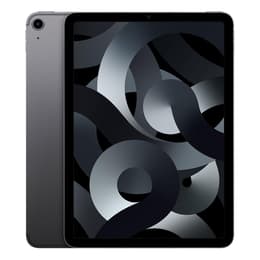
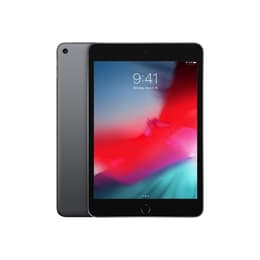

iPad Air 5 (2022, M1 series) Vs iPad mini 5 (2019, A12 series)

iPad Air 5 (2022, M1 series)
Starting at

Refurbished price:£274.00

Versus £669.00 new

See options
iPad mini 5 (2019, A12 series)
Starting at

Refurbished price:£104.00

Versus £529.00 new

See options

Ratings

The iPad Air (2022 M1 Series) and the iPad Mini (2019 A12 Series) represent distinct offerings within Apple's tablet lineup, catering to different user preferences and needs. While both devices operate on the iPadOS ecosystem, the iPad Air, released in 2022, features a larger display and a more powerful processor, positioning it for demanding tasks. The iPad Mini, launched in 2019, prioritizes portability with its compact form factor and a capable, though older, chip.

Scores

Durability

The practical lifespan of a tablet is often influenced by its release date and the duration of software support it receives, alongside its physical resilience.

  • Release Timeline: The iPad Air (2022 M1 Series) was released in March 2022, making it a more recent device compared to the iPad Mini (2019 A12 Series), which launched in March 2019. This three-year difference in release dates typically translates to a longer period of software updates and feature compatibility for the newer model.
  • Software Longevity: Both iPads run on iPadOS, receiving regular updates from Apple. The iPad Air, being newer, is expected to receive software support for a longer duration, potentially extending its functional life by several years compared to the iPad Mini. The iPad Mini (2019) shipped with iOS 12.1.3 and is upgradable to iPadOS 17.2, indicating a good run of updates.
  • Physical Durability: The iPad Air (2022) features a design with flat sides and a recycled aluminum body, contributing to its robust feel. While specific repairability scores vary, both devices are generally well-constructed, though the iPad Mini's older design includes thicker bezels.

Year of Release

2022

2019

Compatible with latest Update

Yes

Yes

OS

iPadOS

iPadOS

Maximum Operating System supported

iPadOS 18

iPadOS 18

Performance

The performance of these two tablets differs significantly due to the advancements in processing technology over their respective release cycles, impacting how they handle various applications and multitasking.

  • Processing Power: The iPad Air (2022) is equipped with a powerful chip that delivers a substantial boost in performance, making it suitable for demanding applications and workflows. This allows for smoother operation in tasks like video editing, graphic design, and intensive gaming. The iPad Mini (2019) features a capable processor that handles everyday tasks, multitasking, and many games smoothly.
  • System Responsiveness: Users of the iPad Air (2022) can expect a highly responsive experience, with applications loading quickly and seamless transitions between tasks, even with multiple apps running simultaneously. The iPad Mini (2019) also offers a responsive user experience for general use, with apps opening and closing quickly.
  • Multitasking and Storage: The iPad Air (2022) comes with 8GB of RAM, which enhances its ability to manage numerous applications concurrently without slowdowns. It is available with 64GB or 256GB of internal storage. The iPad Mini (2019) has 3GB of RAM and is offered with 64GB or 256GB of storage, allowing for effective multitasking with a reasonable number of applications.

Memory (GB)

8 GB

3 GB

Processor

Apple M1

Apple A12 Bionic

Screen quality

The visual experience on these tablets is shaped by their display technology, size, and specific features, influencing suitability for different viewing and interaction preferences.

  • Display Technology and Size: The iPad Air (2022) features a 10.9-inch Liquid Retina IPS display, offering a larger canvas for content consumption and creation. The iPad Mini (2019) has a more compact 7.9-inch Retina IPS LCD display, making it highly portable and comfortable for one-handed use.
  • Resolution and Clarity: The iPad Air (2022) provides a resolution of 2360 x 1640 pixels, resulting in clear and detailed visuals. The iPad Mini (2019) offers a resolution of 2048 x 1536 pixels, which, combined with its smaller size, results in a high pixel density for sharp images and text. Both displays feature True Tone technology for adaptive color temperature.
  • Brightness and Smoothness: The iPad Air (2022) has a brightness of 500 nits, providing good visibility in various lighting conditions. The iPad Mini (2019) also offers a bright and colorful display. Both devices have a standard refresh rate, which provides a smooth experience for general use, though not the higher refresh rates found in some other models.

Resolution

2360 x 1640

2048 x 1536

True Tone

Yes

Yes

Pro-Motion

No

No

Screen type

Liquid Retina display

Retina display

Pixel density

264ppp

326ppp

Brightness

500 nits brightness

500 nits brightness

Sound quality

Speakers

Stereo speakers

Stereo speakers

Audiovisual

The camera systems on these iPads offer different capabilities for photography, video recording, and video conferencing, reflecting their intended uses and generational differences.

  • Rear Camera Capabilities: The iPad Air (2022) is equipped with a 12MP wide rear camera that supports 4K video recording at up to 60 frames per second. This camera performs well in good lighting and is suitable for scanning documents and occasional photography. The iPad Mini (2019) features an 8MP rear camera that can capture decent images in optimal lighting and records 1080p video.
  • Front Camera and Video Calls: The iPad Air (2022) has a 12MP ultrawide front camera with Center Stage, which automatically adjusts to keep the user in view during video calls. This is a significant enhancement for video conferencing. The iPad Mini (2019) has a 7MP front-facing camera that is a notable improvement over its predecessor and is well-suited for FaceTime calls.
  • Audio Experience: Both tablets feature stereo speakers. The iPad Air (2022) offers clear stereo sound, though it may lack the bass and richness of higher-end models. The iPad Mini (2019) also has stereo speakers, which are positioned at the bottom, meaning sound comes from one side when held in landscape orientation.

Miscellaneous

Beyond core specifications, several practical elements contribute to the overall user experience, including connectivity, physical design, and accessory support.

  • Connectivity and Ports: The iPad Air (2022) supports Wi-Fi 6 and offers 5G connectivity on cellular models, along with a USB-C port that provides faster data transfer speeds and external display support. The iPad Mini (2019) supports Wi-Fi 5 and 4G LTE on cellular models, and it retains the Lightning port for charging and accessories.
  • Design and Portability: The iPad Air (2022) has a modern, all-screen design with Touch ID integrated into the top button. It weighs around 460g and is 6.1mm thin. The iPad Mini (2019) is notably more compact and lighter at approximately 300g and 6.1mm thin, featuring a home button with Touch ID.
  • Accessory Support: The iPad Air (2022) is compatible with the second-generation Apple Pencil, which charges magnetically, and supports accessories like the Magic Keyboard. The iPad Mini (2019) supports the first-generation Apple Pencil, which charges via the Lightning port.

Weight

461 g

300 g

Width

17.85 cm

13.48 cm

Height

24.76 cm

23.32 cm

Depth

0.61 cm

0.61 cm

Screen size (in)

10.9

7.9

Network

Wi-Fi

Wi-Fi

Carrier compatibility

Without SIM Port

Without SIM Port

Wi-Fi technology

Wi-Fi 6 802.11ax

Wi-Fi 6 802.11a/b/g/n/ac

Bluetooth Version

Bluetooth 5.0

Bluetooth 5.0

Face ID

No

No

Touch ID

Yes

Yes

Connector

USB Type-C

Lightning connector

User feedback for the iPad Air (2022 M1 Series) frequently highlights its powerful performance, often described as desktop-class, making it highly capable for demanding tasks like video editing and graphic design. The improved front-facing camera with Center Stage is also a common praise point, enhancing video call experiences. Some users, however, note that the base storage option of 64GB can be limiting for those with extensive app libraries or large media files. The battery life, while generally acceptable, is sometimes mentioned as an area that could see further improvement for heavy users.

For the iPad Mini (2019 A12 Series), users consistently appreciate its exceptional portability and compact size, making it ideal for reading, quick notes, and on-the-go media consumption. The display quality and the inclusion of the A12 Bionic chip, which provides robust performance for its size, are also frequently praised. Criticisms often revolve around its older design, including thicker bezels and the continued use of the Lightning port instead of USB-C. Some users also express a desire for a more modern camera system.

Users prioritizing a larger screen for productivity, creative work, or immersive media consumption, coupled with high-end performance and modern connectivity, may find the iPad Air (2022 M1 Series) well-suited to their needs. Its powerful chip and support for advanced accessories make it a strong contender for those seeking a versatile tablet for more intensive use. Conversely, individuals who value extreme portability, a comfortable reading experience, and a device that is easy to handle with one hand will likely lean towards the iPad Mini (2019 A12 Series). It remains an excellent choice for casual use, content consumption, and light productivity tasks where a smaller footprint is paramount. Both devices offer a quality-assured refurbished option, providing an eco-friendly alternative for consumers.


See all articles

Our recent comparisons