
Compare models

Google Pixel 10 Vs OnePlus 13

  • 1-year minimum warranty
  • Free delivery on all items
  • Free 30-day returns
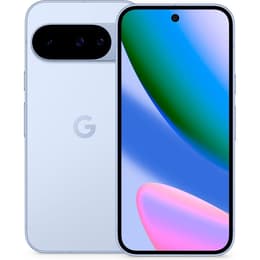
Google Pixel 10
Starting at

Refurbished price:£411.00

Versus £799.00 new

See options
OnePlus 13
Starting at

Refurbished price:£714.00

Versus £1,167.01 new

See options

Differences at a glance

The Google Pixel 10 (2025) and the OnePlus 13 (2025) are high-performance Android smartphones designed to meet diverse user preferences in daily connectivity, mobile photography, and media consumption. While both devices occupy the upper tier of the smartphone market, they approach everyday usability through distinctly different hardware choices and operating system philosophies. The Google Pixel 10 runs on Android with a heavy focus on streamlined software integration and computational assistance, whereas the OnePlus 13 utilizes its own customized user interface built over Android to prioritize raw resource management and customization.

Available Models

Colour

Storage

Scores

Durability

Both smartphones provide robust long-term durability features, though their software support timelines and physical structural designs cater to different expectations for longevity.

  • Software support timeline: The Google Pixel 10 benefits from extended software commitment with long-term operating system updates, whereas the OnePlus 13 offers a slightly shorter standard update window for core system upgrades.
  • Repairability and build: Both models utilize strengthened glass and reinforced frames to withstand everyday wear and tear, paired with high-level dust and water resistance ratings for environmental protection.
  • Expected lifespan: Built-in battery health management tools and efficient internal processing ensure that both devices maintain stable day-to-day usability over several years of continuous ownership.

Year of Release

2025

2024

Compatible with latest Update

Yes

No

OS

Android

Android

Foldable

No

No

Performance

Performance capabilities on both devices handle intensive workloads, multitasking, and casual gaming with ease, though their internal hardware configurations manage power distribution differently.

  • Storage configurations: Both models offer spacious starting internal storage tiers paired with generous random access memory capacity to keep multiple applications open simultaneously without lagging.
  • Battery behavior: The OnePlus 13 features a larger physical battery capacity paired with rapid wired charging speeds, while the Google Pixel 10 relies on software-driven power optimization to sustain standard daily usage patterns.
  • System responsiveness: Everyday tasks, app launching, and graphics-heavy mobile games run smoothly and efficiently on both platforms thanks to current-generation processor architectures and thermal management systems.

Screen quality

Visual immersion is a primary focus for both handsets, though they utilize distinct display sizes and panel technologies to shape media viewing experiences.

  • Display technology: The OnePlus 13 features a larger panel utilizing advanced adaptive refresh technology, while the Google Pixel 10 offers a more compact screen format optimized for single-handed navigation.
  • Brightness and outdoor visibility: Both displays achieve high peak brightness levels, ensuring clear legibility and crisp contrast when viewed under direct sunlight or in bright outdoor environments.
  • Refresh rate and smoothness: Dynamic refresh rate scaling allows both screens to switch seamlessly between high smoothness during scrolling and lower rates during static viewing to conserve energy.

Resolution

1080x2424

1440x3168

Screen type

OLED

LTPO 4.1 AMOLED

Audiovisual

Media creation and audio playback capabilities differ notably between the two manufacturers, reflecting unique engineering priorities for photography and sound.

  • Camera system setup: The Google Pixel 10 employs computational photography algorithms to deliver balanced everyday images, whereas the OnePlus 13 collaborates with traditional camera partners for calibrated color tuning across its multi-lens rear array.
  • Video and low-light performance: Both devices capture detailed video footage with steady optical image stabilization, performing reliably when shooting in dimly lit environments.
  • Audio output: Integrated stereo speakers on both models provide clear sound separation for media streaming and hands-free calls, though neither includes a traditional wired headphone jack.

Front camera

42 megapixels

16 megapixels

Miscellaneous

Practical daily utility features vary across connectivity standards, physical dimensions, and security authentication options for each smartphone.

  • Connectivity and ports: Both devices support modern global 5G networks, advanced wireless local area networking standards, and universal USB Type-C physical data connections.
  • Security sensors: Fast biometric authentication is handled via responsive optical fingerprint sensors embedded beneath the glass alongside software-based facial recognition options.
  • Physical handling: The Google Pixel 10 provides a lighter, more compact footprint suitable for pocket storage, while the OnePlus 13 offers a wider physical build to accommodate its larger screen real estate.

Weight

204 g

210 g

Screen size (in)

6.3

6.82

Mobile network

5G

5G

SIM card

eSIM

Dual Physical SIM

Carrier compatibility

Unlocked

Unlocked

Connector

USB-C

USB-C

What the community thinks

User feedback and community discussions highlight distinct preferences for each device based on everyday priorities. Owners frequently praise the Google Pixel 10 for its clean software interface, reliable point-and-shoot camera consistency, and comfortable physical dimensions. Conversely, users often emphasize the OnePlus 13 for its expansive display, exceptional battery endurance, and rapid charging capabilities. Deciding between the two models depends largely on individual workflow requirements.

Users who prioritize a compact form factor, clean software design, and automated image processing will find the Google Pixel 10 well-suited to their daily routines. Meanwhile, users who prefer a larger viewing area, extended battery capacity, and fast power replenishment may lean toward the OnePlus 13. For those seeking an eco-friendly alternative, a quality-assured refurbished option provides a sustainable choice that extends device lifecycles without compromising on core performance capabilities.