
Galaxy Tab S8+ (12.4", 2022) Vs iPad Air 5 (2022, M1 series)

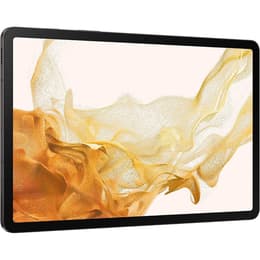
Galaxy Tab S8+ (12.4", 2022)
Starting at

Refurbished price:£323.36

Versus £999.00 new

See options
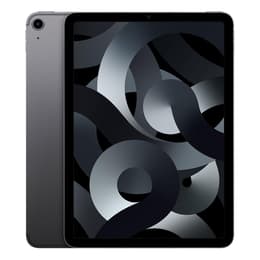
iPad Air 5 (2022, M1 series)
Starting at

Refurbished price:£274.00

Versus £669.00 new

See options

Ratings

The Samsung Galaxy Tab S8+ and the Apple iPad Air (M1 Series) both launched in 2022, offering distinct tablet experiences within their respective ecosystems. The Galaxy Tab S8+ runs on Android with Samsung's One UI, while the iPad Air operates on iPadOS. Key differentiators include their display technologies, processor architectures, and stylus integration, catering to varied user preferences and workflows.

Scores

Durability

When considering the long-term usability of these tablets, their release timelines and software support are important factors.

  • Release Timeline: The Galaxy Tab S8+ was released in February 2022, while the iPad Air (M1 Series) followed in March 2022. Both devices are from the same year, suggesting a similar starting point for their operational lifespan.
  • Software Longevity: Samsung typically provides several years of Android operating system updates and security patches for its flagship tablets, with the Tab S8+ expected to receive updates for a considerable period. Apple is known for its extended software support, often providing major iPadOS updates for 5-7 years from a device's release, potentially offering a longer update cycle for the iPad Air.
  • Physical Durability: The Galaxy Tab S8+ features an Armor Aluminum body, designed to be more resistant to scratches and bending compared to previous models. The iPad Air also utilizes an aluminum enclosure, contributing to its robust build.

Year of Release

2022

2022

Compatible with latest Update

Yes

Yes

OS

Android

iPadOS

Performance

Both tablets deliver strong performance, but their underlying architectures lead to different strengths in real-world usage scenarios.

  • Processing Power: The Galaxy Tab S8+ is equipped with a current-generation octa-core processor, enabling it to handle demanding applications and multitasking smoothly. The iPad Air features Apple's M1 chip, which includes an 8-core CPU and 8-core GPU, providing a significant performance boost for intensive tasks like video editing, graphic design, and gaming.
  • Multitasking and Responsiveness: The iPad Air's M1 chip ensures a highly responsive experience, allowing for seamless transitions between apps and efficient handling of complex workflows. The Galaxy Tab S8+ also offers capable multitasking, enhanced by features like Samsung DeX, which provides a desktop-like environment for productivity.
  • Storage and Memory: The Galaxy Tab S8+ comes with 8GB or 12GB of RAM and storage options of 128GB or 256GB, with the added flexibility of microSD card expansion up to 1TB. The iPad Air offers 8GB of unified memory and storage options of 64GB or 256GB, without expandable storage.
  • Battery Behavior: The Galaxy Tab S8+ houses a 10,090mAh battery, generally providing 6 to 12 hours of screen-on time depending on usage intensity. The iPad Air, with its 28.6 watt-hour battery, is rated for up to 10 hours of web browsing or video playback over Wi-Fi, though heavy use can lead to shorter durations.

Memory (GB)

8 GB

8 GB

Screen quality

The visual experience on both tablets is a highlight, though they employ different display technologies.

  • Display Technology: The Galaxy Tab S8+ features a 12.4-inch Super AMOLED display, known for its deep blacks, high contrast, and vibrant colors. The iPad Air (M1 Series) uses a 10.9-inch Liquid Retina IPS LED-backlit display, which provides accurate color reproduction and wide viewing angles.
  • Resolution and Clarity: The Tab S8+ offers a resolution of 2800x1752 pixels (266 ppi), delivering sharp images and text across its larger screen. The iPad Air has a resolution of 2360x1640 pixels (264 ppi), ensuring clear and detailed visuals on its slightly smaller display.
  • Refresh Rate and Smoothness: The Galaxy Tab S8+ boasts a 120Hz refresh rate, contributing to smoother scrolling, more fluid animations, and a more responsive touch experience. The iPad Air maintains a standard 60Hz refresh rate.
  • Brightness and Color: Both tablets offer good brightness for various lighting conditions, with the Tab S8+ reaching up to 420 nits (some reports indicate higher averages) and the iPad Air providing 500 nits. Both support wide color gamuts for rich and accurate color presentation.

Resolution

1752 x 2800

2360 x 1640

Screen type

Super AMOLED

Liquid Retina display

Pixel density

270ppp

264ppp

Audiovisual

Both tablets are equipped with capable camera systems for a tablet, focusing on utility for video calls and document scanning.

  • Rear Camera System: The Galaxy Tab S8+ features a dual-camera setup on the rear, consisting of a 13MP main camera with autofocus and a 6MP ultra-wide lens, suitable for general photography and scanning. The iPad Air has a single 12MP wide camera on the rear, capable of capturing detailed photos.
  • Front Camera for Communication: For video conferencing, the Tab S8+ includes a 12MP ultra-wide front camera with auto-framing technology, which keeps the subject centered during calls. The iPad Air also features a 12MP ultra-wide front camera with a 122° field of view and Apple's Center Stage feature, which intelligently adjusts the camera to keep users in view during video calls.
  • Video Recording Capabilities: Both tablets support 4K video recording. The Galaxy Tab S8+ records at 30 frames per second (fps), while the iPad Air can record 4K video at up to 60 fps.
  • Audio Experience: The Galaxy Tab S8+ is equipped with quad stereo speakers tuned by AKG and supports Dolby Atmos, providing an immersive audio experience for media consumption. The iPad Air also offers stereo speakers, delivering clear audio for videos and music.

Miscellaneous

Beyond core performance and display, several practical features differentiate these two tablets.

  • Connectivity Standards: The Galaxy Tab S8+ supports Wi-Fi 6E and Bluetooth 5.2, with optional 5G connectivity for mobile data. The iPad Air features Wi-Fi 6 and Bluetooth 5.0, also with optional 5G for cellular models.
  • Ports and Biometrics: Both tablets utilize a USB-C port for charging and data transfer, with the iPad Air's port offering up to 2x faster transfer speeds compared to its predecessor. The Galaxy Tab S8+ incorporates an in-display fingerprint sensor for secure unlocking. The iPad Air features Touch ID integrated into its top button.
  • Stylus Inclusion and Features: A significant difference is the stylus. The Galaxy Tab S8+ includes the S Pen in the box, offering low latency for a natural writing and drawing experience, along with features like Air Command and screen-off memos. The iPad Air supports the Apple Pencil 2nd Generation, which is sold separately, providing precise input for creative and productivity tasks.
  • Design and Handling: The Galaxy Tab S8+ is slightly larger and heavier at 12.4 inches and around 567g (Wi-Fi), while the iPad Air is more compact at 10.9 inches and approximately 461g (Wi-Fi). Both feature premium aluminum builds.

Weight

567 g

461 g

Screen size (in)

12.4

10.9

Network

Wi-Fi + 5G

Wi-Fi

Carrier compatibility

Unlocked

Without SIM Port

User feedback for the Samsung Galaxy Tab S8+ often highlights its vibrant Super AMOLED display, the included S Pen with its versatile features, and the robust multitasking capabilities offered by Samsung DeX. Users appreciate the expansive screen real estate for media consumption and productivity. Some common considerations include its larger size and the Android tablet app ecosystem, which, while improved, may not always offer the same level of optimization as iPadOS for certain professional applications. The battery life is generally considered good, though heavy usage can lead to more frequent charging.

The iPad Air (M1 Series) receives praise for its powerful M1 chip, which delivers exceptional performance for demanding tasks, ensuring a smooth and responsive user experience. Its compact design and integration within the Apple ecosystem are also frequently cited as strong points. Users value the consistent software experience and the wide array of optimized applications available on iPadOS. A recurring point of discussion is the standard 60Hz refresh rate of its display, which some users note when comparing it to tablets with higher refresh rates. Battery life is generally reported as sufficient for a full day of typical use, though intensive tasks or high brightness can reduce this.

Users prioritizing a large, high-refresh-rate AMOLED display, expandable storage, and an included stylus for note-taking and drawing may find the Galaxy Tab S8+ well-suited to their needs. Those who value raw processing power for creative work, a highly optimized app ecosystem, and a more compact form factor might lean towards the iPad Air. Both devices offer a quality-assured refurbished option, providing a sustainable choice for consumers.
See all articles

Our recent comparisons