
Galaxy S25+ Vs iPhone 16 Pro Max

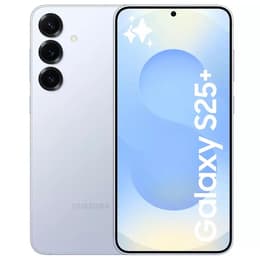
Galaxy S25+
Galaxy S25+
Starting at

Refurbished price:£550.00

Versus £958.39 new

See options
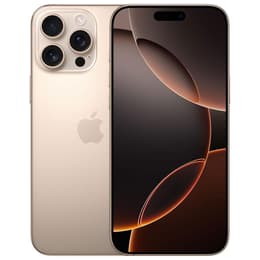
iPhone 16 Pro Max
iPhone 16 Pro Max
Starting at

Refurbished price:£658.00

Versus £1,199.00 new

See options

Ratings

The Samsung Galaxy S25 Plus, released in February 2025, and the Apple iPhone 16 Pro Max, launched in September 2024, represent two leading smartphones from their respective ecosystems. While both devices offer premium experiences, they differentiate themselves through their operating systems, camera philosophies, and display characteristics. The Galaxy S25 Plus runs on Android with Samsung's One UI, while the iPhone 16 Pro Max operates on Apple's iOS, each offering distinct user interfaces and app ecosystems.

Scores

Durability

When considering the longevity of these devices, both the Galaxy S25 Plus and the iPhone 16 Pro Max are built with robust materials and receive extensive software support, though their timelines differ.

  • Release Timeline: The iPhone 16 Pro Max was released in September 2024, preceding the Galaxy S25 Plus, which launched in February 2025. This means the Galaxy S25 Plus benefits from a slightly newer hardware generation and a longer period before its successor arrives.
  • Software Support: Samsung has committed to providing seven years of OS and security updates for the Galaxy S25 series, extending support until approximately 2032. The iPhone 16 Pro Max, while receiving regular iOS updates for several years, was succeeded by the iPhone 17 Pro Max in September 2025, which typically indicates a slightly shorter overall support window compared to a newly released model.
  • Physical Durability: The Galaxy S25 Plus features an aluminum frame and Gorilla Glass Victus 2 on both the front and back, contributing to its resilience. The iPhone 16 Pro Max utilizes a titanium design with a Ceramic Shield front and a textured matte glass back. Both devices carry an IP68 rating for dust and water resistance. However, real-world drop tests for the iPhone 16 Pro Max have shown that its display can still be vulnerable to shattering upon impact, despite the Ceramic Shield.

Year of Release

2025

2024

Foldable

No

No

Performance

Both smartphones are equipped with advanced internal components designed to handle demanding tasks and provide a fluid user experience, though their approaches to performance management and available storage vary.

  • Processing Power: The Galaxy S25 Plus is powered by a current-generation processor, enabling smooth operation across various applications and efficient multitasking. The iPhone 16 Pro Max features Apple's latest Pro series chip, which is engineered for high performance, particularly in graphics-intensive tasks and AI computations.
  • Multitasking and Responsiveness: The Galaxy S25 Plus typically comes with 12GB of RAM, which supports robust multitasking and keeps numerous applications active in the background without slowdowns. The iPhone 16 Pro Max is equipped with 8GB of RAM, optimized by iOS to manage applications efficiently, ensuring a responsive experience even with multiple apps open.
  • Storage Options: The Galaxy S25 Plus offers storage configurations of 256GB and 512GB. The iPhone 16 Pro Max provides more extensive options, starting at 256GB and going up to 512GB and 1TB, catering to users with larger storage needs for media and applications.

Memory (GB)

12 GB

8 GB

Screen quality

The visual experience on both devices is characterized by high-quality displays, each employing distinct technologies and features to deliver vibrant and clear imagery.

  • Display Technology and Clarity: The Galaxy S25 Plus features a 6.7-inch Dynamic LTPO AMOLED 2X display with a QHD+ resolution (3120x1440 pixels), resulting in a sharp visual experience. The iPhone 16 Pro Max sports a slightly larger 6.9-inch Super Retina XDR OLED display with a resolution of 2868x1320 pixels, offering comparable clarity. Both OLED panels provide deep blacks and vibrant colors.
  • Brightness and Outdoor Visibility: The Galaxy S25 Plus can reach a peak brightness of up to 2600 nits, ensuring good visibility even in bright outdoor conditions. The iPhone 16 Pro Max offers a typical brightness of 1000 nits and a peak brightness of 2000 nits for HDR content, also providing strong performance in varied lighting.
  • Refresh Rate and Smoothness: Both smartphones feature adaptive refresh rates that can scale from 1Hz up to 120Hz. This ProMotion technology on the iPhone and LTPO technology on the Galaxy ensures smooth scrolling and fluid animations while conserving battery life by lowering the refresh rate when static content is displayed.

Resolution

1440x3120

1320 x 2868

Audiovisual

Both the Galaxy S25 Plus and the iPhone 16 Pro Max offer advanced camera systems, each with unique strengths in photography and videography to capture moments with detail and clarity.

  • Rear Camera Systems: The Galaxy S25 Plus is equipped with a triple-camera setup, including a 50 MP main wide-angle lens with optical image stabilization (OIS), a 12 MP ultra-wide lens, and a 10 MP telephoto lens capable of 3x optical zoom with OIS. The iPhone 16 Pro Max features a Pro camera system with a 48 MP main wide-angle lens (Fusion technology for detailed photos), a 48 MP ultra-wide lens, and a 12 MP telephoto lens offering 5x optical zoom with OIS.
  • Photography Features: The Galaxy S25 Plus includes a 'Pro Visual Engine' for enhanced image processing and AI-based upscaling for content. The iPhone 16 Pro Max introduces a dedicated Camera Control button for quick access to camera functions and offers advanced features like next-generation Photographic Styles. Both excel in everyday photography, with the iPhone often praised for its consistent image quality and the Galaxy for its versatility.
  • Video Capabilities: The Galaxy S25 Plus supports video recording up to 8K resolution. The iPhone 16 Pro Max offers extensive video features, including 4K Dolby Vision recording at up to 120 frames per second, Cinematic mode, Action mode, Spatial video recording, and ProRes video for professional-grade capture.

Miscellaneous

Beyond their core features, both devices incorporate various practical elements that enhance user interaction and connectivity, catering to different preferences in design and functionality.

  • Connectivity and Ports: Both smartphones support 5G connectivity and advanced Wi-Fi standards for fast wireless communication. The Galaxy S25 Plus typically features a USB-C port for charging and data transfer. The iPhone 16 Pro Max also uses a USB-C connector, supporting charging and DisplayPort functionality.
  • Biometric Security: The Galaxy S25 Plus includes an ultrasonic in-screen fingerprint sensor for secure unlocking and authentication. The iPhone 16 Pro Max relies on Face ID, Apple's facial recognition system, for biometric security.
  • Design and Handling: The Galaxy S25 Plus has an aluminum body and glass back, weighing approximately 190 grams. The iPhone 16 Pro Max features a titanium design, contributing to its strong yet lightweight feel, and weighs around 227 grams. The iPhone 16 Pro Max is slightly larger with a 6.9-inch display compared to the Galaxy S25 Plus's 6.7-inch display, which can impact one-handed use for some individuals.

Weight

190 g

227 g

Screen size (in)

6.7

6.9

Mobile network

5G

5G

SIM card

Dual Physical SIM

Physical SIM + eSIM

Carrier compatibility

Unlocked

Unlocked

User feedback for the Galaxy S25 Plus often highlights its excellent battery life, with many reporting it can last a full day or more with moderate use. Its vibrant display and smooth performance are also frequently praised. Some users, however, have noted that while its camera system is capable, it might not always surpass competitors in specific scenarios, and some feel the design is a subtle evolution rather than a significant change.

The iPhone 16 Pro Max receives consistent acclaim for its exceptional battery longevity, often cited as one of the best available, with some tests showing over 25 hours of continuous use. Its powerful processor and advanced video recording capabilities are also strong points. Criticisms sometimes revolve around its large size, which some users find less comfortable for one-handed operation, and the perception that while durable, its glass construction remains susceptible to shattering in severe drops.

Users prioritizing a long-lasting battery and a highly capable video camera system may find the iPhone 16 Pro Max well-suited to their needs. Those who prefer the Android ecosystem, a slightly lighter device, and a longer guaranteed software update period might lean towards the Galaxy S25 Plus. Both devices offer a premium smartphone experience, and for those seeking a more sustainable choice, considering a quality-assured refurbished option for either model can be an eco-friendly alternative.


See all articles

Our recent comparisons