Compare models

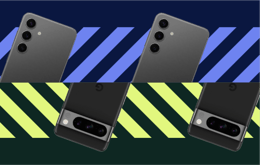
Galaxy S24 Ultra Vs Google Pixel 10

  • 1-year minimum warranty
  • Free delivery on all items
  • Free returns until Jan 31
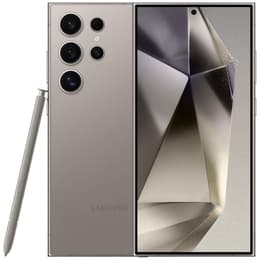
Galaxy S24 Ultra
Starting at

Refurbished price:£456.00

Versus £1,357.64 new

See options
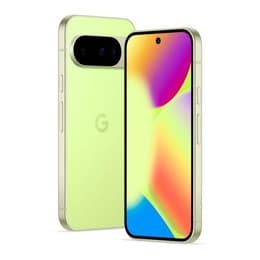
Google Pixel 10
Starting at

Refurbished price:£365.00

Versus £1,196.66 new

See options

Differences at a glance

The Samsung Galaxy S24 Ultra (2024) and the Google Pixel 10 (2025) are high-end smartphones designed to cater to users seeking advanced mobile capabilities, robust build quality, and long-term software support. While the Galaxy S24 Ultra functions as a large-format productivity powerhouse complete with an integrated stylus, the Google Pixel 10 offers a more compact form factor emphasizing streamlined software integration and computational photography. Both devices run on the Android operating system, though their manufacturer interfaces provide distinct customization styles and feature sets.

Available Models

Colour

Storage

Scores

Durability

When examining hardware longevity and software sustainability, both devices provide extended support windows designed to keep them functional for years, though their release years and repair frameworks differ slightly.

  • Software longevity: Both models benefit from extensive manufacturer software update commitments lasting multiple years, ensuring access to security patches and system upgrades well into the future.
  • Build endurance: The Galaxy S24 Ultra employs a titanium frame and durable front glass construction, whereas the Google Pixel 10 utilizes robust modern aluminum and reinforced glass materials suited for daily wear and tear.
  • Repair ecosystem: Both manufacturers provide structured repair channels and replacement parts, making quality-assured refurbished options an eco-friendly choice for reducing electronic waste while maintaining long-term usability.

Year of Release

2024

2025

Compatible with latest Update

Yes

Yes

OS

Android

Android

Foldable

No

No

Performance

System responsiveness and daily multitasking capabilities are handled differently across these two models based on their hardware architectures and software optimization approaches.

  • Multitasking and app switching: Both devices handle demanding productivity apps, intensive background tasks, and high-end mobile gaming smoothly without noticeable stutter or slowdowns.
  • Battery endurance: Large internal battery capacities on both models allow for consistent all-day usage under standard conditions, though heavy media consumption or continuous navigation will require a recharge by evening.
  • Storage configurations: Multiple internal storage tiers are available to accommodate large media libraries, offline documents, and extensive photo collections without relying on expandable storage slots.

Screen quality

Visual output and panel characteristics differ notably in physical dimensions and peak illumination capabilities, influencing how content is consumed outdoors or in low-light environments.

  • Display panels: Both devices feature vibrant organic light-emitting diode screens with deep contrast ratios and sharp resolutions, though the Galaxy S24 Ultra offers a larger physical workspace compared to the more compact Pixel 10.
  • Outdoor visibility: High peak brightness thresholds on both panels ensure that text, images, and video feeds remain legible even under direct sunlight.
  • Refresh rate smoothness: Adaptive refresh rate technology scales frame delivery dynamically on both screens, ensuring fluid scrolling during web browsing while conserving battery power during static tasks.

Resolution

1440 x 3120

1080x2424

Screen type

Dynamic LTPO AMOLED 2X

OLED

Audiovisual

Imaging systems on both smartphones utilize advanced multi-lens hardware backed by complex processing algorithms to handle everyday snapshots and challenging lighting conditions.

  • Rear camera versatility: Both models incorporate high-resolution main sensors and auxiliary lenses, enabling detailed wide-angle photography alongside dedicated zoom capabilities for distant subjects.
  • Video recording: High-definition video capture features stabilization systems and clear audio capture, making both devices well-suited for recording impromptu clips or professional-grade home videos.
  • Media audio output: Built-in stereo speaker configurations deliver balanced sound reproduction for hands-free calls, podcasts, and casual video playback.

Front camera

12 megapixels

42 megapixels

Miscellaneous

Practical daily usability elements such as connectivity protocols, physical dimensions, and security authentication shape the overall handling experience of each device.

  • Connectivity standards: Comprehensive support for fifth-generation cellular networks, modern wireless local area networks, and Bluetooth protocols ensures stable accessories pairing and fast data transfers.
  • Biometric security: Fast authentication methods, including facial recognition and integrated fingerprint sensors, secure user data while allowing rapid device unlocking.
  • Physical handling: The Galaxy S24 Ultra presents a larger, boxier profile optimized for expansive viewing, whereas the Pixel 10 offers a more rounded, pocket-friendly footprint that is easier to operate with one hand.

Weight

232 g

204 g

Screen size (in)

6.8

6.3

Mobile network

5G

4G

SIM card

Dual Physical SIM + eSIM

Physical SIM + eSIM

Carrier compatibility

Unlocked

Unlocked

What the community thinks

User discussions and community feedback indicate that both smartphones excel in distinct areas, satisfying different user priorities. Owners of the Galaxy S24 Ultra frequently praise its expansive screen, integrated productivity stylus, and versatile multi-lens zoom system. Conversely, users often highlight the Google Pixel 10 for its clean software interface, reliable everyday battery efficiency, and intuitive image processing capabilities. Common criticisms for the Samsung model usually center on its heavy weight and large pocket footprint, while Pixel users occasionally note limitations in manual pro-level camera controls compared to its larger Pro-tier siblings.

Users prioritizing maximum screen estate, stylus-based note-taking, and heavy productivity tasks will find the Galaxy S24 Ultra well-suited to their needs. Meanwhile, users who value a more compact device footprint, streamlined software navigation, and balanced everyday photography will lean toward the Google Pixel 10. For buyers exploring sustainable purchasing alternatives, choosing a quality-assured refurbished option provides a reliable and eco-friendly way to acquire either device without compromising on performance or longevity.