Galaxy A16 5G Vs Galaxy S24 Ultra

Galaxy A16 5G
Galaxy A16 5G
Starting at

Refurbished price:£103.00

Versus £205.87 new

See options
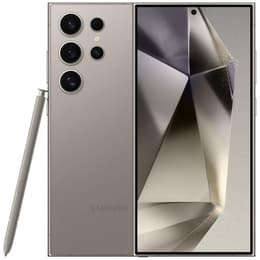
Galaxy S24 Ultra
Galaxy S24 Ultra
Starting at

Refurbished price:£422.00

Versus £1,357.64 new

See options

Ratings

The Samsung Galaxy A16 5G, released in late 2024 and early 2025, and the Samsung Galaxy S24 Ultra, launched in January 2024, represent distinct offerings within Samsung's smartphone lineup. While both operate on the Android platform, they cater to different user priorities, with the A16 5G focusing on essential connectivity and extended software support, and the S24 Ultra delivering advanced performance, camera capabilities, and a premium user experience.

Scores

Durability

The longevity of a smartphone is influenced by its build, software support, and repairability. Both devices offer substantial software commitment from Samsung, contributing to a longer practical lifespan.

  • Software Support: The Galaxy A16 5G is notable for its commitment to six years of Android operating system upgrades and security updates, extending its support until October 2030. The Galaxy S24 Ultra, as a flagship device, surpasses this with an impressive seven years of Android OS and security updates. This means the S24 Ultra will receive updates for a year longer than the A16 5G.
  • Physical Durability: The Galaxy A16 5G features an IP54 rating, providing protection against dust and moderate water splashes. Its construction primarily uses plastic, including a 'Glastic' back, which some users have noted can be slippery. The Galaxy S24 Ultra boasts an IP68 rating, offering higher resistance to dust and water immersion (up to 1.5 meters for 30 minutes). It incorporates a titanium frame and Gorilla Glass Armor for enhanced scratch and drop resistance.
  • Repairability: The Galaxy A16 5G has received a repairability score of 8 out of 10 in some assessments, with features like pull tabs for battery removal. The Galaxy S24 Ultra has also achieved high repairability scores, often rated at 9 out of 10 by some reviewers, indicating that components like the battery are relatively accessible for replacement. However, some sources indicate a score of 7 out of 10 for the S24 Ultra, noting that screen replacement can be challenging without causing damage.

Year of Release

2024

2024

Compatible with latest Update

Yes

Yes

OS

Android

Android

Foldable

No

No

Performance

Performance is a key differentiator, impacting how smoothly applications run, how quickly tasks are completed, and the overall responsiveness of the device.

  • Processing Power: The Galaxy A16 5G is equipped with a processor designed for everyday tasks, such as social media, streaming, and light multitasking. While it handles basic activities smoothly, some users have reported occasional sluggishness and stuttering, particularly with more demanding applications or extensive multitasking. The Galaxy S24 Ultra features a current-generation processor engineered for high-demand scenarios. It delivers robust performance, handling intensive applications, advanced gaming, and complex multitasking without noticeable delays.
  • Multitasking and Storage: The Galaxy A16 5G typically comes with 4GB or 8GB of RAM, with some users finding 4GB insufficient for Android's multitasking requirements. It offers storage options of 128GB or 256GB, expandable via a Micro-SD card up to 1.5TB. The Galaxy S24 Ultra is equipped with 12GB of RAM, facilitating seamless transitions between numerous applications. Its storage options range from 256GB to 1TB, providing ample space for extensive media and applications.
  • Battery Behavior: Both devices house a 5000 mAh battery. The Galaxy A16 5G generally provides over a full day of use, even with moderate to heavy activity. The Galaxy S24 Ultra is noted for its exceptional battery endurance, often lasting a full day of heavy use and potentially extending to two days with moderate usage, outperforming many other flagship devices in battery tests.

Memory (GB)

4 GB

12 GB

Screen quality

The display is the primary interface for user interaction, and differences in technology, resolution, and brightness significantly affect the viewing experience.

  • Display Technology and Clarity: Both phones feature Super AMOLED display technology, known for vibrant colors and deep blacks. The Galaxy A16 5G has a 6.7-inch FHD+ (1080x2340px) display. The Galaxy S24 Ultra offers a larger 6.8-inch Dynamic LTPO AMOLED 2X display with a higher QHD+ (3088x1440px) resolution, providing a sharper and more detailed visual experience.
  • Brightness and Refresh Rate: The Galaxy A16 5G features a 90Hz refresh rate for smoother scrolling and animations, with a peak brightness of around 800 nits, which can be challenging for outdoor visibility in bright conditions. The Galaxy S24 Ultra provides an adaptive refresh rate ranging from 1Hz to 120Hz, optimizing power consumption while ensuring fluid visuals. Its display can reach a peak brightness of up to 2600 nits, offering excellent visibility even in direct sunlight.
  • Design and Protection: The Galaxy A16 5G has noticeable bezels and a waterdrop notch for the front camera. The Galaxy S24 Ultra features a flat display with minimal bezels and is protected by Gorilla Glass Armor, which also includes an anti-glare coating for improved viewing in various lighting conditions.

Resolution

1080 x 2340

1440 x 3120

Screen type

Super AMOLED

Dynamic LTPO AMOLED 2X

Audiovisual

Camera capabilities are a significant factor for many users, with differences in sensor technology, lens configurations, and software processing affecting image and video quality.

  • Rear Camera System: The Galaxy A16 5G includes a triple camera setup with a 50MP main sensor, a 5MP ultrawide lens, and a 2MP macro lens. While it delivers decent photos in good lighting, some users have noted issues with white balance and color accuracy compared to its predecessor, and it lacks optical image stabilization (OIS). The Galaxy S24 Ultra features a versatile quad-camera system, including a 200MP main sensor, a 12MP ultrawide, a 50MP 5x telephoto, and a 10MP 3x telephoto lens. This configuration allows for exceptional detail, versatility across various focal lengths, and strong performance in diverse shooting conditions, particularly excelling in long-range zoom.
  • Low-Light and Video Performance: The Galaxy A16 5G's low-light photography is not its strongest suit, and video recording quality is generally considered improved over previous models but without 4K capability in the stock app. The Galaxy S24 Ultra offers advanced low-light performance and high-quality video recording, including features like AI-enabled slow-motion previews, making it suitable for a wide range of video capture needs.
  • Front Camera and Audio: Both devices feature a front-facing camera, with the A16 5G having a 13MP sensor and the S24 Ultra a 12MP sensor. The Galaxy A16 5G has a single bottom-firing speaker, with some improvements in audio quality over its predecessor, though distortion can occur at maximum volume. The Galaxy S24 Ultra provides a robust media consumption experience with solid speakers and enhanced microphone quality for calls and recordings.

Main camera

50 megapixels

200 megapixels

Front camera

13 megapixels

12 megapixels

Miscellaneous

Beyond core specifications, several practical features and design elements contribute to the overall user experience and device utility.

  • Connectivity and Ports: Both devices support 5G connectivity. The Galaxy A16 5G includes a USB Type-C port but omits the 3.5mm headphone jack. The Galaxy S24 Ultra also features a USB Type-C port and offers advanced Wi-Fi standards (802.11 a/b/g/n/ac/ax) and Bluetooth v5.3 for robust wireless connections.
  • Biometrics and Sensors: The Galaxy A16 5G includes essential sensors, though specific biometric details are less prominent in general reviews. The Galaxy S24 Ultra integrates an in-display fingerprint sensor and face recognition for secure unlocking, alongside a comprehensive suite of sensors including an accelerometer, ambient light sensor, barometer, compass, and gyroscope.
  • Design and Handling: The Galaxy A16 5G measures 164.4 mm in height and features a plastic build, contributing to a lighter feel. The Galaxy S24 Ultra, with its titanium frame and glass construction, measures 162.3 x 79.0 x 8.6mm and weighs 232 grams, offering a more substantial and premium in-hand feel. The S24 Ultra also integrates the S Pen, providing additional functionality for note-taking and navigation.

Weight

200 g

232 g

Screen size (in)

6.7

6.8

Mobile network

5G

5G

SIM card

Dual Physical SIM

Dual Physical SIM + eSIM

Carrier compatibility

Unlocked

Unlocked

The Samsung Galaxy A16 5G and Galaxy S24 Ultra cater to distinct user needs, a fact reflected in user sentiment and device capabilities. Users often praise the Galaxy A16 5G for its extended software support, decent battery life, and satisfactory performance for everyday tasks. However, common criticisms point to its occasional sluggishness, particularly with demanding applications, and its less robust build materials.

Conversely, the Galaxy S24 Ultra receives widespread acclaim for its exceptional display, powerful performance, and versatile camera system, with many users highlighting its long-lasting battery and the utility of the integrated S Pen. Some users have noted concerns regarding motion blur in certain camera scenarios and the potential difficulty of screen repairs.

Users prioritizing long-term software support and a device capable of handling essential daily functions without needing top-tier performance may find the Galaxy A16 5G well-suited to their needs. It offers a practical and sustainable choice for those who value longevity in updates. For individuals who require a device with cutting-edge performance, a superior camera system, a vibrant and highly durable display, and advanced productivity features like the S Pen, the Galaxy S24 Ultra aligns more closely with those priorities. Both devices, when considered as quality-assured refurbished options, present an eco-friendly alternative for consumers.

See all articles

Our recent comparisons