
Compare models
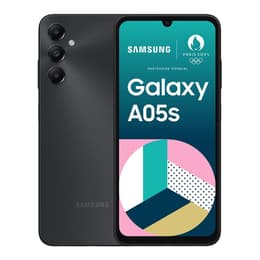
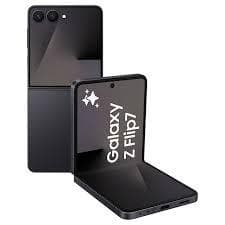
Galaxy A05s Vs Galaxy Z Flip7
- 1-year minimum warranty
- Free delivery on all items
- Free 30-day returns
Differences at a glance
The Samsung Galaxy A05s (2023) and the Samsung Galaxy Z Flip7 (2025) represent two fundamentally different approaches to modern smartphone engineering, catering to distinct user expectations. While the Galaxy A05s focuses on delivering core functionalities within a conventional, traditional candy-bar form factor, the Galaxy Z Flip7 introduces a cutting-edge foldable design that prioritizes portability and innovative hardware. Both devices operate on Android, though they target entirely different segments of the mobile market through their distinct physical builds and engineering choices.
Available Models
Colour
Storage (GB)
Scores
Durability
When evaluating structural longevity and software support, these devices offer contrasting timelines that reflect their respective release years and market positions.
- Software update support: The Galaxy Z Flip7 benefits from a more recent release date, meaning it receives security patches and operating system upgrades further into the future compared to the older Galaxy A05s.
- Build and physical durability: The Galaxy A05s relies on a sturdy, traditional plastic frame designed to withstand everyday wear and tear, whereas the Galaxy Z Flip7 features complex folding mechanics that require mindful handling over years of daily use.
- Expected lifespan: Users seeking long-term system update relevance will find the newer folding model advantageous, while those looking for a simple device without moving mechanical parts often prefer traditional bar phones for long-term mechanical resilience.
Year of Release
2023
2025
Performance
Processing capabilities and day-to-day responsiveness vary significantly, affecting how each phone handles multiple tasks and resource-heavy software.
- System responsiveness: The Galaxy Z Flip7 handles demanding applications, intense multitasking, and modern mobile gaming smoothly, whereas the Galaxy A05s is optimized for lighter, everyday tasks like web browsing and messaging.
- Storage capacity and memory: The Galaxy Z Flip7 offers higher baseline memory configurations to keep numerous background apps active, while the Galaxy A05s provides standard storage configurations often expandable via a memory card slot.
- Power management: The Galaxy A05s features a standard battery size that comfortably handles basic daily use, while the Galaxy Z Flip7 balances a compact folding battery design with efficient power processing for a full day of mixed usage.
Screen quality
Visual output and display engineering differ greatly, offering distinct experiences for media consumption and daily viewing.
- Display technology: The Galaxy A05s uses a standard LCD screen with clear resolution, while the Galaxy Z Flip7 features a vibrant foldable OLED main panel that delivers deep contrast levels and rich colors.
- Refresh rate and fluidity: Both devices support smooth scrolling capabilities, though the advanced panel on the Galaxy Z Flip7 offers superior brightness levels for clear visibility under direct outdoor sunlight.
- Form factor interaction: The Galaxy Z Flip7 provides a unique dual-screen experience with an outer cover display for quick notifications, while the Galaxy A05s provides a conventional, uninterrupted single viewing area.
Audiovisual
Imaging hardware and media playback systems cater to different photography preferences and audio-visual needs.
- Camera versatility: The Galaxy Z Flip7 includes advanced multi-lens camera configurations with sophisticated processing for detailed low-light shots, while the Galaxy A05s handles basic everyday snapshots reliably.
- Video recording: The Galaxy Z Flip7 supports high-resolution stabilization features for smooth video capturing, whereas the Galaxy A05s covers standard definition recording requirements.
- Media and audio output: The Galaxy Z Flip7 delivers rich stereo sound for media consumption, while the Galaxy A05s retains a traditional physical headphone jack for wired audio accessories.
Miscellaneous
Physical dimensions, connectivity standards, and practical hardware additions shape the daily usability of each smartphone.
- Connectivity options: The Galaxy Z Flip7 includes modern high-speed 5G connectivity and advanced wireless standards, while the Galaxy A05s offers standard 4G connectivity alongside basic wireless features.
- Security features: The Galaxy A05s utilizes a convenient side-mounted fingerprint sensor, whereas the Galaxy Z Flip7 integrates facial recognition and a fingerprint reader into its folding design.
- Portability and dimensions: The Galaxy Z Flip7 folds in half to easily fit into small pockets, while the Galaxy A05s maintains a larger, fixed rectangular footprint during daily handling.
Screen size (in)
6.7
6.9
Mobile network
4G
5G
SIM card
Dual Physical SIM
Physical SIM + eSIM
Carrier compatibility
Unlocked
Unlocked
Connector
USB-C
USB-C
What the community thinks
User discussions across public forums highlight distinct community feedback for both devices. Owners of the Galaxy A05s frequently praise its straightforward reliability, straightforward physical build, and the inclusion of expandable storage. Common criticisms focus on its basic processing limits and lack of advanced display technology. Conversely, users of the Galaxy Z Flip7 often commend its compact pocketability, innovative form factor, and snappy system speed, though some note that the folding screen crease and battery endurance under heavy usage require careful management.
Users prioritizing a compact device that fits easily into small spaces and handles demanding tasks smoothly will find the Galaxy Z Flip7 well-suited to their needs. On the other hand, users prioritizing essential everyday communication, expandable storage, and a traditional phone design may lean toward the Galaxy A05s. For those looking to make a sustainable choice, choosing a quality-assured refurbished option provides a practical way to acquire these devices while reducing electronic waste. Ultimately, the choice depends entirely on individual preferences regarding form factor, performance demands, and budget considerations.