Refurbished price:£50.00
Versus £59.99 new


Updated on 16 October 2026
16 October 2026
10 mins read

Emma Madden
Freelance journalist
Sega's Dreamcast was the Japanese giant's last home console, seen by many as a flop. But writer Emma Madden reports that the Dreamcast has gained cult status as a beloved retro device, and they exclusively interviewed Peter Moore - the former CEO of Sega America - about this retro console's timeless charm.
Sega’s Dreamcast, a new gaming console that seemed, at least in its marketing, capable of sparking a revolution, was about to enter living rooms in North America (it had already launched in Japan towards the tailend of 1998, while it came out in Europe a month after the US), trailing the promises and anxieties of the coming millennium. The console helped pioneer online gaming, pairing a 56K modem with a broadband adapter, mouse, and keyboard. It also had memory cards (Visual Memory Units) that doubled as miniature handheld gaming screens.
In the US Sega priced it at $199, leaning into the eerie numerology. For a spell, the console was everywhere: projected into millions of houses via Super Bowl commercials; movie trailers in the summer of Star Wars: The Phantom Menace; and Janet Jackson’s music video for her hit ‘Doesn’t Really Matter.’ Legendary footballer Thierry Henry even had the Dreamcast logo on his kit, with Dreamcast briefly the official sponsor of Arsenal Football Club. But in the case of the Dreamcast, the millennium ended not with a bang but a womp-womp.
The Dreamcast sold briskly at first: 225,132 units in 24 hours in North America, racking up $98.4 million. In Japan, it sold around 150,000 units — a figure that could have been far larger had it not been for supply chain issues. By Christmas 1999, it held 31 percent of the North American market. Early titles like Sonic Adventure and Crazy Taxi promised, and delivered, arcade visuals at home. The Dreamcast’s ability to output 480i, modest by later standards, nevertheless lent its games a visual clarity that, in hindsight, places it among the earliest contenders for “high-definition” gaming.

Former Sega America CEO Peter Moore continues to love the Dreamcast. Photo by Ethan Baron.
Yet the PlayStation 2 loomed, offering not only superior processing power but also an affordable built-in DVD player, which was an irresistible family proposition. For Sega, that early success carried a sense of déjà vu. This was, after all, the company that had once gone toe-to-toe with Nintendo in the early ’90s, a time when the Sega Genesis (called the Mega Drive in Europe) turned the console war into a genuine rivalry rather than a foregone conclusion. Sonic the Hedgehog, at this point, even had Mario on the back foot.
Its immediate predecessor, the Sega Saturn, launched just a few years earlier in 1995 and had been intended to carry that momentum into the 32-bit era, but instead faltered despite its cult classic games like the Panzer Dragoon trilogy. It was hampered by a notoriously complex hardware architecture and a botched surprise release in the U.S. that alienated retailers and developers alike.
The Dreamcast felt, for a moment, like a return to form for Sega; in hindsight, it reads more like a final surge and the last time Sega looked like a genuine hardware heavyweight before the ground shifted beneath it. Peter Moore, the CEO of Sega’s American branch at the time, remembers, with a sigh, “I was ringing retailers every day to check sales figures, but by Black Friday of 2000 the numbers were way below where we wanted them to be. So many of the Dreamcast consoles remained in warehouses.”
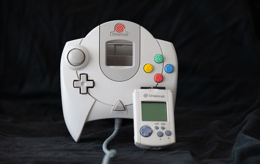
The bulky Sega Dreamcast controller and Visual Memory Unit, a playable memory card. Photo by Ethan Baron.
By the end of 2001, in the US at least, the dream of the Dreamcast was over. Moore stood at a press conference and announced that Sega would exit the hardware business. “It was tragic,” he says. Despite having genuinely pioneering games like Skies of Arcadia and Shenmue, the console quickly became bargain bin fodder.
“It burned very brightly with so many innovative and memorable games that oozed charisma,” says Harvey Jones, a music producer and game composer, as well as a keen advocate of the console, who makes Dreamcast-inspired music under the alias Pizza Hotline. “There’s so much room for ‘what if’ questions. I think that’s a big part of what makes people want to keep the dream alive.”
Today, Jones is part of a cohort of hardcore fans doing just that—homebrew hackers, coders, and nostalgists who have revived the console’s online capabilities. Many of them acquired the discontinued console from garage sales or Facebook Marketplace. Then, they retooled it: services like DreamPi allow the console to trick itself into thinking it is using a 1999 dial-up connection and redirect it to unofficial servers, where games like NBA 2K and Phantasy Star Online still host lively multiplayer sessions.
"Back then video games didn’t cost tens of millions of dollars to make, so you could experiment and do something innovative for a few million dollars just to see if it worked" - Peter Moore, former CEO of Sega America
The number of regular players is modest: perhaps 50 to 100 active in a given month, from a pool of around 2,000 unique DreamPi users spread across the globe. The dedication, though, is extraordinary. The players are caretakers of a machine whose soul was always slightly out of step with its time.
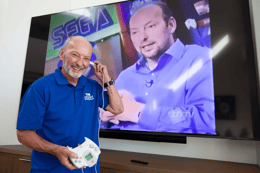
Former Sega America CEO Peter Moore today and back when the Dreamcast launched. Photo by Ethan Baron. .
Laurence Goodchild, a player and prominent contributor to the Dreamcast’s dedicated blog, The Dreamcast Junkyard, says that gamers organize themselves into regular timeslots that recur weekly. Each Thursday at 8 p.m. GMT, the Sega Online group hosts a Euro Gaming night, with the game selected in advance by nomination or voting on a dedicated Discord server.
Friday evenings, known as “Fragging Friday,” have run, “for as long as I can remember,” says Goodchild, with members playing games like Quake III Arena, a frenetic multiplayer shooter, into the early hours. The community, Goodchild says, “offers a sense of community and comfort for many.”
Within it, fans push the console to its outer limits, even using it to order Domino’s Pizza (a process that takes at least twenty times as long). The friction of outdated technology becomes a glue of the community and this is largely the point. Together, its members set themselves the task of reviving online modes, first creating servers the games can function on, and then figuring out how to direct each game to those unofficial servers. “Neither of which is simple,” says Goodchild.
The slower, more awkward nature of the hardware brings the community closer together. “You’ll often find that people genuinely enjoy finding and overcoming technical issues with their consoles,” adds Jones. “That in itself becomes part of the communal experience.”
An enterprising group of hackers and pirates have existed since the Dreamcast’s launch, collectively referring to themselves as ‘Utopia.’ Skot Deeming, a scholar and researcher, notes that all game consoles tend to have an afterlife in fandoms, with communities driving the post-consumer lifespan of the hardware. What sets the Dreamcast apart, he says, is its technology, particularly the GD-ROM drive. Because fans can burn their own CDs and run them directly on the console, it is far more accessible than other methods like firmware or ROM hacking, making it easier for the community to engage with and keep the system alive.
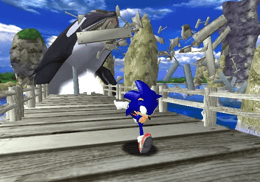
This moment in Sonic Adventure was seen as a new high in 128-bit visuals. Photo from Sega.
Deeming observes that vintage technologies become appealing because they are “not subject to the same kinds of legal consequences” as contemporary market devices. Like all fandoms and hobby cultures, he notes, these practices generate “incredibly in-depth knowledge about their craft,” and it is the sharing of that knowledge that “builds these communities.” He suggests that many who engage in these activities do so because it is “something they can claim as their own.”
He explains that this is “the very nature of subculture.” In mainstream culture, Deeming notes, people are treated primarily as consumers, with little agency beyond “buy this, or don’t.” In a subculture like the Dreamcast community, by contrast, it is “like having your own clubhouse, a place for the initiated, a little slice of culture they can call their own.” For him, any member of a fandom participates for these reasons: “to connect with others who share their passion.”
Decades after the Sega Dreamcast’ commercial demise, indie developers are still producing new physical releases, aimed squarely at its small but devoted retro audience, while modders continue to push the hardware in ways its creators never imagined. Projects like unofficial ports of Grand Theft Auto III and Mario 64, adapted to run on the system long after its demise, insist that there’s still some life left in it and, by running these complex games, prove the Dreamcast was packing a lot of power.
Refurbished price:£50.00
Versus £59.99 new

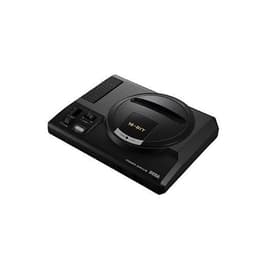
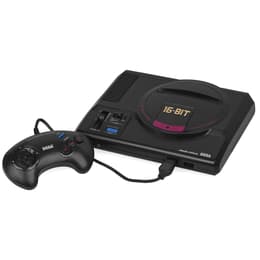
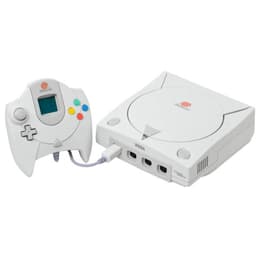
Refurbished price:£180.00
To the community, there is something especially compelling about tinkering with older and slower forms of digital networking. “I adore surfing around old, outdated websites,” says Jones. Like him, the players are trying to restore the optimism of the early internet, rescuing that faded dream from the centralized, platform-driven internet we now inhabit, where every user becomes a product, mined for data. “Using Instagram now is almost like watching teleshopping. It’s sickening.”
Conversely, the Sega Dreamcast, in its original form, embraced the techno-optimism of the early internet: GeoCities-era vernacular, with a sense of personal expression. It was also a time when game developers could afford to take risks. “Back then games didn’t cost tens of millions of dollars to make, so you could experiment and do something for a few million dollars just to see if it worked,” Moore recalls.
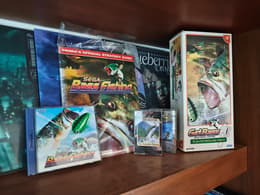
Beloved Sega Dreamcast memorabilia. Photo by Harvey Jones.
The Dreamcast’s launch library was nineteen titles deep. So many of the games that followed carried a conceptual daring. One of them, Seaman, invited players to converse, via microphone, with a fish-bodied humanoid whose interests ranged from baseball to politics to gangsta rap. Typing of the Dead, meanwhile, transformed a zombie invasion into a touch-typing exercise.
“It burned very brightly with so many innovative and memorable games that oozed charisma" - Harvey Jones, a music producer and Sega Dreamcast super fan
That’s not even mentioning the pure cel-shaded sugar rush of Jet Force Radio, a game where you do graffiti tags and roller skate around futuristic cities, or the benchmark title Sonic Adventure 2, which let Sonic skateboard around a realistic city. To describe this forward thinking approach to game design, Moore coined a phrase they used both internally and externally: “We’re taking gamers where gaming is going.”
“And I was exactly right,” he adds, “but as with many pioneers, we got all the arrows.” I ask Moore why he agreed to an interview about one of the greatest failures of his career. Many might have ignored the email. “It was a very special time in my life,” he says. “Whenever there’s a date with a nine in it, I always think of the Dreamcast.”
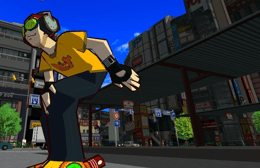
The cel-shaded graphics of the Dreamcast's Jet Set Radio remain unique today. Photo from Sega.
Behind him are shelves full of mementos from his career: a 360 console from his time as corporate vice president at Microsoft, where he oversaw the Xbox (“I brought the soul of the Dreamcast to the Xbox,” he says, referencing the fact that iconic Dreamcast games like Jet Set Radio received sequels on the black Microsoft console), and Liverpool FC jerseys from his time as the iconic football club’s CEO. But a Dreamcast is curiously absent. “I went on eBay the other day and saw it listed for $250.” Moore considered buying one, wishing he had instead kept one of the many left in the warehouse.
The Dreamcast’s afterlife suggests that a technology does not need to win to endure. It only needs people willing to keep imagining alternate timelines, ones in which the utopian promise of the Dreamcast and the internet were actually fulfilled. Now, the console’s fate is held in place by a small community willing to ask and answer a question that has never quite gone away: what if?
To them, the Dreamcast and its humongous yet study controllers were simply released into the wrong era, with the 2020s the right moment for it to finally cement its power as a device. Maybe we’re all finally catching up to the Sega Dreamcast’s innovative charms.
Emma Madden is a British writer based in Los Angeles who writes about culture, both offline and online. They have written for titles such as Dazed, Pitchfork, the LA Times, and the New York Times.