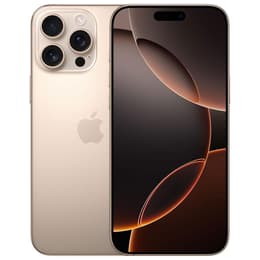


iPhone 16 Pro Max Vs Xiaomi Redmi Note 11 Pro 5G

iPhone 16 Pro Max
iPhone 16 Pro Max
Starting at

Refurbished price:£658.00

Versus £1,199.00 new

See options
Xiaomi Redmi Note 11 Pro 5G
Starting at

Refurbished price:£102.00

Versus £599.00 new

See options

Ratings

The iPhone 16 Pro Max, released in September 2024, represents Apple's premium smartphone offering, featuring advanced technology and a focus on high-end user experience. In contrast, the Xiaomi Redmi Note 11 Pro 5G, launched in early 2022, positions itself as a capable device in the mid-range segment, offering a balance of features for everyday use. The primary distinctions between these two devices lie in their operating systems, overall performance capabilities, and camera systems, reflecting their different market segments and release timelines.

Scores

Durability

The expected lifespan and software support differ considerably between these two smartphones, largely due to their release dates and manufacturer policies.

  • Release Timeline: The iPhone 16 Pro Max, launched in September 2024, benefits from being a much newer device compared to the Xiaomi Redmi Note 11 Pro 5G, which was released in January 2022. This age difference means the iPhone has a longer runway for future updates and relevance.
  • OS Support & Longevity: Apple typically provides extensive software support, with the iPhone 16 Pro Max launching with iOS 18 and likely receiving updates for many years to come, potentially up to iOS 26.3.1 (a) as of March 2026. The Redmi Note 11 Pro 5G, initially running Android 11 with MIUI 13, has a shorter expected software update cycle, which is common for Android devices in its category.
  • Durability & Repairability: The iPhone 16 Pro Max features a titanium design and the latest generation Ceramic Shield front, contributing to its robust build and IP68 water and dust resistance, allowing submersion up to 6 meters for 30 minutes. While the Redmi Note 11 Pro 5G uses Gorilla Glass 5 on the front and has an IP53 rating for splash and dust resistance, it offers less protection against water immersion. Both devices are designed with modern smartphone repairability in mind, though the availability and cost of parts can vary by region and model.

Year of Release

2024

2022

Compatible with latest Update

Yes

No

Foldable

No

No

Performance

The performance capabilities of these two devices reflect their respective market positions and the technological advancements over their differing release periods.

  • Processor Capabilities: The iPhone 16 Pro Max is equipped with a current-generation processor designed for demanding tasks, ensuring smooth operation for complex applications, intensive gaming, and advanced computational features. The Redmi Note 11 Pro 5G, powered by a mid-range processor, handles everyday tasks and moderate gaming efficiently, providing a responsive experience for general use.
  • Multitasking and Responsiveness: The iPhone 16 Pro Max offers substantial internal memory, contributing to seamless multitasking and quick app loading, maintaining high responsiveness even with numerous applications running simultaneously. The Redmi Note 11 Pro 5G, available with varying internal memory configurations, provides adequate performance for switching between typical applications, though it may exhibit more noticeable pauses during heavy multitasking compared to the iPhone.
  • Battery Behavior: The iPhone 16 Pro Max is noted for its extended battery life, capable of supporting prolonged video playback and heavy daily usage, often lasting through a full day and beyond for many users. The Redmi Note 11 Pro 5G features a large battery capacity that typically provides a full day of use, with some users reporting up to two days under lighter conditions. It also supports rapid charging, allowing for quick power top-ups.

Memory (GB)

8 GB

6 GB

Screen quality

Both devices offer vibrant displays, but they differ in technology, resolution, and advanced features, impacting the overall visual experience.

  • Display Technology and Clarity: The iPhone 16 Pro Max features a 6.9-inch Super Retina XDR OLED display, providing deep blacks, high contrast, and vibrant colors with a resolution of 2868 by 1320 pixels, resulting in sharp and detailed visuals. The Redmi Note 11 Pro 5G comes with a 6.67-inch FHD+ AMOLED DotDisplay, offering rich colors and good contrast, with a resolution of 1080x2400 pixels.
  • Brightness and Refresh Rate: The iPhone 16 Pro Max's display supports an adaptive refresh rate from 1Hz to 120Hz, known as ProMotion, which provides smooth scrolling and responsiveness while conserving power. It also achieves high brightness levels, with up to 1200 nits for standard content and 2000 nits peak for HDR content, making it highly visible in bright outdoor conditions. The Redmi Note 11 Pro 5G offers a 120Hz refresh rate for fluid visuals, though it is not adaptive, and reaches a peak brightness of 1200 nits, which is suitable for most lighting environments.
  • Viewing Experience: The larger screen size of the iPhone 16 Pro Max, combined with its advanced display technologies, offers an expansive and immersive viewing experience for media consumption and productivity. The Redmi Note 11 Pro 5G's display provides a good viewing experience for its class, with its AMOLED panel delivering punchy colors for videos and images.

Resolution

1320 x 2868

1080 x 2400

Screen type

LTPO Super Retina XDR OLED

Super AMOLED

Audiovisual

The camera systems on these two smartphones reflect different approaches to mobile photography, with the iPhone focusing on advanced computational capabilities and the Redmi offering a high-megapixel main sensor.

  • Rear Camera System: The iPhone 16 Pro Max features a versatile Pro camera system, including a 48MP Wide camera with advanced optical image stabilization, a 48MP Ultra Wide camera, and a 12MP 5x Telephoto camera. This setup is designed for detailed photos across various focal lengths and improved low-light performance. The Redmi Note 11 Pro 5G is equipped with a 108MP main camera that uses pixel-binning technology to capture detailed images, alongside an 8MP ultra-wide and a 2MP macro lens.
  • Photography Performance: The iPhone 16 Pro Max excels in computational photography, offering features like advanced HDR, improved low-light processing, and various photographic styles, resulting in consistent and high-quality images across diverse conditions. The Redmi Note 11 Pro 5G's 108MP sensor can capture sharp images in good lighting, and its night mode helps improve low-light shots, though it may not match the iPhone's performance in challenging scenarios.
  • Video Recording and Audio: The iPhone 16 Pro Max offers extensive video capabilities, including 4K Dolby Vision recording at high frame rates, Cinematic mode, Action mode, and ProRes video, providing professional-grade video capture. It also features enhanced audio recording with spatial audio capture and wind noise reduction. The Redmi Note 11 Pro 5G records video at up to 1080p at 30fps, which is suitable for casual video capture but lacks the advanced features and resolution of the iPhone. Both devices include stereo speakers, with the Redmi Note 11 Pro 5G offering robust sound for media consumption.

Main camera

48 megapixels

108 megapixels

Front camera

12 megapixels

16 megapixels

Miscellaneous

Beyond core features, several practical elements contribute to the overall user experience and daily utility of these smartphones.

  • Connectivity and Ports: The iPhone 16 Pro Max supports the latest wireless standards, including 5G and Wi-Fi 7, ensuring fast and reliable network connections. It features a USB-C port for charging and data transfer. The Redmi Note 11 Pro 5G also supports 5G connectivity and Wi-Fi 5 (802.11ac). It includes a USB-C port and retains a 3.5mm headphone jack, offering more traditional audio connectivity options.
  • Security and Sensors: The iPhone 16 Pro Max relies on advanced facial recognition for secure unlocking and authentication. It also integrates a LiDAR scanner for enhanced augmented reality experiences and improved low-light focusing. The Redmi Note 11 Pro 5G features a side-mounted fingerprint sensor and AI Face Unlock for security. It also includes an IR blaster, allowing it to function as a universal remote control.
  • Design and Handling: The iPhone 16 Pro Max features a premium titanium design, contributing to its lightweight yet durable build. Its dimensions are 163 mm in height, 77.6 mm in width, and 8.25 mm in thickness, weighing 227 grams. The Redmi Note 11 Pro 5G has a flat-edge design with a glass back, measuring 164.19 mm in height, 76.1 mm in width, and 8.12 mm in thickness, with a weight of 202 grams. The iPhone also includes an Action button and a dedicated Camera Control button for quick access to functions.

Weight

227 g

202 g

Screen size (in)

6.9

6.67

Mobile network

5G

5G

SIM card

Physical SIM + eSIM

Dual Physical SIM

Carrier compatibility

Unlocked

Unlocked

The iPhone 16 Pro Max and the Xiaomi Redmi Note 11 Pro 5G cater to different user expectations and priorities, largely influenced by their respective market segments and release dates. Users often praise the iPhone 16 Pro Max for its exceptional performance, advanced camera capabilities, and extended battery life, with many appreciating the seamless iOS experience and robust build quality. Some users, however, note that while the device is highly capable, the incremental updates might not always feel revolutionary compared to its immediate predecessors, and some new features like Apple Intelligence were not fully available at launch.

The Xiaomi Redmi Note 11 Pro 5G is frequently lauded for its vibrant AMOLED display with a high refresh rate, reliable battery life, and fast charging capabilities, offering a strong feature set for its category. Common feedback includes appreciation for its overall value and solid performance for daily tasks. However, some users point out that its video recording capabilities are limited to 1080p and that its processor, while competent, may not handle the most demanding applications as smoothly as higher-end devices.

Users prioritizing a cutting-edge mobile experience with top-tier performance, advanced photography and videography features, and long-term software support will find the iPhone 16 Pro Max well-suited to their needs. Its robust ecosystem and premium build are designed for those who rely heavily on their device for demanding tasks and creative work. Conversely, individuals seeking a capable smartphone for everyday communication, media consumption, and moderate gaming, with a focus on a vibrant display and strong battery endurance, may lean towards the Xiaomi Redmi Note 11 Pro 5G. This device offers a balanced set of features for users who value core smartphone functionalities without needing the absolute latest in processing power or advanced camera systems. Both devices are available as quality-assured refurbished options, providing an eco-friendly alternative for consumers.

See all articles

Our recent comparisons