
Galaxy A15 Vs iPhone 15 Pro Max

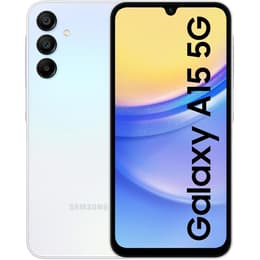
Galaxy A15
Galaxy A15
Starting at

Refurbished price:£88.00

Versus £169.00 new

See options
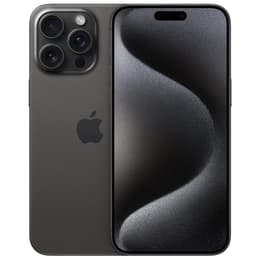
iPhone 15 Pro Max
iPhone 15 Pro Max
Starting at

Refurbished price:£453.00

Versus £1,199.00 new

See options

Ratings

The Samsung Galaxy A15, released in December 2023, and the iPhone 15 Pro Max, launched in September 2023, are both contemporary smartphones, yet they cater to different user expectations and needs. The Galaxy A15 operates on the Android platform, offering a versatile and customizable experience, while the iPhone 15 Pro Max runs on iOS, known for its integrated ecosystem and streamlined interface. The primary distinctions lie in their processing power, camera capabilities, and overall build quality.

Scores

Durability

The expected practical lifespan and software support differ between these two devices.

  • Release timeline and age: Both devices were released in late 2023, making them current generation models. The iPhone 15 Pro Max typically receives software updates for a longer duration, often extending to six or seven years from its release. The Galaxy A15 generally receives operating system updates for about four to five years, with security updates extending slightly longer.
  • Software longevity expectations: Users prioritizing the longest possible software support and access to the latest operating system features will find the iPhone 15 Pro Max offers a more extended timeline. The Galaxy A15 still provides a substantial period of support, ensuring it remains functional and secure for several years.
  • Build and protection: The iPhone 15 Pro Max features a robust titanium frame and a Ceramic Shield front cover, contributing to enhanced drop resistance and an IP68 rating for dust and water resistance. The Galaxy A15 utilizes a plastic frame and a glass front, offering standard durability for everyday use, though it typically lacks an official IP rating.

Year of Release

2023

2023

Compatible with latest Update

Yes

Yes

OS

Android

iOS

Foldable

No

No

Performance

The internal components of these two smartphones are designed for different levels of demand.

  • Processor capabilities: The iPhone 15 Pro Max is equipped with a highly advanced processor, enabling it to handle the most demanding applications, complex 3D games, and intensive multitasking with exceptional fluidity. The Galaxy A15 features a capable processor that efficiently manages everyday tasks, social media, web browsing, and casual gaming without significant slowdowns.
  • Storage options: The iPhone 15 Pro Max offers larger internal storage configurations, starting at 256GB and going up to 1TB, providing ample space for extensive media libraries and numerous applications. The Galaxy A15 comes with storage options typically ranging from 128GB to 256GB, and often includes expandable storage via a microSD card slot.
  • System responsiveness: Users will experience immediate app launches and seamless transitions on the iPhone 15 Pro Max due to its powerful hardware and optimized software. The Galaxy A15 provides a responsive experience for general use, though it may exhibit slight delays when switching between many demanding applications.

Memory (GB)

4 GB

8 GB

Screen quality

The visual experience offered by each device's display varies in technology and characteristics.

  • Display technology and clarity: The iPhone 15 Pro Max features a Super Retina XDR OLED display, known for its deep blacks, vibrant colors, and high contrast, providing an immersive viewing experience. The Galaxy A15 uses a Super AMOLED display, which also delivers rich colors and good contrast, enhancing media consumption. Both offer a resolution that ensures sharp text and clear images.
  • Brightness levels: The iPhone 15 Pro Max achieves significantly higher peak brightness, making its screen highly visible even in direct sunlight. The Galaxy A15's display offers good brightness for indoor and typical outdoor conditions, though it may be less legible under very bright sunlight.
  • Refresh rate and smoothness: The iPhone 15 Pro Max incorporates ProMotion technology, offering an adaptive refresh rate up to 120Hz, which results in exceptionally smooth scrolling and fluid animations. The Galaxy A15 features a 90Hz refresh rate, providing a noticeably smoother experience than standard 60Hz displays, enhancing daily interactions.

Resolution

1080 x 2340

1290 x 2796

Screen type

Super AMOLED

LTPO Super Retina XDR OLED

Audiovisual

The camera systems and audio output capabilities present distinct offerings.

  • Camera system capabilities: The iPhone 15 Pro Max boasts a versatile triple-camera system, including a 48 MP main sensor, a 12 MP ultrawide lens, and a 12 MP telephoto lens with 5x optical zoom, excelling in various photographic scenarios. The Galaxy A15 features a triple camera setup with a 50 MP main sensor, a 5 MP ultrawide, and a 2 MP macro lens, suitable for everyday photography.
  • Photography performance: The iPhone 15 Pro Max delivers exceptional image quality across diverse lighting conditions, including challenging low-light environments, with advanced computational photography features. The Galaxy A15 performs well in good lighting, capturing clear and detailed photos, though its low-light performance is more modest.
  • Video recording and audio: The iPhone 15 Pro Max offers advanced video recording capabilities, including ProRes video and cinematic mode, producing high-quality, stable footage with excellent audio capture. The Galaxy A15 records video suitable for casual use, and its microphone quality is adequate for calls and basic recordings. The iPhone 15 Pro Max also features stereo speakers for a richer audio experience.

Main camera

50 megapixels

48 megapixels

Front camera

13 megapixels

12 megapixels

Miscellaneous

Practical features and design elements contribute to the overall user experience.

  • Connectivity options: Both devices support 5G cellular networks for fast mobile data. The iPhone 15 Pro Max includes Wi-Fi 6E for faster wireless internet speeds and Bluetooth 5.3. The Galaxy A15 supports Wi-Fi 5 (802.11ac) and Bluetooth 5.3.
  • Port types and biometrics: The iPhone 15 Pro Max features a USB-C 3.2 Gen 2 port, offering faster data transfer speeds and broader compatibility. The Galaxy A15 uses a USB-C 2.0 port and retains a 3.5mm headphone jack, which is absent on the iPhone. For security, the iPhone 15 Pro Max uses Face ID for facial recognition, while the Galaxy A15 incorporates a side-mounted fingerprint sensor.
  • Build materials and handling: The iPhone 15 Pro Max is constructed with a lightweight titanium frame and a textured matte glass back, providing a premium feel and a comfortable grip despite its size. The Galaxy A15 has a plastic back and frame, which contributes to its lighter feel and robust build for daily handling.

Weight

200 g

221 g

Screen size (in)

6.5

6.7

Mobile network

4G

5G

SIM card

Dual Physical SIM

Physical SIM + eSIM

Carrier compatibility

Unlocked

Unlocked

Users frequently praise the iPhone 15 Pro Max for its exceptional camera system, powerful performance, and long-term software support, making it a strong choice for those who demand the highest capabilities from their smartphone. Some common feedback points include its size and weight, which might be a consideration for users preferring a more compact device. The Galaxy A15 is often appreciated for its vibrant display, reliable battery life, and the inclusion of a headphone jack and expandable storage, which are practical benefits for many users.

Users prioritizing cutting-edge photography, demanding application performance, and an extended software update cycle may find the iPhone 15 Pro Max well-suited to their needs. Conversely, users who value a vibrant display, long battery life, and practical features like a headphone jack and expandable storage for everyday use will likely lean toward the Galaxy A15. Both devices offer a reliable smartphone experience, and for those considering a more sustainable choice, quality-assured refurbished options are available for both models, providing an eco-friendly alternative. The decision ultimately depends on individual priorities regarding features, ecosystem preference, and usage patterns.
See all articles

Our recent comparisons