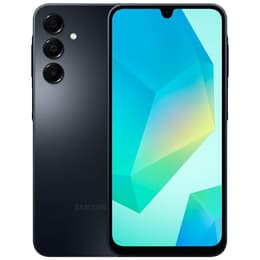
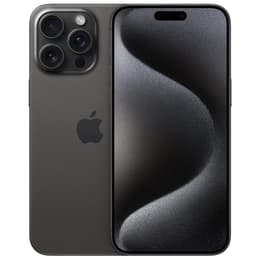

Galaxy A16 Vs iPhone 15 Pro Max

Galaxy A16
Galaxy A16
Starting at

Refurbished price:£100.62

Versus £206.96 new

See options
iPhone 15 Pro Max
iPhone 15 Pro Max
Starting at

Refurbished price:£453.00

Versus £1,199.00 new

See options

Ratings

The Samsung Galaxy A16 (released in late 2024/early 2025) and the iPhone 15 Pro Max (released in late 2023) represent distinct segments of the smartphone market. While both are designed to provide a comprehensive mobile experience, they cater to different user priorities through their operating systems, performance capabilities, and camera systems. The Galaxy A16 operates on Android, offering a customizable interface, whereas the iPhone 15 Pro Max runs on Apple's iOS, known for its integrated ecosystem.

Scores

Durability

The longevity of a smartphone is influenced by its build quality, software support, and the availability of repairs. Both devices offer substantial support, though their timelines differ.

  • Release Timeline: The iPhone 15 Pro Max was released in September 2023, preceding the Galaxy A16, which launched in late 2024/early 2025. This means the iPhone has been on the market for a longer period.
  • Software Support: The Galaxy A16 is notable for its commitment to six generations of Android OS upgrades and six years of security updates, extending its usability until October 2030. The iPhone 15 Pro Max typically receives major iOS updates for approximately five to six years, with security support often extending to seven or eight years, potentially lasting until 2030-2035.
  • Durability Features: The iPhone 15 Pro Max features a titanium frame and a Ceramic Shield front cover, contributing to its robust build and offering IP68 water and dust resistance, allowing submersion up to 6 meters for 30 minutes. The Galaxy A16 utilizes a plastic frame and a 'Glastic' back, providing IP54 splash and dust resistance, which protects against splashes and limited dust ingress.

Year of Release

2024

2023

Compatible with latest Update

Yes

Yes

OS

Android

iOS

Foldable

No

No

Performance

Performance is a key differentiator, impacting how smoothly applications run and how devices handle demanding tasks.

  • Processing Power: The iPhone 15 Pro Max is equipped with a high-performance processor designed to handle intensive applications, advanced gaming, and complex multitasking with ease, often outperforming competitors in real-world speed tests. The Galaxy A16, depending on the variant, uses a mid-range processor that capably manages everyday tasks like browsing, social media, and media consumption. While it shows improvement over its predecessor in single-core CPU performance, it may exhibit some stuttering with more demanding applications or graphically intensive games.
  • Multitasking and Storage: The iPhone 15 Pro Max comes with 8 GB of RAM and offers substantial internal storage options up to 1 TB, without expandable storage. The Galaxy A16 offers 4 GB to 8 GB of RAM and 128 GB or 256 GB of internal storage, with the flexibility of a microSDXC card slot for storage expansion up to 1 TB or 1.5 TB.
  • Battery Behavior: Both devices are designed for all-day use. The Galaxy A16 features a 5000 mAh battery with 25W fast charging. The iPhone 15 Pro Max has a 4422 mAh battery and also supports fast charging, with users reporting good battery longevity.

Memory (GB)

4 GB

8 GB

Screen quality

The display is the primary interface for user interaction, and both devices offer distinct visual experiences.

  • Display Technology and Resolution: The iPhone 15 Pro Max features a 6.7-inch Super Retina XDR OLED display with a resolution of 2796 x 1290 pixels, resulting in a pixel density of 460 ppi. This OLED technology provides deep blacks and vibrant colors. The Galaxy A16 also has a 6.7-inch Super AMOLED display, offering a resolution of 2340 x 1080 pixels (FHD+), with a pixel density of approximately 385 ppi.
  • Refresh Rate and Brightness: The iPhone 15 Pro Max includes ProMotion technology, providing an adaptive refresh rate that can scale from 10Hz to 120Hz, offering smoother scrolling and responsiveness while conserving power. It also boasts high brightness levels, reaching up to 1000 nits typical, 1600 nits peak for HDR content, and 2000 nits peak outdoors. The Galaxy A16 features a 90Hz refresh rate, which provides a smoother experience than standard 60Hz displays, and a typical brightness of around 800 nits.
  • Special Features: The iPhone 15 Pro Max incorporates the Dynamic Island, which dynamically adapts to show alerts and live activities.

Resolution

1080 x 2340

1290 x 2796

Screen type

Super AMOLED

LTPO Super Retina XDR OLED

Audiovisual

Camera capabilities are a significant factor for many users, and these devices offer different photographic strengths.

  • Rear Camera System: The iPhone 15 Pro Max features a versatile Pro camera system with a 48MP main sensor (f/1.78) with second-generation sensor-shift optical image stabilization, a 12MP ultrawide lens (f/2.2), and two telephoto lenses: a 12MP 2x telephoto (f/1.78) and a 12MP 5x telephoto (f/2.8) with 3D sensor-shift optical image stabilization and a tetraprism design, offering a 10x optical zoom range. The Galaxy A16 is equipped with a triple camera setup, including a 50MP main sensor (f/1.8), a 5MP ultrawide lens (f/2.2), and a 2MP macro lens (f/2.4).
  • Photography Performance: The iPhone 15 Pro Max excels in various lighting conditions, offering advanced computational photography features for detailed and color-accurate images, including improved low-light performance. The Galaxy A16 performs well in everyday photography under good lighting, but its low-light performance may show more noise and less detail.
  • Video Recording and Front Camera: The iPhone 15 Pro Max supports video recording up to 4K at 60 frames per second, with features like Cinematic mode and HDR video. Its front camera is 12MP (f/1.9). The Galaxy A16 records video up to 1080p at 30 frames per second, utilizing electronic image stabilization (EIS) rather than optical image stabilization (OIS). Its front-facing camera is 13MP.

Main camera

50 megapixels

48 megapixels

Front camera

13 megapixels

12 megapixels

Miscellaneous

Beyond core features, several practical elements contribute to the overall user experience.

  • Connectivity and Ports: The iPhone 15 Pro Max supports 5G (sub-6 GHz and mmWave), Wi-Fi 6E, and Bluetooth 5.3. It features a USB-C port with USB 3.2 Gen 2 speeds for faster data transfer. It also supports dual eSIM. The Galaxy A16 (5G variant) offers 5G connectivity, dual-band Wi-Fi, Bluetooth 5.3, and a USB-C port with USB 2.0 speeds.
  • Biometrics and Sensors: The iPhone 15 Pro Max relies on Face ID for secure authentication and includes an Action Button for customizable shortcuts. The Galaxy A16 features a side-mounted fingerprint sensor and face recognition for unlocking.
  • Design and Handling: The iPhone 15 Pro Max has dimensions of 159.9 mm (height) x 76.7 mm (width) x 8.25 mm (depth) and weighs 221 grams. The Galaxy A16 measures 164.4 mm (height) x 77.9 mm (width) x 7.9 mm (depth) and weighs 200 grams. The iPhone's titanium build offers a premium feel, while the Galaxy A16's plastic construction is lighter.

Weight

200 g

221 g

Screen size (in)

6.7

6.7

Mobile network

4G

5G

SIM card

Dual Physical SIM

Physical SIM + eSIM

Carrier compatibility

Unlocked

Unlocked

Connector

USB-C

USB-C

The Samsung Galaxy A16 and iPhone 15 Pro Max cater to different user needs and expectations, reflecting their distinct market positions. User sentiment for the iPhone 15 Pro Max often highlights its exceptional performance, advanced camera capabilities, and vibrant display, making it a strong choice for users who prioritize cutting-edge technology and a premium experience. Some users appreciate its robust build and long-term software support. Criticisms, when they arise, sometimes relate to its size and weight, though many find it manageable for its screen real estate.

For the Galaxy A16, user feedback often praises its impressive battery life, large Super AMOLED display with a 90Hz refresh rate, and Samsung's commitment to extended software updates, which is a significant advantage for a device in its category. It is generally seen as a reliable device for everyday use, though some users note that its performance might not be ideal for intensive gaming or heavy multitasking, and its camera performance in low light is more basic.

Users prioritizing a highly responsive device with advanced photography and video capabilities, a top-tier display, and a robust build will find the iPhone 15 Pro Max well-suited to their needs. Its integrated ecosystem and powerful processing are ideal for demanding applications and content creation. Conversely, users seeking a device with excellent battery endurance, a large and smooth display for media consumption, and a strong commitment to software longevity, without the need for flagship-level performance in every aspect, may lean toward the Galaxy A16. Both devices offer compelling features for their respective audiences, and considering a quality-assured refurbished option can be a practical way to access either device.
See all articles

Our recent comparisons