iPhone 6S Vs iPhone SE (2020)

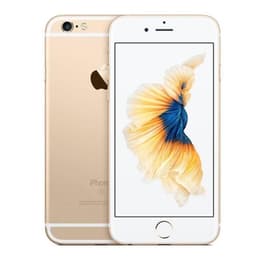
iPhone 6S
iPhone 6S
Starting at

Refurbished price:£30.00

Versus £159.00 new

See options
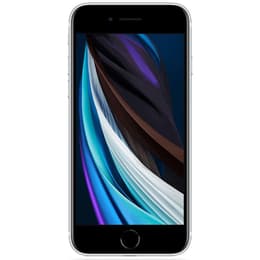
iPhone SE (2020)
iPhone SE (2020)
Starting at

Refurbished price:£70.00

Versus £289.00 new

See options

Ratings

The iPhone 6S, released in September 2015, and the iPhone SE 2020, launched in April 2020, are both compact smartphones from Apple. While they share a similar physical design and display size, the iPhone SE 2020 benefits from significantly newer internal components, offering a substantial upgrade in performance and camera capabilities. Both devices operate on Apple's iOS platform, but their respective release timelines mean different levels of ongoing software support.

Scores

Durability

The longevity of a smartphone is often tied to its release timeline and the duration of software support it receives. These two models, despite their similar appearance, have distinct differences in this regard.

  • Release Timeline: The iPhone 6S was released in September 2015, making it a considerably older device compared to the iPhone SE 2020, which launched in April 2020. This age difference directly impacts their expected practical lifespan.
  • OS Support Duration: The iPhone 6S received its last major iOS update with iOS 15.7.9 in September 2023, meaning it no longer receives the latest features and security patches. In contrast, the iPhone SE 2020, initially shipped with iOS 13, is still actively supported and is expected to receive several more years of major iOS updates, likely extending its usability well into the future.
  • Expected Practical Lifespan: Users prioritizing the latest software features and security updates will find the iPhone SE 2020 offers a much longer practical lifespan. The iPhone 6S, while still functional for basic tasks, is increasingly limited by its outdated software.

Year of Release

2015

2020

Compatible with latest Update

No

Yes

OS

iOS

iOS

Foldable

No

No

Performance

Performance is a key differentiator between these two devices, largely due to the significant gap in their release dates and the advancements in internal hardware.

  • Processor Capabilities: The iPhone SE 2020 features a much more advanced processor compared to the iPhone 6S. This translates to noticeably faster app loading times, smoother multitasking, and a more responsive overall user experience. Demanding applications and modern games will run considerably better on the iPhone SE 2020.
  • RAM and Storage: The iPhone SE 2020 comes with 3GB of RAM, providing better multitasking capabilities than the 2GB found in the iPhone 6S. Both models offer various storage options, with the iPhone SE 2020 starting at 64GB and going up to 256GB, while the iPhone 6S offered options from 16GB to 128GB.
  • Battery Behavior: While the iPhone SE 2020 has a slightly larger battery capacity (1821 mAh) compared to the iPhone 6S (1715 mAh), user reports indicate that the iPhone SE 2020's battery life can be a limitation for heavy users, often requiring more frequent charging throughout the day. The iPhone 6S also has a modest battery life, with typical usage often requiring a midday charge.

Memory

2 GB

3 GB

Screen quality

Both the iPhone 6S and iPhone SE 2020 share a similar display form factor and technology, but there are subtle differences in their viewing experience.

  • Display Technology and Resolution: Both devices feature a 4.7-inch Retina IPS LCD display with a resolution of 1334 x 750 pixels, resulting in a pixel density of 326 pixels per inch. This provides clear and sharp visuals for everyday use.
  • Brightness and Color: The iPhone SE 2020 generally offers improved brightness and color accuracy, including True Tone technology which adjusts the display's white balance to match the ambient light. The iPhone 6S has a typical maximum brightness of 500 cd/m2.
  • Touch Interaction: The iPhone 6S introduced 3D Touch, a pressure-sensing technology that allowed for context-sensitive actions. The iPhone SE 2020 replaced this with Haptic Touch, which provides similar functionality through a long press and haptic feedback, but without the pressure-sensing capability.

Resolution

750 x 1334

750 x 1334

Screen type

IPS LCD

Retina IPS LCD

Audiovisual

The camera systems on these two iPhones, while both featuring a 12-megapixel main sensor, offer different capabilities and image processing due to their generational gap.

  • Rear Camera Performance: Both phones have a 12-megapixel rear camera. However, the iPhone SE 2020 benefits from a wider f/1.8 aperture and more advanced computational photography features, including Smart HDR and Portrait mode, which are not available on the iPhone 6S. This results in better low-light performance and more detailed, dynamic range in photos from the SE 2020.
  • Video Recording: The iPhone SE 2020 can record 4K video at up to 60 frames per second (fps), and offers extended dynamic range for video. The iPhone 6S can record 4K video at 30 fps. Both support slow-motion video.
  • Front Camera: The iPhone SE 2020 features a 7-megapixel front camera, an upgrade from the 5-megapixel front camera on the iPhone 6S. This provides clearer selfies and improved video call quality on the newer model.

Main camera

12 megapixels

12 megapixels

Front camera

5 megapixels

7 megapixels

Miscellaneous

Beyond core performance and display, several practical elements contribute to the overall user experience and differentiate these two iPhone models.

  • Connectivity: The iPhone SE 2020 supports newer wireless standards, including Wi-Fi 6 and Bluetooth 5.0, offering faster and more reliable connections compared to the Wi-Fi 802.11ac and Bluetooth 4.2 found in the iPhone 6S. Both support 4G LTE.
  • Physical Design and Durability: Both devices share a similar physical form factor with a home button featuring Touch ID. The iPhone SE 2020 has an IP67 rating for dust and water resistance, meaning it can withstand immersion in up to 1 meter of water for 30 minutes. The iPhone 6S does not carry an official IP rating. The iPhone 6S is slightly thinner and lighter (7.1 mm, 143g) than the iPhone SE 2020 (7.3 mm, 148g).
  • Ports and Sensors: Both models utilize a Lightning port for charging and data transfer. The iPhone 6S retains a 3.5mm headphone jack, which is absent on the iPhone SE 2020. Both feature a front-mounted Touch ID fingerprint sensor.

Weight

143 g

148 g

Screen size (in)

4.7

4.7

Network

4G

4G

SIM card

Physical SIM

Physical SIM + eSIM

Carrier compatibility

Unlocked

Unlocked

Connector

Lightning + Jack 3.5mm

Lightning

User feedback for the iPhone 6S often praised its introduction of 3D Touch and its solid build quality for its time. However, common criticisms in recent years revolve around its aging processor, limited battery life, and the cessation of major iOS updates, which impacts app compatibility and security. Users frequently note that while it can still handle basic communication, its performance for demanding tasks has significantly diminished.

The iPhone SE 2020, on the other hand, is frequently lauded for bringing a powerful, current-generation processor into a compact and familiar design. Users appreciate its strong performance for everyday tasks and gaming, as well as its improved camera capabilities, especially the inclusion of Portrait mode. The most common criticism for the iPhone SE 2020 centers on its battery life, which many users find to be only average, often requiring a charge before the end of a full day of heavy use. The design, while popular for its familiarity and Touch ID, is also sometimes seen as dated due to the large bezels compared to more modern, all-screen devices.

Users prioritizing a device with a longer software support lifespan and robust performance for modern applications will find the iPhone SE 2020 to be a more suitable choice. Its enhanced camera and water resistance also make it a more versatile option for many. Conversely, the iPhone 6S might appeal to those who require a headphone jack and primarily use their phone for very basic communication and light browsing, understanding that it is a device with limited future software updates. For those seeking a more sustainable choice, both models are available as quality-assured refurbished options, extending their useful life and reducing electronic waste.

See all articles

Our recent comparisons